
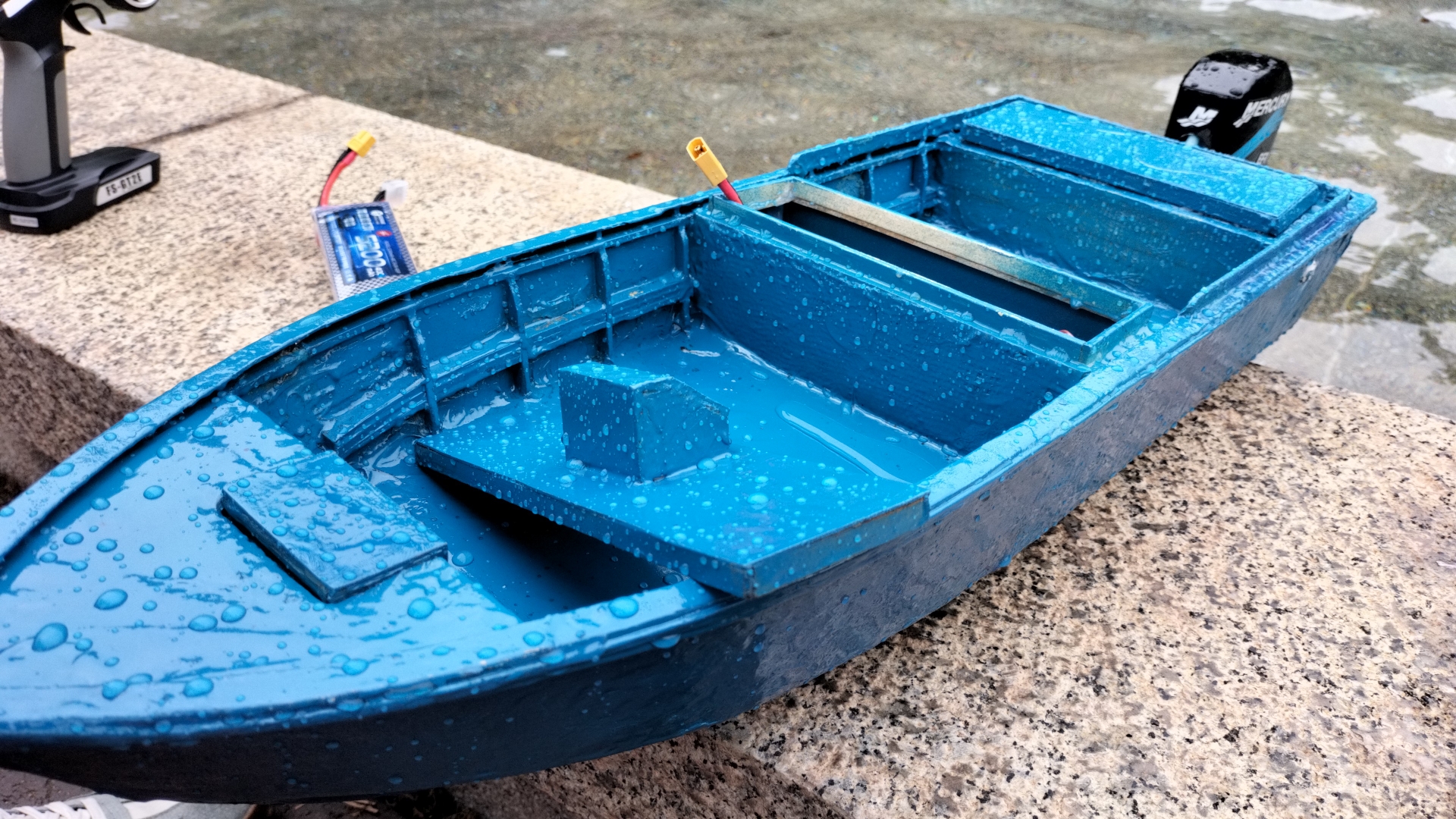
4S power, off the shelf prop unit:

Fiberglass is a popular material for RC boat hulls due to its combination of strength, durability, and lightweight properties. It offers an excellent strength-to-weight ratio, making the boat both sturdy and easy to maneuver. Unlike wood, fiberglass does not absorb water or rot over time, ensuring long-term durability even in harsh conditions. It is also highly resistant to impacts, UV exposure, and general wear and tear.
One of the key advantages of fiberglass is its ability to form a smooth, streamlined surface. This reduces drag and enhances speed, making it an excellent choice for high-performance and competition RC boats. Additionally, fiberglass can be easily customized, allowing for complex hull designs and modifications. If the hull is damaged, it can be sanded, patched, and repainted, making repairs relatively simple.
Another benefit is its thermal stability and resistance to chemicals such as fuel, oil, and saltwater. Unlike some plastics, fiberglass does not warp easily under temperature changes, maintaining its shape and performance over time. While it may be more expensive than basic plastic materials, fiberglass provides premium performance at a reasonable cost, making it a preferred choice for RC enthusiasts seeking speed, durability, and customization options.

A wooden frame is often used as the foundation for an RC boat hull because it provides a strong, lightweight, and customizable structure. Wood is easy to work with, allowing builders to create precise shapes and designs that form the backbone of the hull. It offers natural rigidity while remaining relatively lightweight, making it ideal for supporting fiberglass or other outer hull materials.
Wood is also highly versatile, enabling hobbyists to adjust or modify the frame as needed during the construction process. It can be easily cut, sanded, and glued, allowing for intricate and detailed designs. When properly sealed and treated, wood becomes resistant to water damage, ensuring the frame remains durable over time.
Additionally, wooden frames provide excellent structural integrity, distributing stress evenly across the hull. This results in a sturdy and stable boat that can handle the forces of water resistance and motor vibrations. Many traditional and high-performance RC boats use wooden frames combined with fiberglass or epoxy coatings to achieve a balance of strength, flexibility, and water resistance.
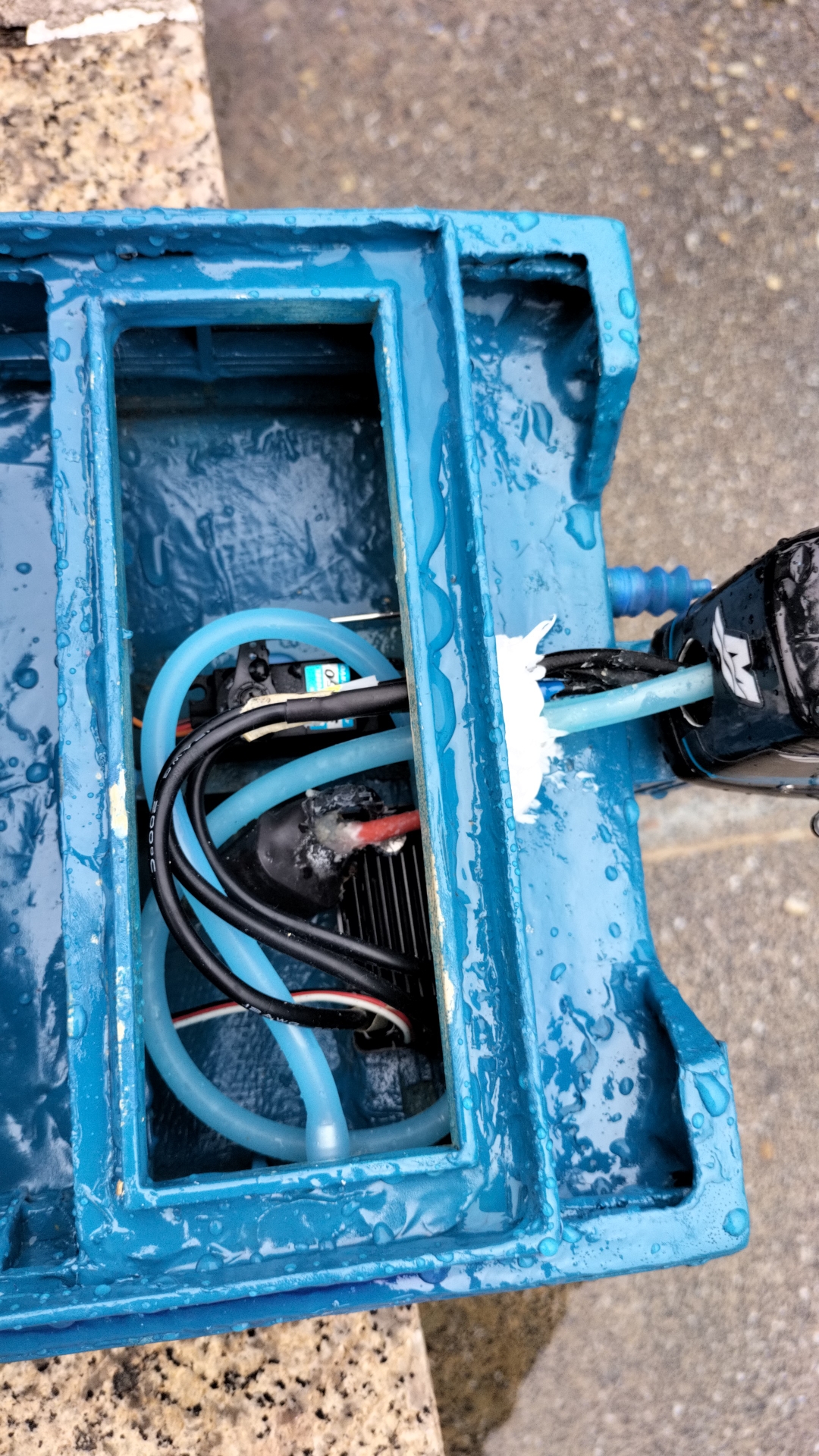

This photo shows an Outboard Motor and Propeller Tail Drive System module.


