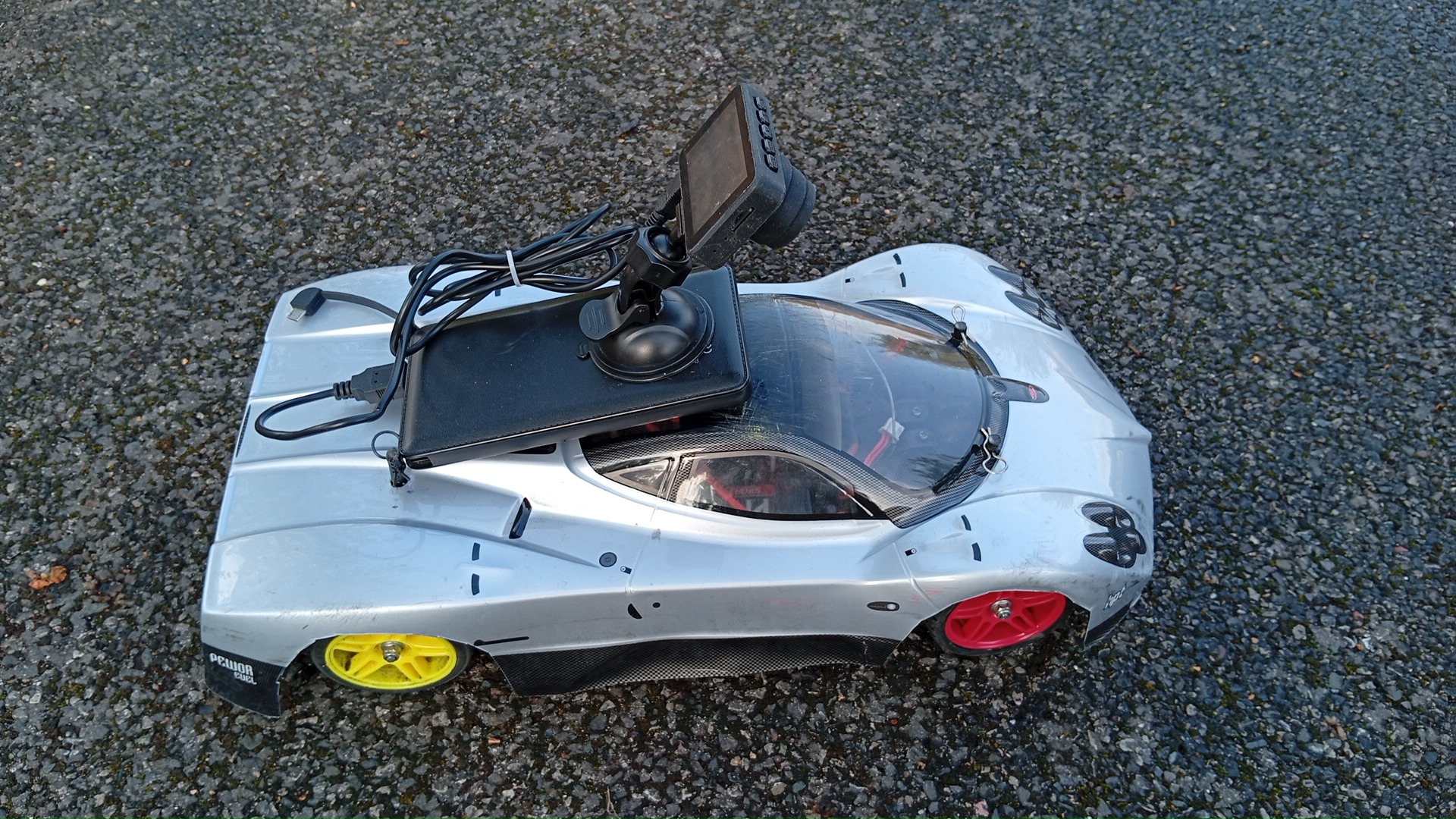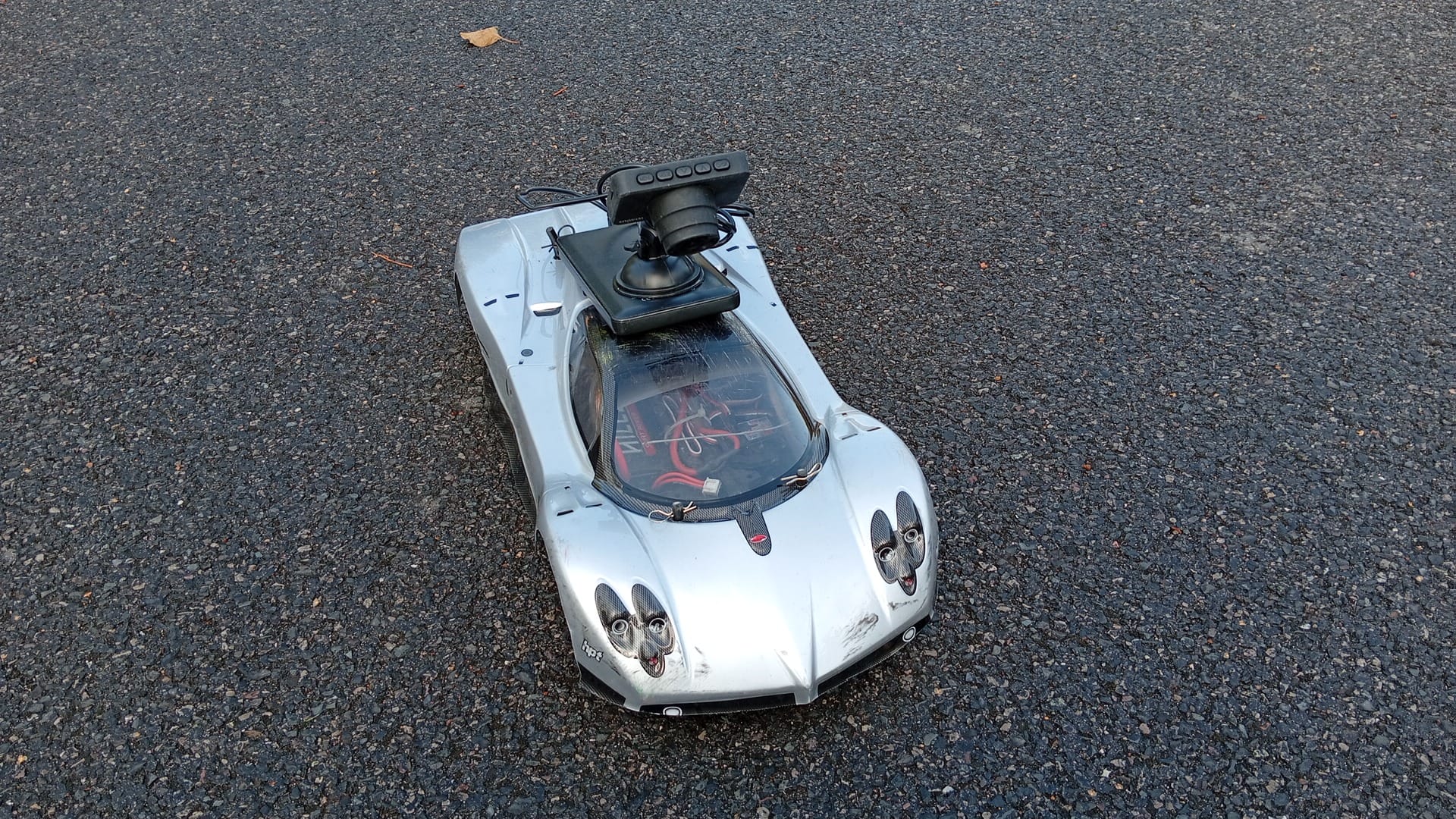
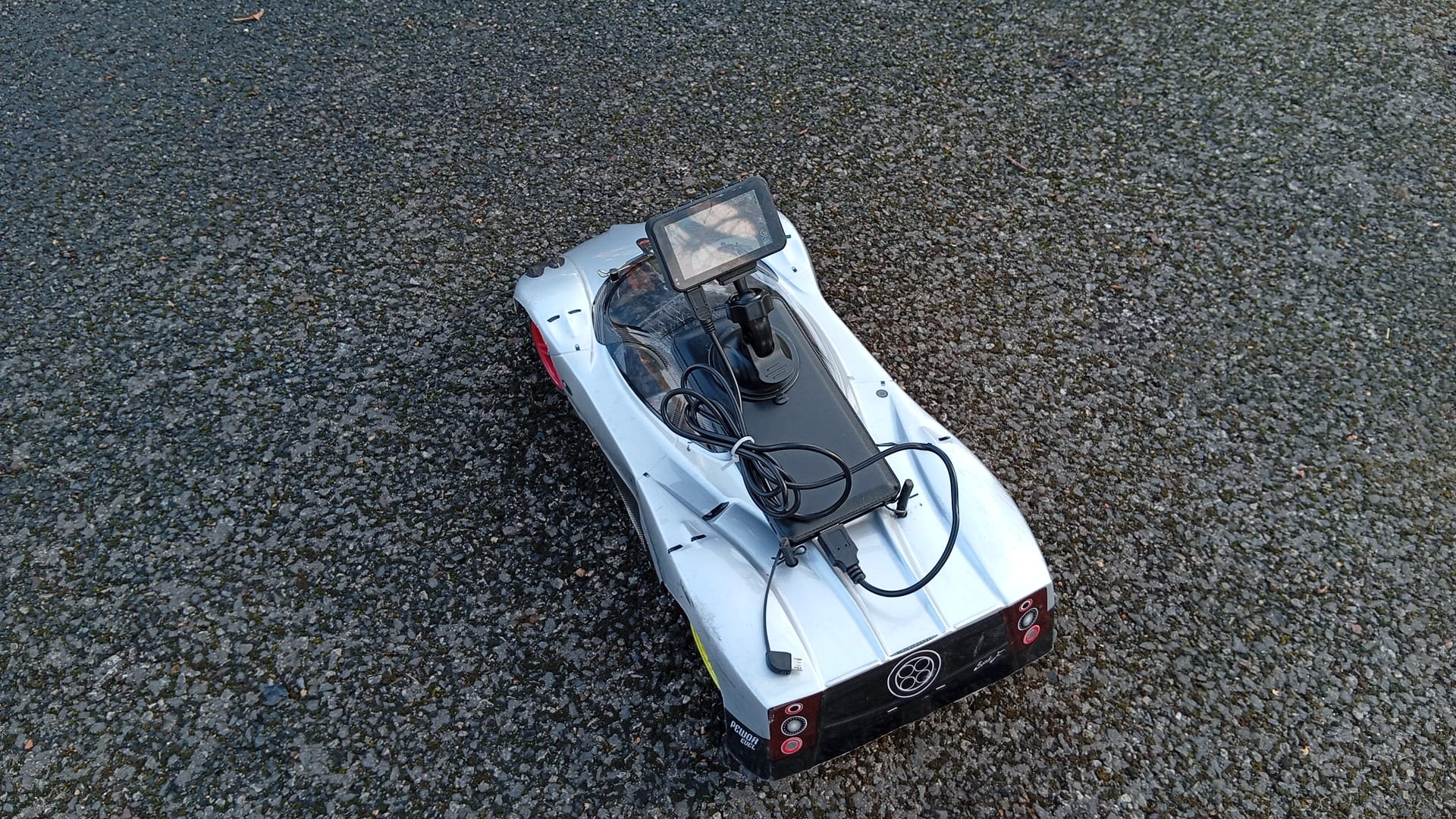
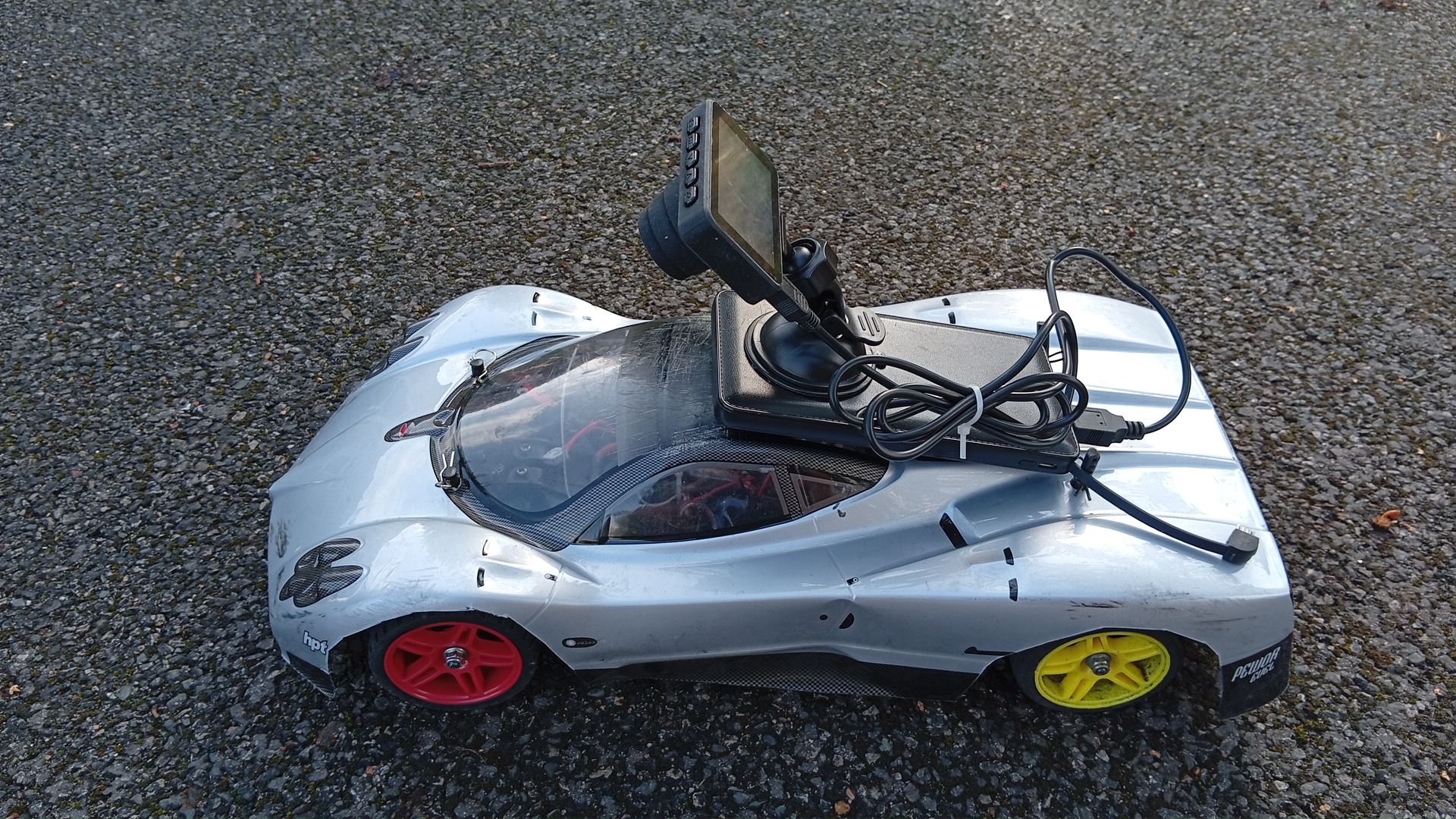
This is a DIY project – a car camera (mini SD card) and a portable USB battery glued to the top of the body shell.
Remember when you were a kid, playing with toy cars and making vroom vroom noises? You’d push them along the carpet, imagining you were Steve McQueen in Bullitt, drifting around the coffee table legs.
Now imagine that, but you have the power to actually see what the car sees. And let me tell you, the world looks a lot different when you’re three inches tall and packing a brushless motor.
Welcome to the chaotic, dizzying, and absolutely hilarious world of RC car cinematography—on a budget.
The Setup: Dashcam, Meet Zip-Tie
Here’s the thing: you don’t need an expensive action camera for this. A regular car dashcam—the kind that suction-cups to your windshield and records your commute—works perfectly fine. In fact, it might be even funnier.
There is something inherently ridiculous about the process. You spend 20 minutes trying to balance the weight distribution perfectly so the car doesn’t tip over, only to realize you’ve taped the dashcam on upside down. The suction cup mount that was designed to stick to glass is now clinging desperately to a plastic roof that was never meant to hold anything heavier than a sticker.
But once you hit that throttle? Pure magic.
The Perspective Shift: You Are the Ant
The first thing that hits you when you watch the footage back is the speed. On the ground, driving your RC car in the park feels fast. Through the lens of a dashcam mounted on the roof? It feels like you’ve engaged warp drive.
Because the camera is so low to the ground, the parallax effect is magnified. A patch of grass becomes a dense jungle. A curb becomes a vertical cliff face. A puddle? That’s the Atlantic Ocean.
Suddenly, you aren’t just driving a toy; you’re piloting a rover on an alien planet. The texture of the asphalt looks like a moonscape, and the dandelions look like giant, terrifying yellow towers.
The Dashcam Difference
Here’s where using a regular car cam gets interesting. These things weren’t designed for this. They were built to sit quietly behind a windshield and record boring highway footage for insurance purposes.
Now you’re subjecting it to jumps, flips, dirt, and the kind of vibration that would make a seismologist nervous.
The footage has a certain gritty charm to it. Dashcams often have a narrower field of view than action cameras, which means you get a more intimate, claustrophobic perspective. It’s less “epic cinematic landscape” and more “what is happening why is the sky on the left.”
And the timestamp? Oh yes, the timestamp. Nothing says “professional cinematography” like a glowing orange date stamp in the corner reminding you that this epic jump happened on 14/03/2024 at 15:47.
The “Oh No” Moments
Recording RC car driving is essentially a lesson in physics—specifically, the physics of crashing.
When you drive an RC car normally, a crash is funny. When you watch it from the onboard camera, a crash is a cinematic masterpiece of disaster. The horizon spins, the sky and dirt swap places three times in a second, and the audio is just the crunch of plastic and the whine of a motor screaming for mercy.
And let’s not forget the audio track. The microphone picks up every pebble hitting the chassis, every gear grinding, and the high-pitched whine of the ESC. It sounds like a swarm of angry robotic bees. It’s chaotic, it’s loud, and it’s perfect.
The “Flimsy Mount” Jitter
Here’s a pro-tip: If you want your footage to look like a found-footage horror movie from the perspective of a shaken soda can, mount the dashcam loosely.
The vibration is part of the charm. It gives the footage a raw, gritty feel. You aren’t watching a stabilized drone shot; you are watching a war zone. Every bump in the dirt sends a shockwave through the frame. It adds a visceral sense of danger that a smooth gimbal just can’t replicate.
Plus, dashcams are surprisingly durable. They’re built to survive a hot car in summer and a cold windshield in winter. A few flips into the grass? That’s nothing.
Why You Should Do It
Is the footage usable for a Hollywood movie? Absolutely not. It’s shaky, the horizon is rarely level, and the camera angle usually ends up pointing at the sky after the first jump. Plus, there’s a good chance the suction cup will give up entirely and your dashcam will become a very expensive projectile.
But that’s exactly why it’s fun.
It forces you to rediscover your backyard. You start looking for ramps, tunnels, and streams. You start driving differently—not just to go fast, but to see things.
So, dig out that old dashcam from the glovebox, grab some duct tape, and create a Frankenstein monster of a car. It’s time to see the world from three inches off the ground.
Just make sure you secure that suction cup properly. Trust me, you don’t want to lose a dashcam in the neighbor’s bushes at 30 miles per hour.
Happy (tiny) driving!