
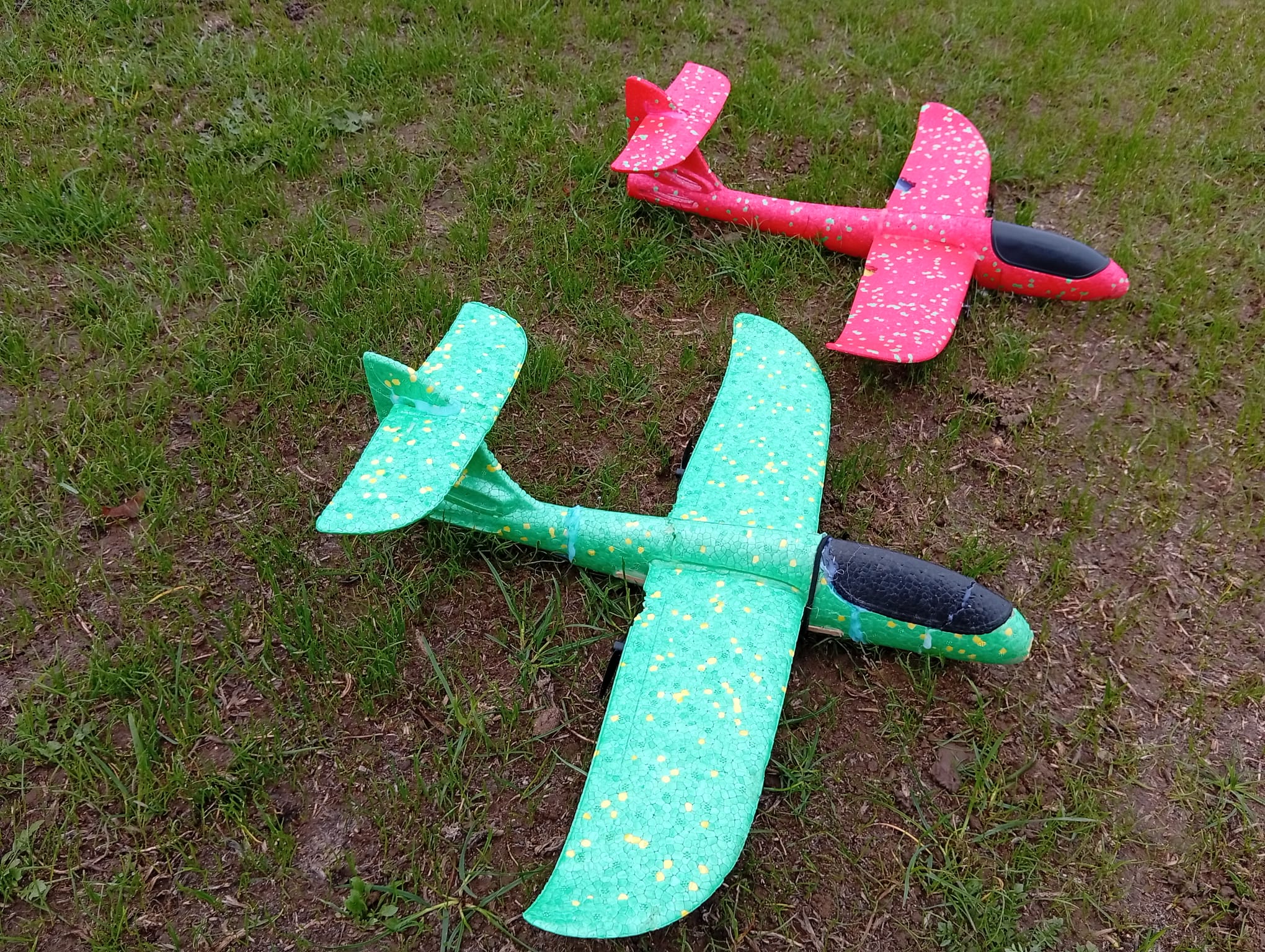
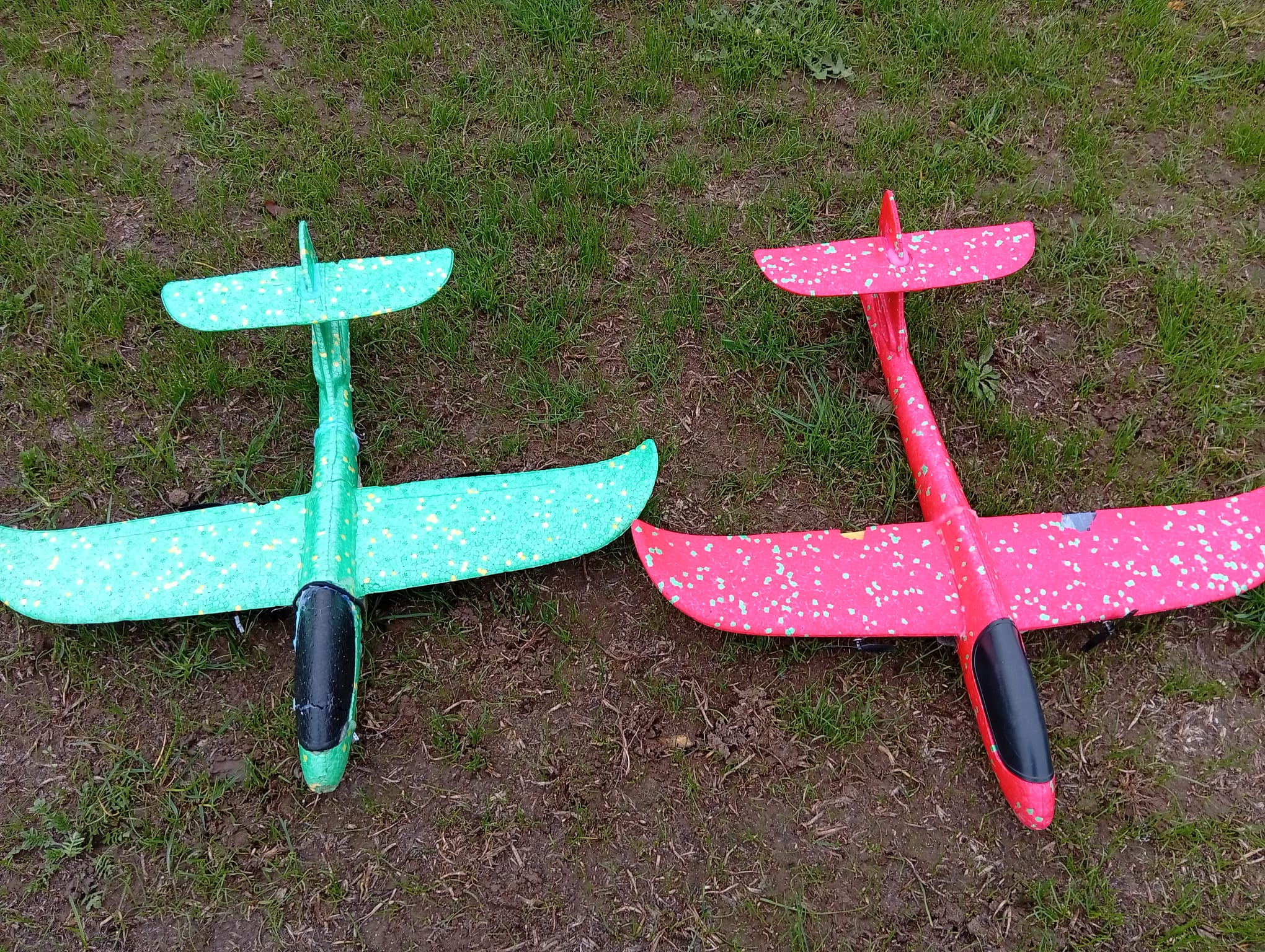
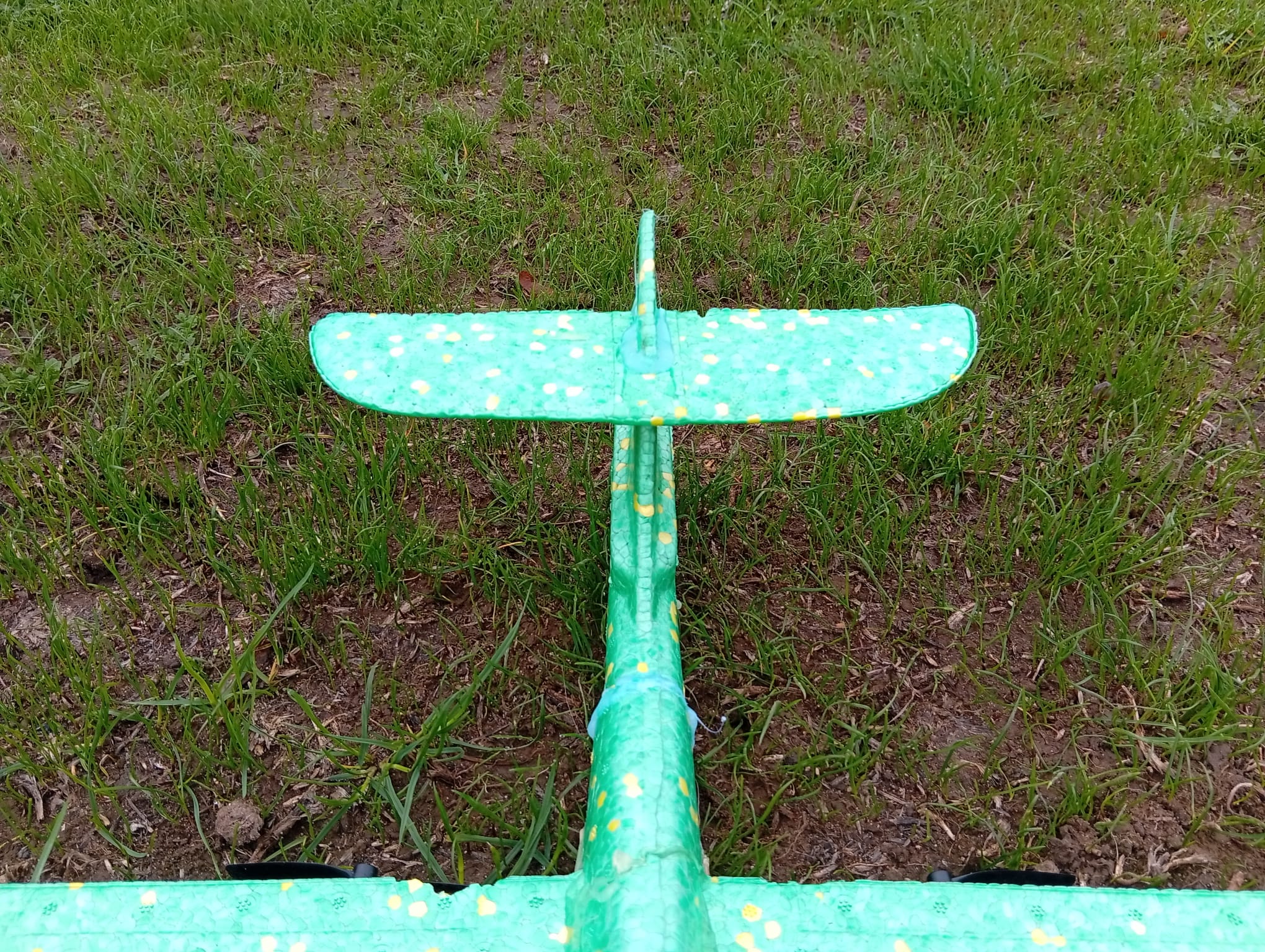
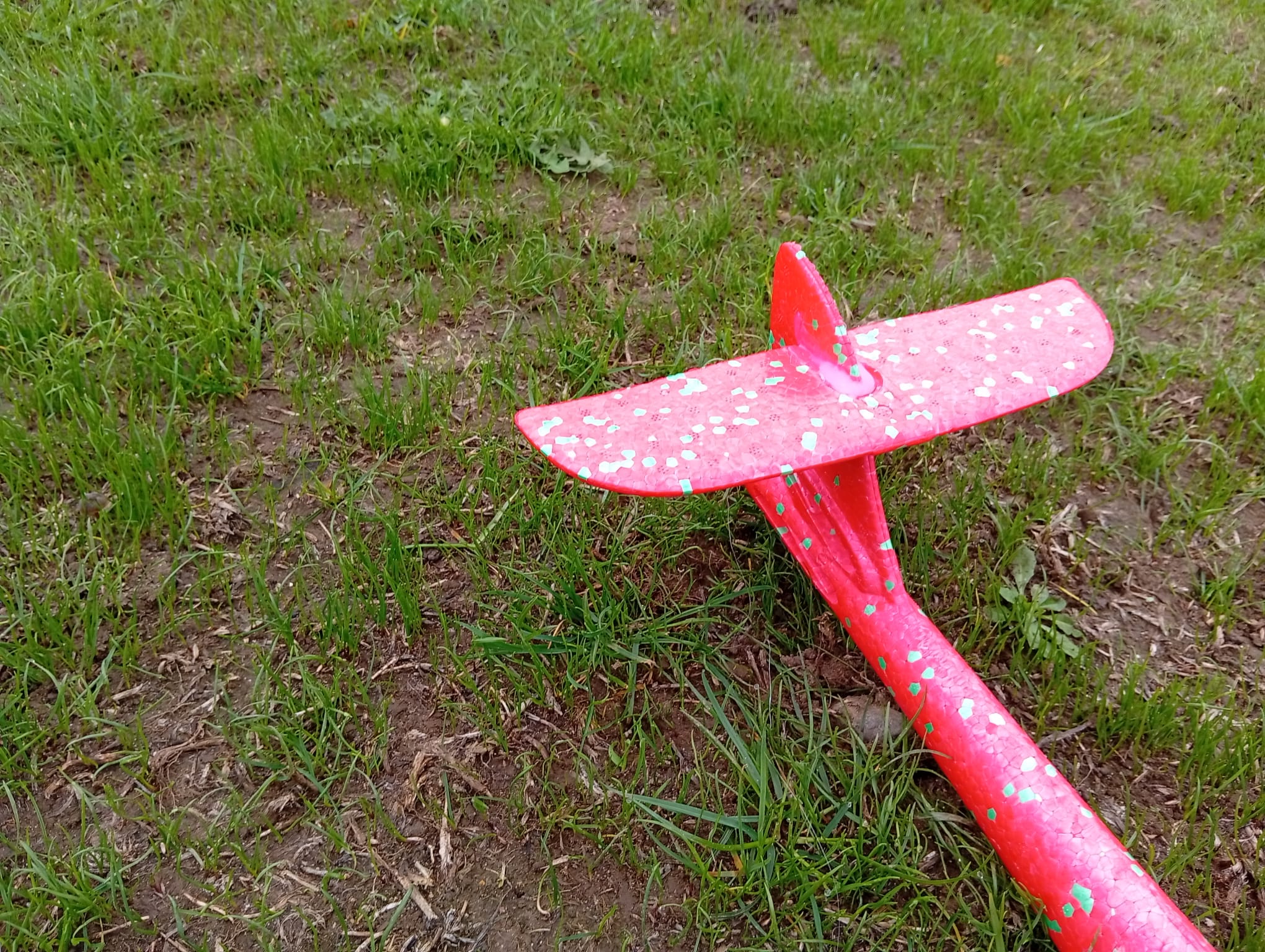
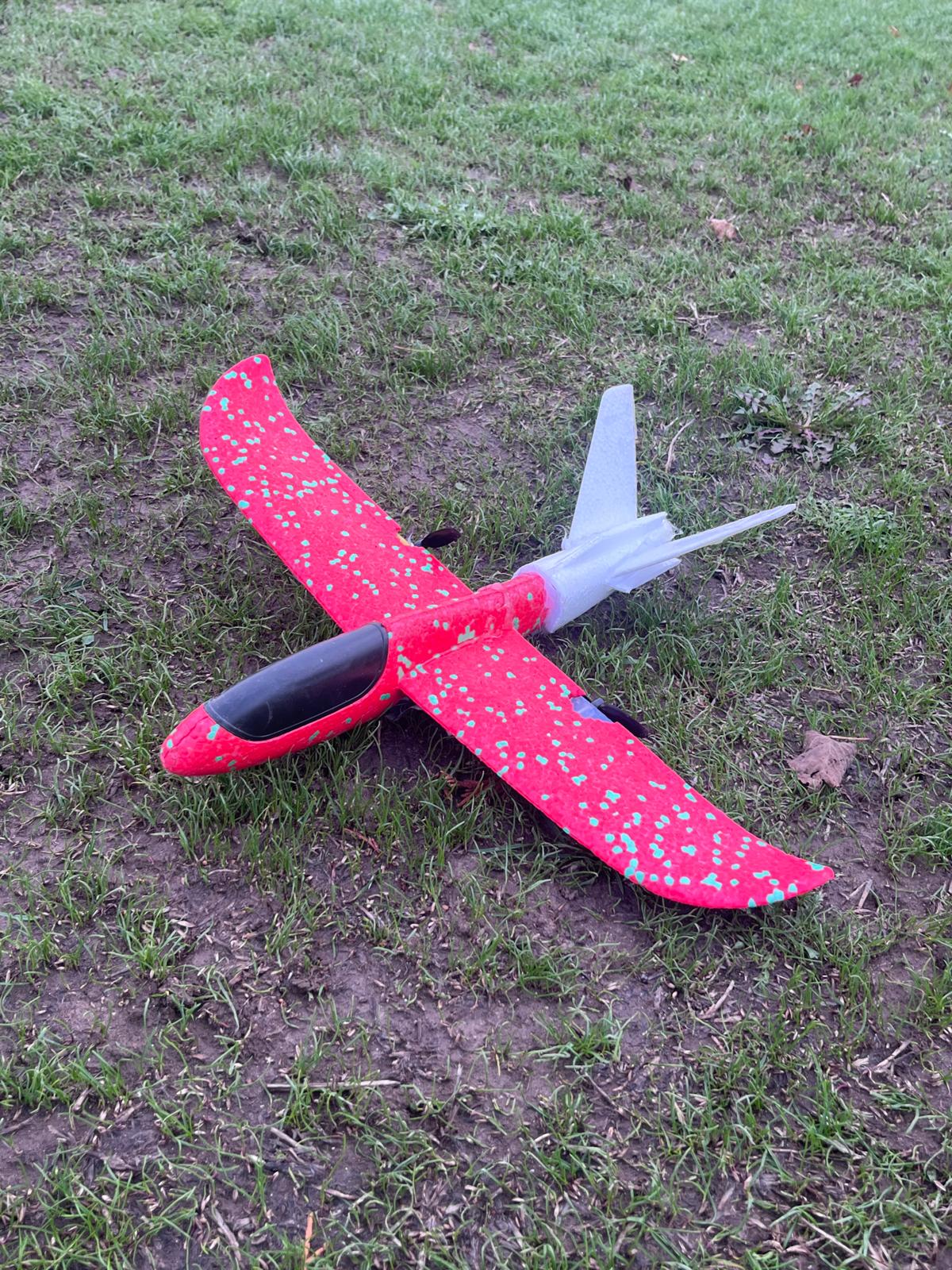
For the red T-tail (or almost T Tail) design, the most significant advantage in a differential thrust setup is how it interacts with the prop wash. Because the horizontal stabilizer is mounted high up, it sits directly behind or within the slipstream of the wing-mounted motors. This exposes the elevator to clean, high-energy airflow, making pitch control much more responsive at low speeds, while also keeping the tail clear of the thrust vectors. Additionally, the elevated position offers excellent ground clearance; as seen in the photo, these planes sit low on the grass, and the T-tail prevents the elevator from snagging on weeds or breaking during belly landings. It also lifts the elevator out of the turbulent wake coming off the main wing, potentially providing smoother pitch control, and gives the plane that classic, scale sailplane aesthetic.
HOWEVER, when you actually fly it, you will soon realize that tractor + T-tail could be the worst combo for a small model. That’s why almost no small tractor RC gliders use it.
With a pusher you at least had some chance the prop wash hit the tail. With a tractor in front, your T-tail is completely out of the slipstream now – by the time the prop wash gets to the tail ∼60-70% of airframe length back, it’s VERY slow (mixed with free air). Your new high T-tail is sitting in clean, slow air. You lost 100% of your prop-boosted elevator power.
On a standard old low tail, the props were blowing directly over the elevator. That propwash is ∼1.5-2x your airspeed. So your elevator had massive authority even when the model itself was flying slowly. Now with a T-tail, there is hardly any propwash, so no elevator power at low speed at all. In contrast, low tail sitting in propwash = elevator works even at 0 airspeed. You can hover, harrier, 3D. And you can fly slower without descending fast.
Even with a pusher, the T-tail can miss most of the propwash:
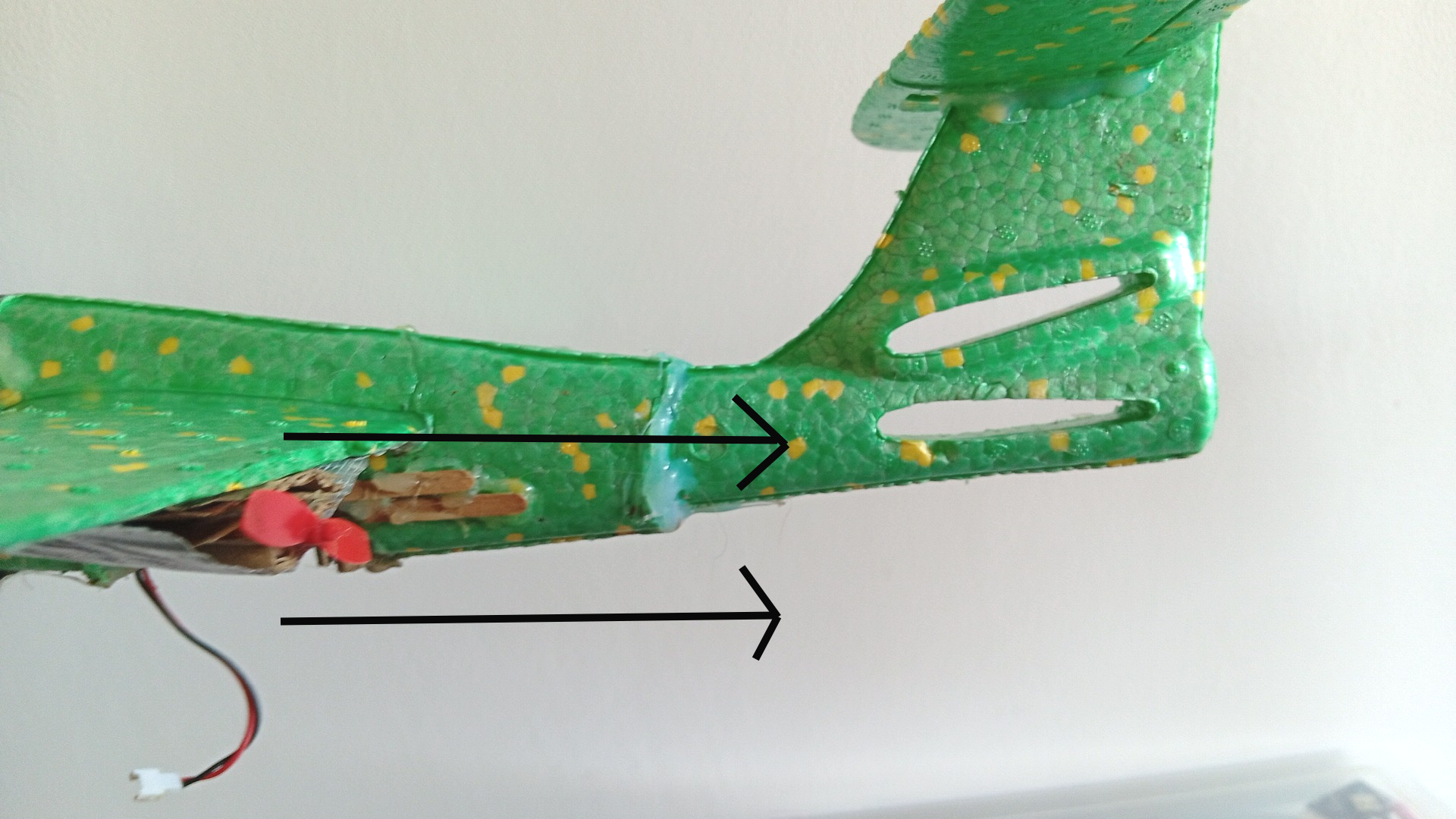
Also, tractor prop makes it pitch-unstable when slow. A tractor prop at high AoA / low speed produces a nose-up normal force in front of the CG. It’s destabilizing. Low tail with propwash can counter it instantly because it gets more effective when you add power. T-tail can’t. So when you add power to save it, it pitches up more, slows down more, and you feel “not enough thrust.”
To counter the nose up tendency of the tractor, you can set the nose of the motor to tilt a bit to offset it, or move the CG slightly forward for like 8 to 10 mm, or use a heavier battery.
The T-tail design comes with notable structural drawbacks, particularly for a foam board construction. Structurally, placing the entire weight and aerodynamic load of the horizontal stabilizer at the top of a long, unsupported lever arm makes it highly vulnerable to flexing and flutter at higher speeds, which can easily snap the tail off.
Furthermore, the T-tail carries a risk of “blanketing” during steep climbs or a high angle of attack, where the main wing blocks airflow to the tail, causing the elevator to lose authority. Pushing mass to the top of the tail also raises the center of gravity, making the plane slightly more prone to tipping over and shifting weight backwards, which can be problematic for these short-nosed gliders.
Finally, the high tail can sometimes act like a rudder, introducing unwanted roll or yaw coupling when the motors spin at different speeds.
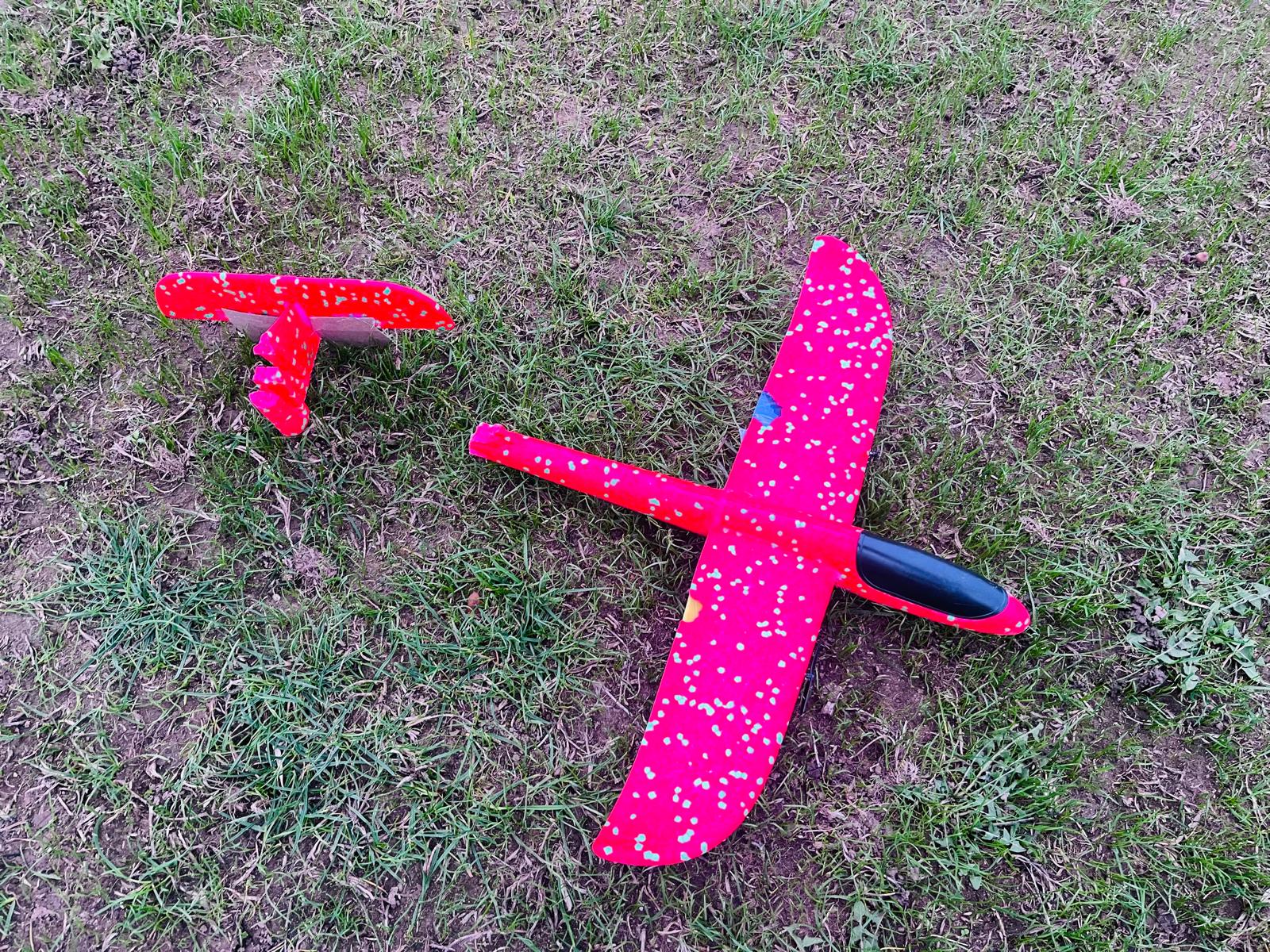
It is extremely difficult to configure a T Tail differential glider … the standard length fuselage does not fly well, not until it is cut short:
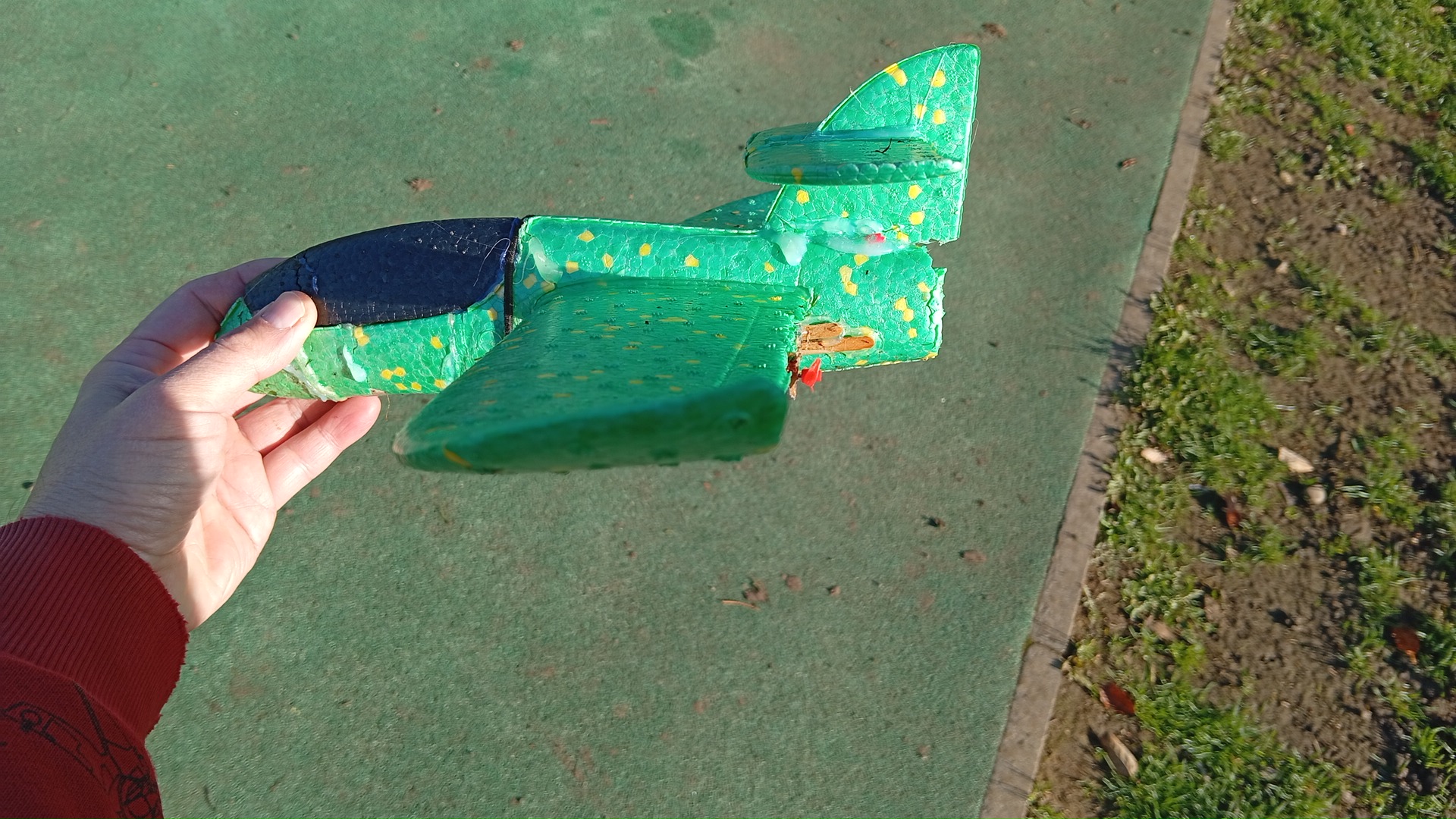
With this short fuselage, the tail is chewed up. Tail got lighter = CG moved forward = stable. It wants to fly nose-forward now instead of mushing. The thrust line is now BELOW CG, which helps a lot. Still, during turns it is much less stable than a standard configuration.
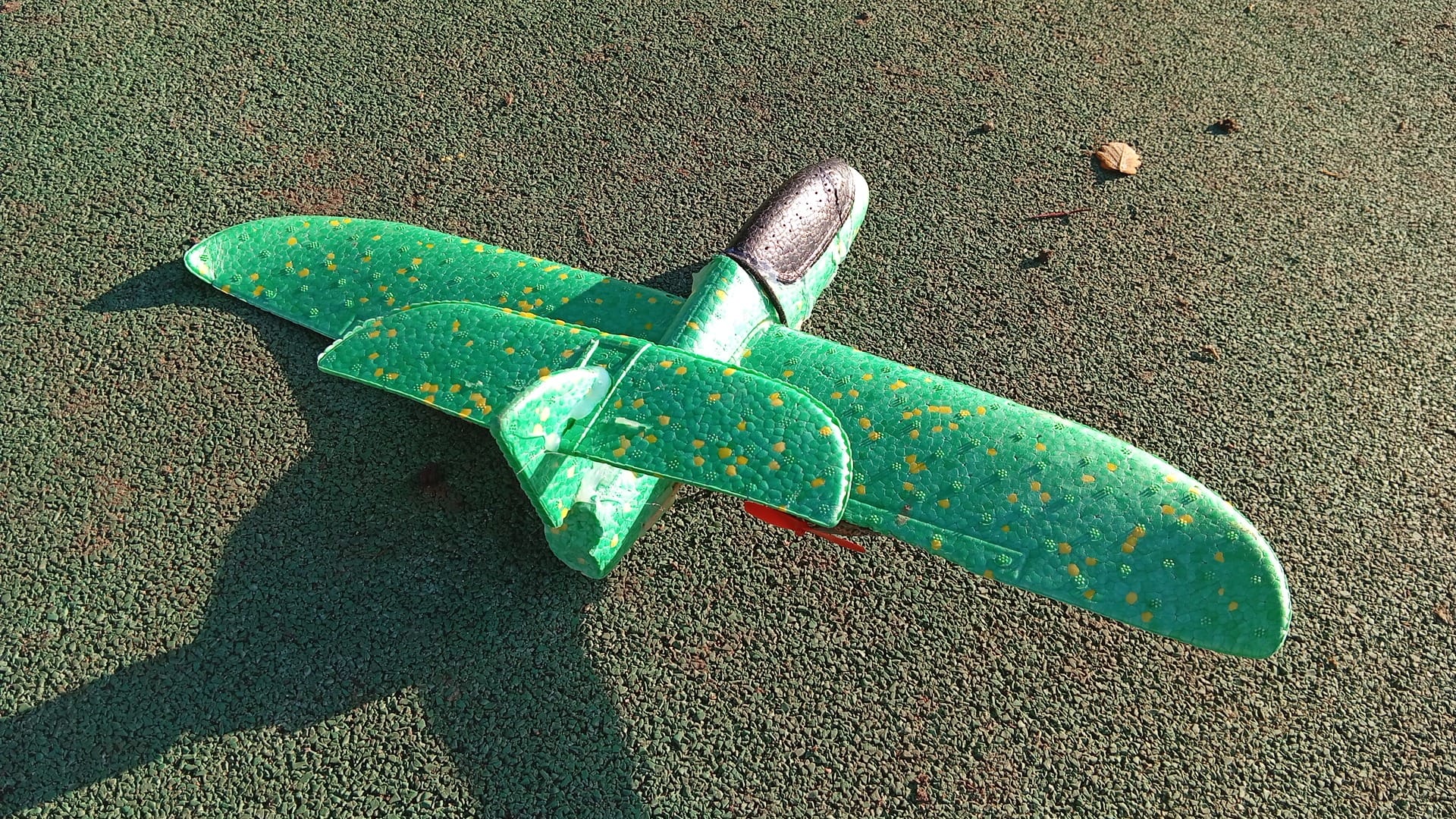
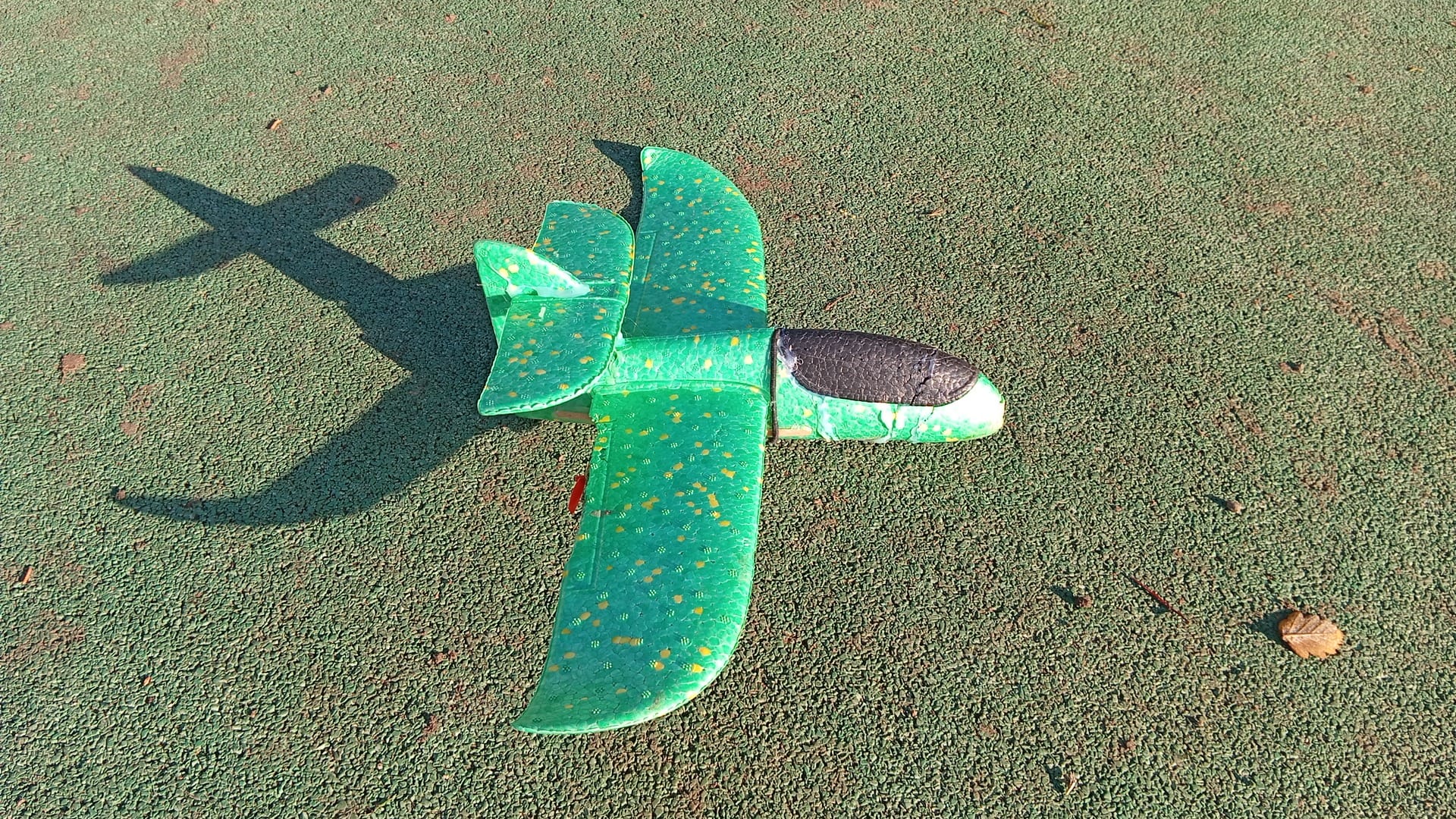
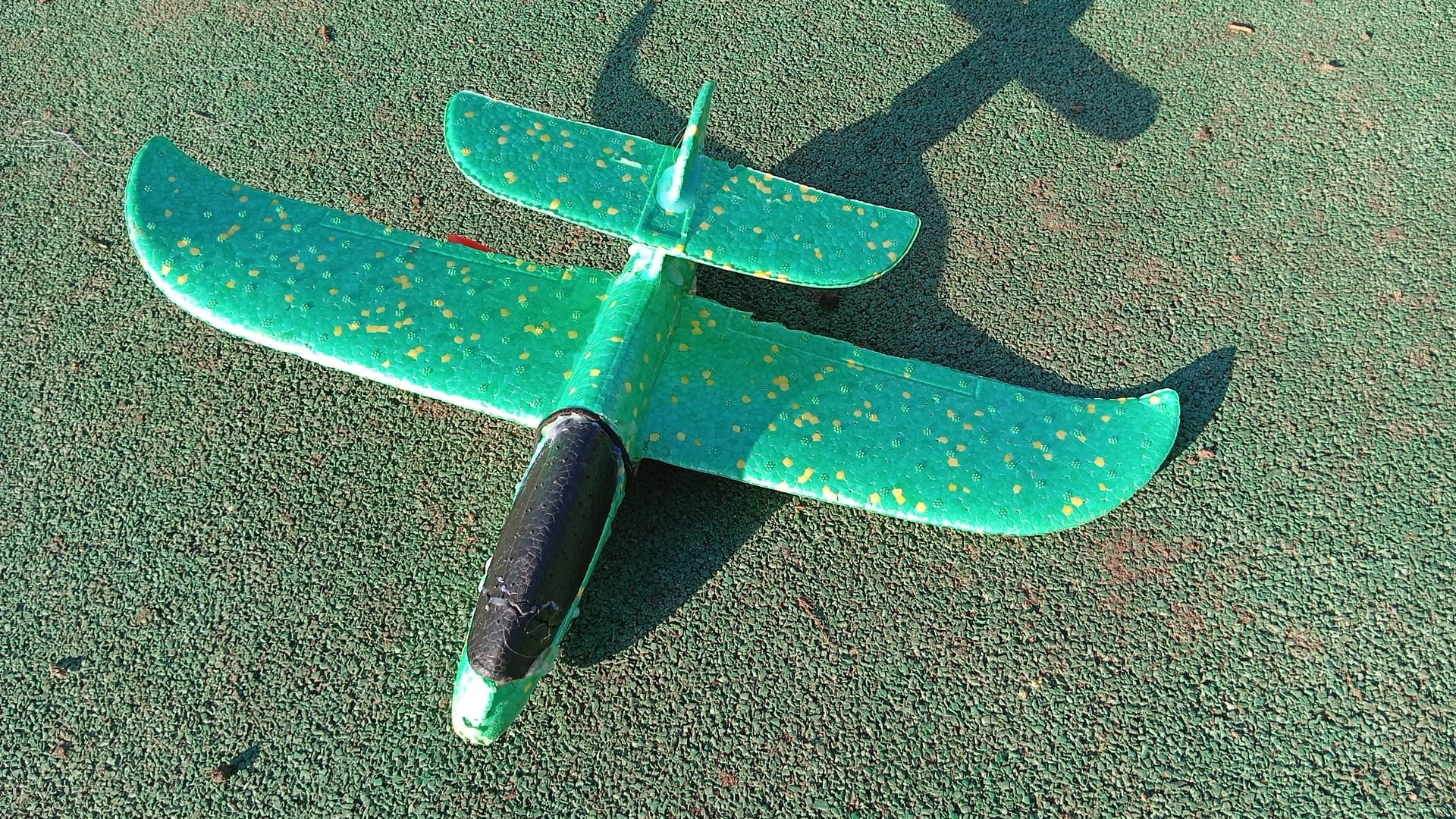
This configuration has an additional big horizontal tail added, and it flies pretty stable.
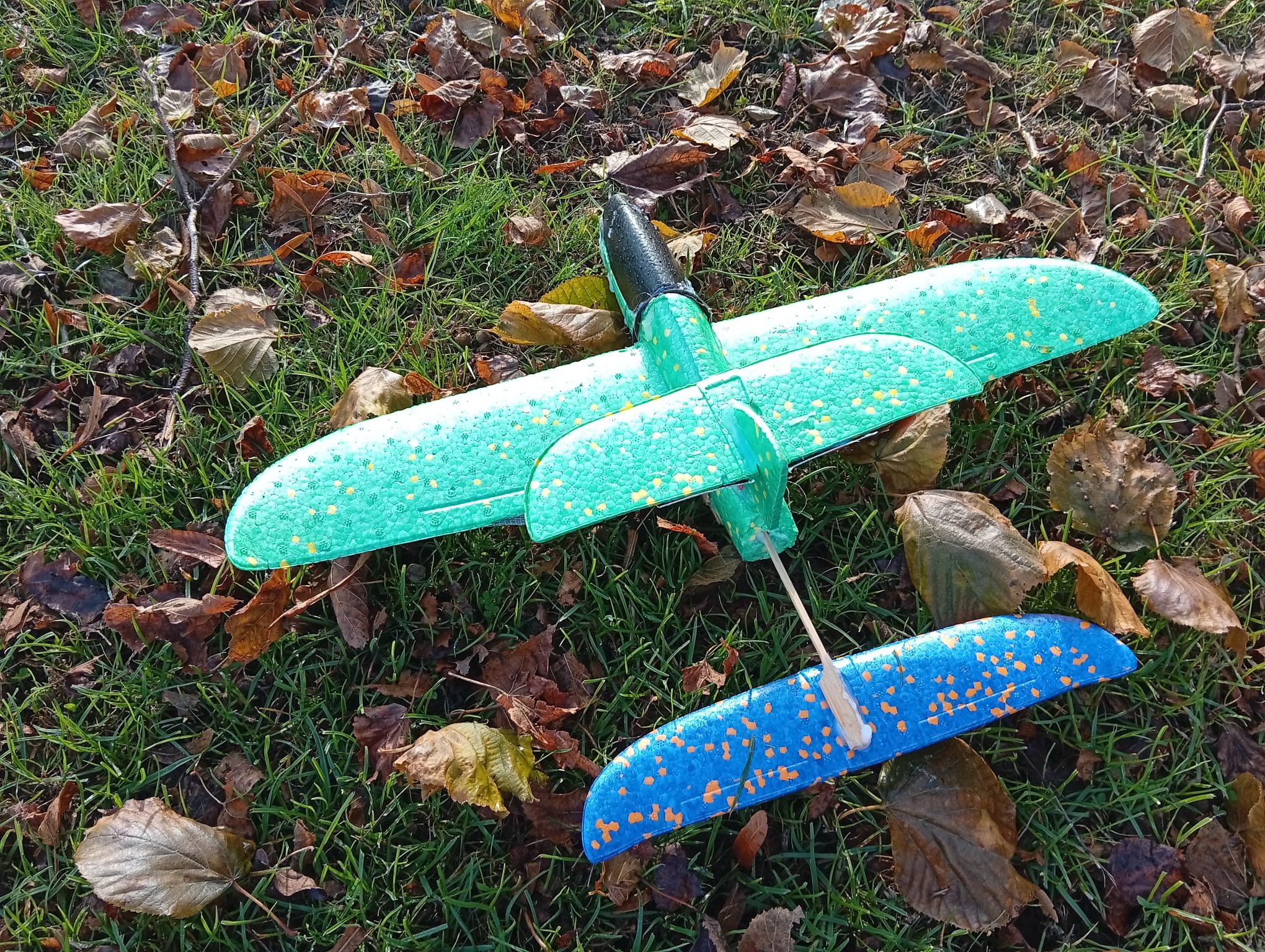
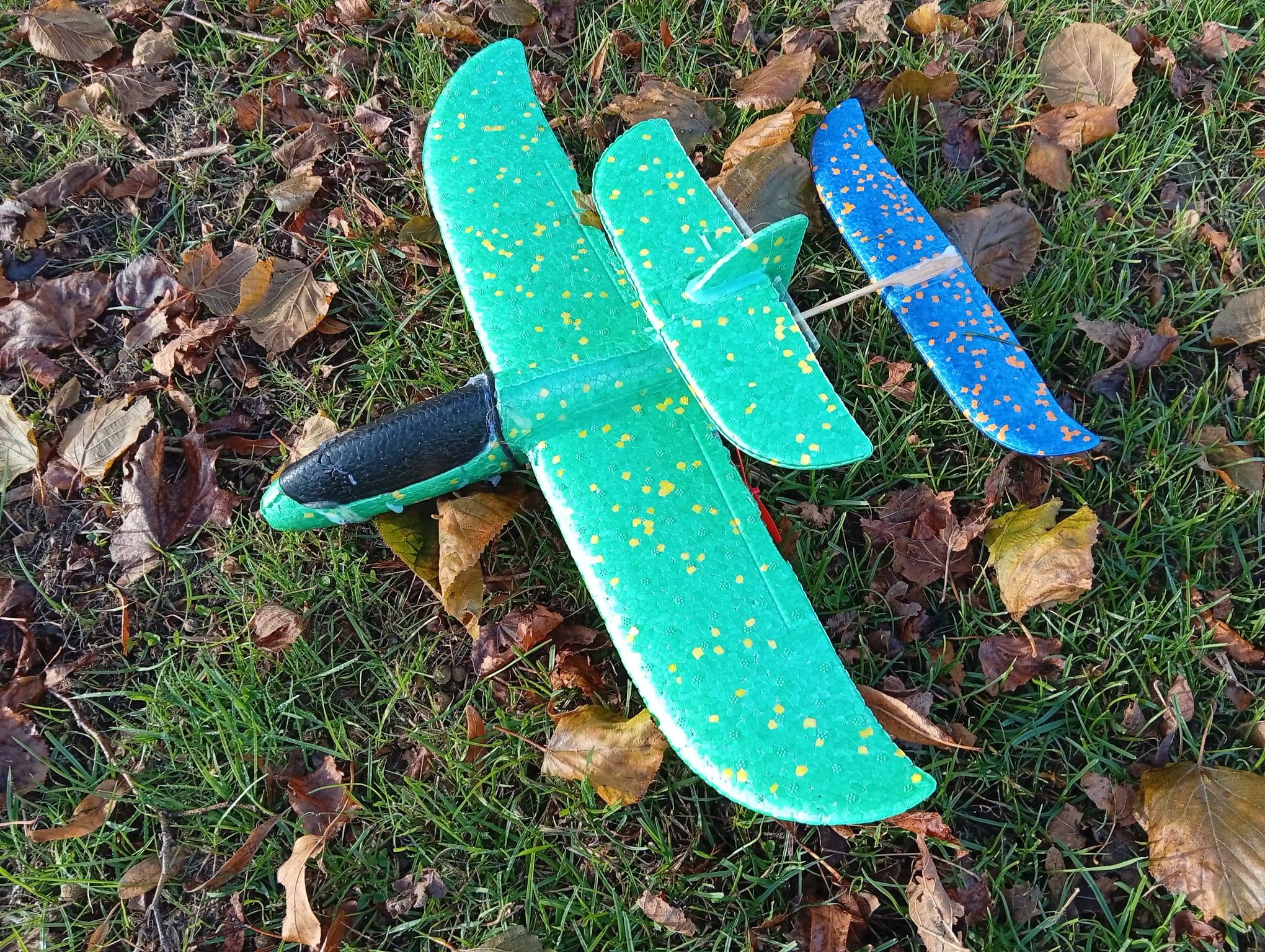
What about a V-Tail? We tried it, somehow it is much harder to fly (much less stable and also poor lift) as seen in this video:


