
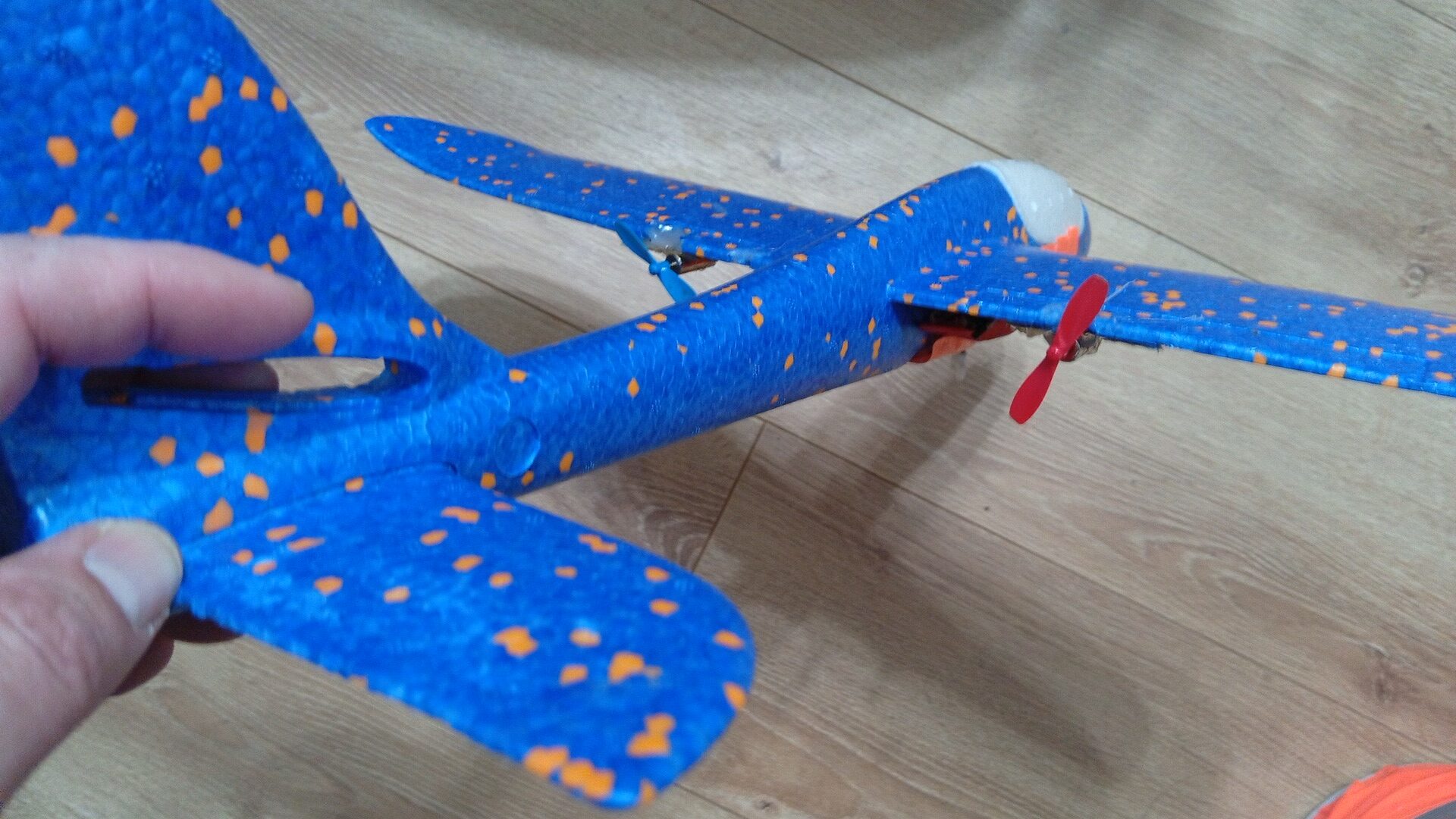
Using smaller props on a differential thrust RC glider can actually improve handling and reliability in several ways. The first major benefit is reduced yaw-induced roll coupling. With differential thrust, turning is achieved by speeding up one motor and slowing the other, which creates a yaw force. However, large props generate strong torque and thrust vectors that tend to roll the plane in the opposite direction of the turn. Smaller props produce less of this coupling effect, so the aircraft tracks more cleanly through turns and feels more stable, requiring less corrective input from the pilot. This stability is especially valuable on a lightweight foam glider with a high wing and no ailerons, where unwanted roll can quickly lead to a spiral dive.
Smaller props also put significantly less stress on the motors and electronic speed controllers. A smaller diameter or lower pitch prop draws less current, which keeps motor temperatures lower, reduces the risk of burning out the windings, and extends the life of the ESCs and battery. On a slow-flying glider, you rarely need huge thrust anyway, so the extra current draw from large props is simply wasted as heat and strain. Reduced current also means longer flight times from the same battery, which is a practical advantage for a plane designed to stay aloft.
Another benefit is improved throttle resolution and finer control. Differential thrust relies on small differences in motor RPM to steer, so having a setup that responds smoothly across the throttle range matters. Smaller props spool up faster and respond more crisply to throttle changes because they have less rotational inertia. This gives the pilot finer, more predictable control during gentle turns, which suits a glider that is meant to be flown slowly and smoothly.
Smaller props also reduce the risk of prop stall and cavitation at low airspeeds, which is common on gliders. Large props moving slowly through the air can stall their blades, producing erratic thrust and vibration that destabilises the plane. Smaller props maintain cleaner airflow and more consistent thrust at the low speeds typical of gliding, which contributes to overall stability.
Finally, smaller props offer better ground clearance and less drag. When the motors are shut off for gliding, a smaller prop creates less aerodynamic drag, allowing the plane to glide more efficiently and stay in the air longer. The reduced diameter also means less chance of the props striking the ground or snagging on grass during low passes or belly landings, which protects both the props and the motor mounts.


