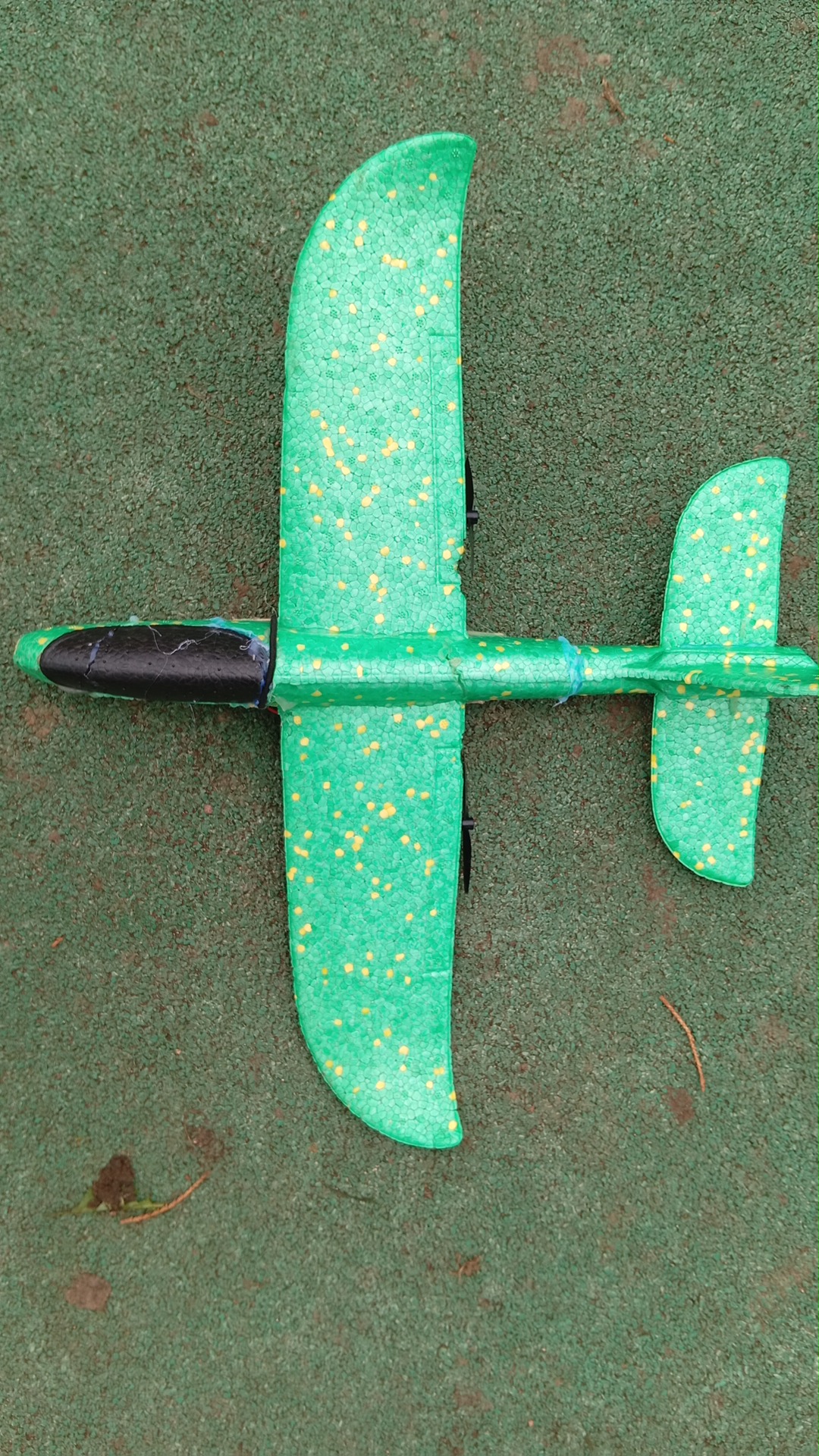
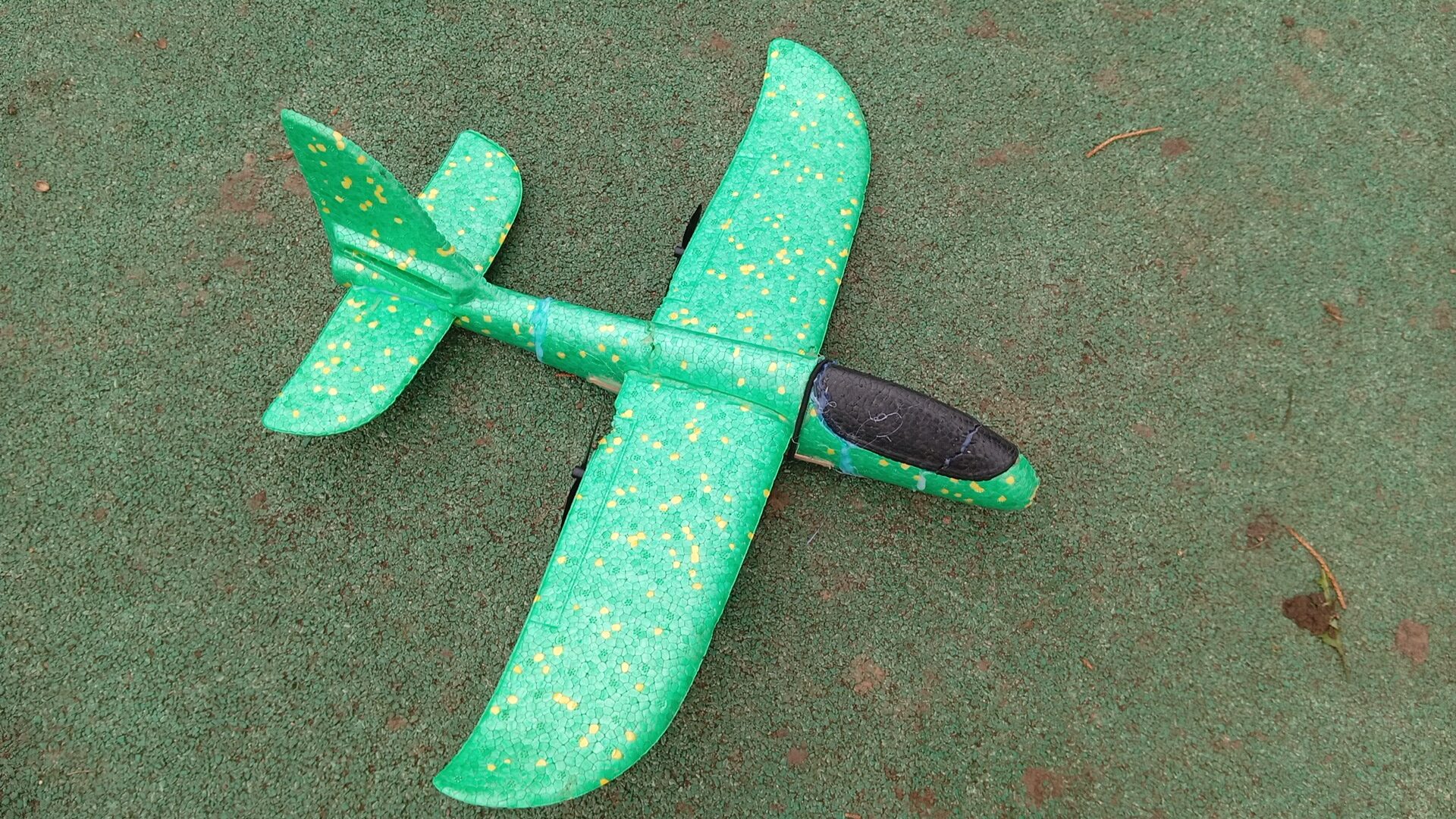
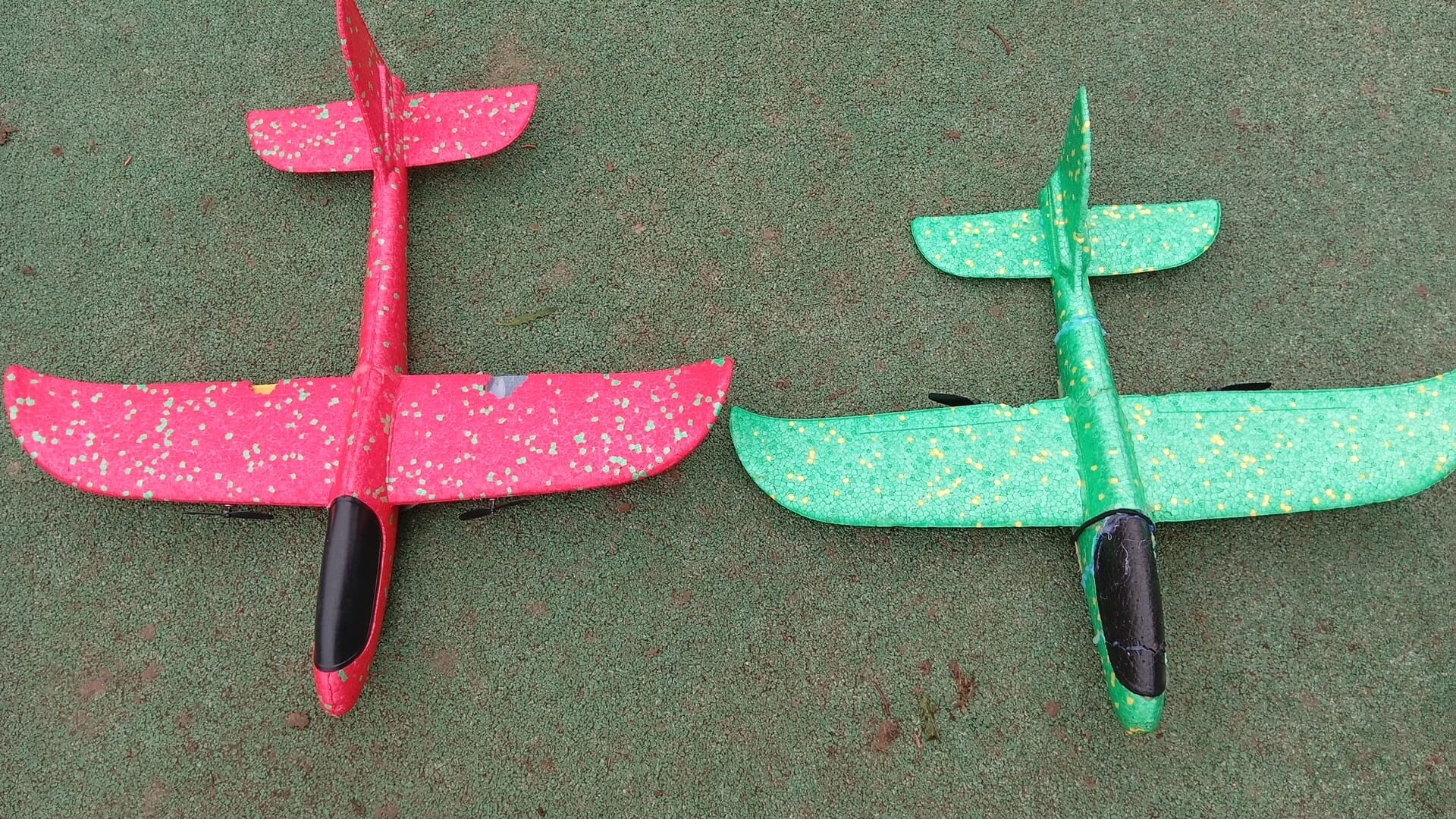
If you’ve ever spent an afternoon tinkering with foam gliders, you know that even minor modifications can completely alter how a plane handles the air. Looking at these two identical models—the classic red baseline and the modified green version—there’s a glaring difference: the green glider’s fuselage and tail boom have been significantly shortened. The nose remains largely the same, but the distance between the wing’s trailing edge and the horizontal stabilizer has been drastically reduced.
So, what does this actually do to the flight characteristics? The short answer is that it fundamentally changes the aircraft’s physics. Here is a breakdown of what happens when you chop the tail off a glider.
The most immediate consequence is a shift in the Center of Gravity (CG). By cutting down the tail boom, you’ve physically removed mass from behind the wing. This naturally pulls the physical CG forward toward the nose. More importantly, because the tail is now much closer to the wing, it has lost a massive amount of leverage. To keep the green glider stable, you will likely need to push the CG even further forward than you would on the red glider. If you don’t compensate by adding a little nose weight or shifting the wing slightly forward, the green glider is going to fly very erratically.
This brings us to the biggest issue: pitch stability. In aerodynamics, the distance between the wing and the tail is known as the “tail moment arm.” The long tail arm on the red glider gives the horizontal stabilizer plenty of leverage to counteract the wing’s tendency to pitch up or down. The green glider, with its stubby tail, has lost that leverage. As a result, it will be much twitchier in the air and highly sensitive to gusts. If the green glider hits a pocket of turbulence and pitches up, the short tail won’t have the authority to push the nose back down quickly. You can expect it to “porpoise”—bouncing up and down—much more easily than its red counterpart.
The same physics applies to yaw stability. The vertical fin on the shortened green glider has less leverage to keep the nose pointed straight into the wind. This makes the aircraft more prone to spiraling. If the green glider banks even slightly, the short tail is less effective at yawing the nose to counteract the turn, making it much easier to accidentally enter a tight, descending death spiral if the plane isn’t trimmed perfectly.
There is also the factor of rotational inertia. Because the mass is now concentrated closer to the nose, the green glider has less pitch inertia. It will react instantly to control inputs or bumps in the air. While this might make it feel “snappy,” it also makes it significantly harder to control smoothly. On top of that, moving the tail so close to the wing introduces aerodynamic interference. At high angles of attack—like when you throw it hard or when it approaches a stall—the wing creates a wake of turbulent, slow-moving air. Because the tail is practically sitting in that wake, it will lose effectiveness exactly when you need it most.
To make the green glider fly well, you have to compensate for the lost tail volume. First, you’ll need to dial in that forward CG, likely by adding a small amount of weight to the nose. You should also ensure the horizontal tail has a tiny bit of downward angle relative to the wing to help stabilize the short arm. If you have any scrap foam, enlarging the horizontal and vertical tail surfaces will also go a long way toward recovering the lost stability.
Ultimately, the red glider will remain a smooth, stable floater, while the green glider is destined to be a twitchy, slightly unstable dart that demands a perfectly tuned CG to fly correctly.