

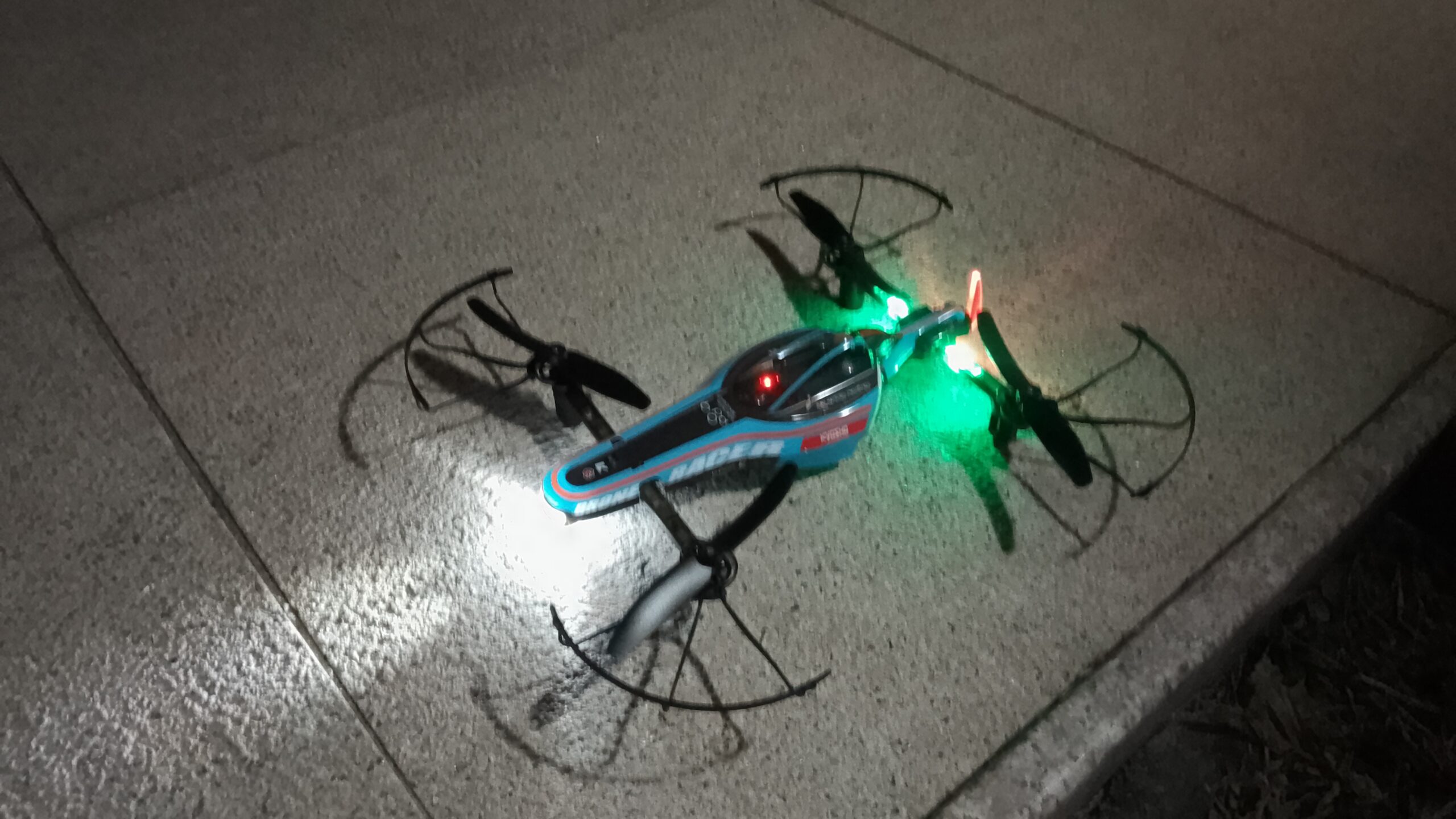
There is a moment every new drone pilot experiences. It usually happens about three seconds after takeoff. The little aircraft lifts off, hovers shakily for a heartbeat, and then, despite your best efforts, it either rockets toward the ceiling or plummets toward the floor. You find yourself wrestling with the throttle, overcorrecting, and eventually crashing in a heap of plastic and frustration.
Now imagine a different scenario. You push the throttle stick up, and the drone rises smoothly to about waist height. You let go of the stick, and it simply stays there, hovering perfectly still as if suspended by an invisible string. You can focus entirely on steering it left and right, forward and backward, without ever worrying about altitude.
This is the magic of the fixed-height drone racer, and it might just be the perfect way to enter the world of drone racing.
A fixed-height drone racer, sometimes called a drone with altitude hold, is exactly what it sounds like. These drones use a combination of sensors, usually a barometer that measures air pressure and a gyroscope that detects orientation, to maintain a consistent altitude automatically. You tell the drone how high you want it to be, and it handles the rest. The RadioLink F121, for example, features altitude holding through inertial navigation and automatic tuning, which means the drone constantly makes tiny adjustments to keep itself at the right height without any input from you. The Parrot Jumping Race Drone takes a different approach with its auto-balance mode, keeping itself perfectly balanced on its two wheels while you focus on steering. These are not toys, though they are often marketed that way. They are genuine training tools that strip away one of the hardest parts of learning to fly so you can focus on everything else.
Fixed-height drones change everything about the learning experience. Traditional drone racing is brutally difficult. The Drone Champions League, the premier racing organization in the world, offers four flight modes in their game, ranging from Arcade Mode with automatic altitude assistance all the way to Acro Mode, which is how the pros fly with complete control and no assistance whatsoever. There is a reason they have four modes. The gap between beginner and expert is vast. Fixed-height drones sit comfortably in that beginner space, and they offer genuine advantages that make the learning curve far less steep.
The first advantage is reduced cognitive load. When you are learning to fly, your brain is processing an overwhelming amount of information. Which way is the drone facing? Is it drifting left? Am I about to hit that wall? Adding constant altitude adjustments to this mental load is simply too much for most beginners. By automating the height, the drone frees up your brain to learn steering, orientation, and basic navigation. The second advantage is confidence. Crashing is discouraging. When every flight ends in a tumble, it is easy to decide that drone racing is not for you. Fixed-height drones drastically reduce crashes caused by altitude mistakes, which are among the most common errors new pilots make. You crash less, you have more fun, and you keep flying. The third advantage is skill progression. Many fixed-height drones offer multiple speed levels, allowing pilots to start slow and gradually increase the challenge as their skills improve. The Parrot Jumping Race Drone takes this further with multiple piloting modes including Jumper Mode for leaping over obstacles and Kicker Mode for pushing objects. You are not stuck in beginner mode forever. You grow with the drone.
The technology behind the magic is worth understanding. The ability to hold altitude comes from sensors that most pilots never think about. A barometer measures air pressure, which changes with altitude. Even a tiny change in height creates a measurable difference in pressure, and the flight controller uses this information to adjust motor speed automatically. The RadioLink F121 goes a step further with advanced algorithms that overcome what engineers call Euler angles singular value problems. In plain English, this means the drone can rise and descend at high speed even while holding altitude automatically. You get the best of both worlds, automatic stability when you want it and responsive performance when you need it. Six-axis gyroscopes are another common feature, providing high stability both indoors and outdoors. These sensors detect even the slightest tilt and compensate instantly, keeping the drone level even when you are not touching the controls.
If you are considering entering the world of drone racing, the fixed-height category offers several compelling options at different price points. The RadioLink F121 is a proper racing drone disguised as a trainer. It features a carbon fiber frame, an image transmission system for first-person view flying, and a control distance of up to two thousand meters when you are ready to venture outside. Flight time runs seven to ten minutes, which is respectable for a drone of its size. For something smaller and more affordable, the Jaycar racing drone weighs only twenty-four grams and fits in the palm of your hand. It offers three speed levels and a six-axis gyroscope for stability, making it ideal for indoor practice. The Parrot Jumping Race Drone takes a completely different approach. Instead of hovering, it balances on two large tires and can jump up to seventy-five centimeters in height. It reaches speeds of eight miles per hour and offers both open wheel mode for stability and retracted wheel mode for agility through tight spaces. This is a fantastic option if you want something that feels more like a ground vehicle but still offers the perspective of drone flight.
At some point, the training wheels have to come off. The fixed-height drone that served you so well as a beginner will eventually start to feel limiting. When that happens, you will know you are ready for the next step. The progression typically leads to acro mode, or acrobatic mode, where the flight controller provides no assistance whatsoever. This is how the professionals fly, and it offers complete freedom to perform flips, rolls, and high-speed maneuvers. The drones that win competitions, flying at high altitudes and reaching speeds close to two hundred kilometers per hour, are flown in acro mode by expert pilots. But here is the encouraging part. The skills you built on a fixed-height drone, the understanding of orientation, the ability to navigate through tight spaces, the muscle memory for steering, all of it transfers directly to more advanced flying. You are not wasting time on a training drone. You are building foundations.
Fixed-height drone racers occupy a special place in the hobby. They are not the fastest drones. They will not win any competitions. But they serve a purpose that is arguably more important than raw performance. They welcome newcomers into a challenging and technical hobby and give them a path to success. For the person who has never flown before, who looks at videos of professional drone races with a mixture of awe and intimidation, the fixed-height racer is the answer. It says, you can do this. It says, start here. It says, everyone was a beginner once.
The throttle stick will still move. The drone will still respond. But that constant battle to stay at the right height, that exhausting wrestling match with gravity, simply disappears. What remains is the pure joy of flight, the thrill of navigation, and the quiet satisfaction of guiding a machine through space with nothing but your thumbs and your wits. And when you finally switch off the altitude hold and fly free, you will realize that the training wheels were never a limitation. They were a gift.


