
Every RC pilot remembers the first time they built a plane and faced this decision. Do you mount the motor on the nose, pulling the aircraft through the sky like a tractor? Or do you bolt it to the tail, pushing from behind like a pylon racer? The answer is not as simple as you might think, and getting it wrong can turn a promising design into a handful of misery. Let me walk you through the differences, the trade-offs, and the moments when each configuration truly shines.
The Nose-Mounted Puller: The Classic for a Reason
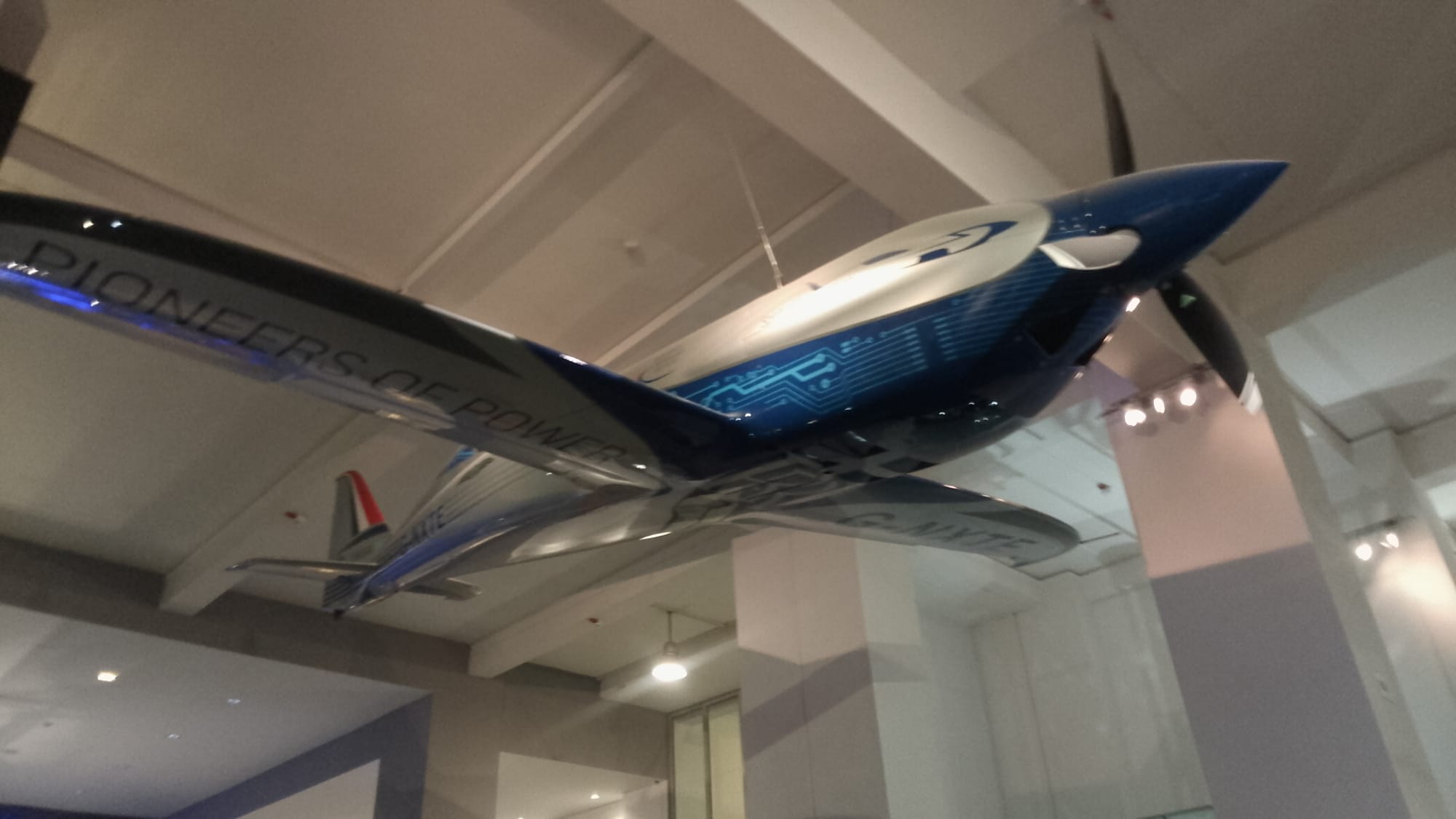
When you look at the vast majority of RC planes—from the humble trainer to the aerobatic Extra 300—you see the motor at the front. This is the puller configuration, and it has dominated aviation for over a century because it simply works. The propeller pulls the aircraft through the air, with the fuselage and wings following behind like a trailer behind a truck.
The advantages start with stability. When the propeller is pulling from the front, it creates a steady stream of air that flows directly over the fuselage and wings before reaching the tail surfaces. This means your elevator and rudder receive clean, energized air even when the aircraft is stationary or moving slowly. For a trainer aircraft or a beginner pilot, this is invaluable. You get positive control authority during takeoff, climb, and slow flight. The nose-mounted motor also places the heaviest component forward, which naturally shifts the center of gravity forward. A forward CG is inherently stable. The aircraft wants to fly nose-first, like a dart. If you let go of the sticks, the nose drops, the plane accelerates, and it tends to recover from stalls more predictably.
Cooling is another major win. The propeller acts as a fan, blasting air directly over the motor, the electronic speed controller, and the battery. You can simply cut an air intake in the cowling, and the prop does the rest. On a hot summer day, a well-designed puller will keep its electronics happy without any additional fuss.
There are downsides, of course. The propeller and motor are the most vulnerable parts of the aircraft, and in a puller configuration, they are mounted right on the nose—the very first thing to hit the ground in a crash. Nose-first landings, which happen to every RC pilot eventually, tend to snap propellers, bend motor shafts, and crumple motor mounts. The propeller also sits directly in front of the wing, which means the turbulent air from the prop washes over the wing roots. For most aircraft, this is not a problem, but for very high-performance designs, it can cause unpredictable stall behavior at high angles of attack.
The Tail-Mounted Pusher: The Rebel with a Cause
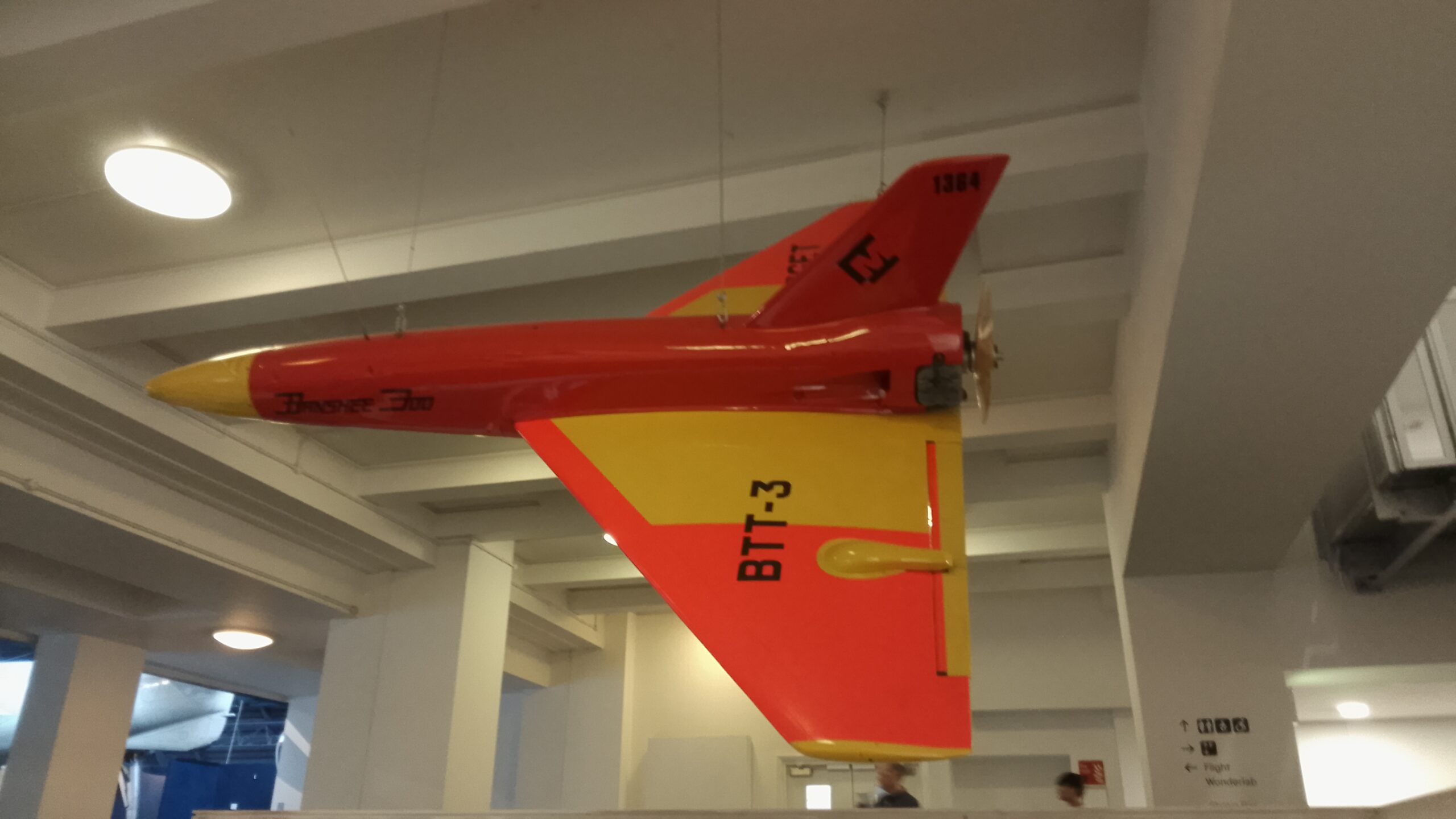
Now imagine flipping everything around. The motor bolts to the back of the fuselage, or sometimes to a pylon above the wing, with the propeller facing backward. This is the pusher configuration, and it is rare for a reason. It is also brilliant for specific applications.
The most obvious advantage is a clear nose. With no propeller spinning at the front, you can mount cameras, sensors, or payloads on the nose without worrying about prop arcs or vibration. This is why pushers dominate the world of FPV (First Person View) drones and reconnaissance aircraft. You can point a camera straight ahead and see nothing but sky and ground—no blurry propeller slicing through your shot.
The pusher configuration also protects the propeller. On a tail-mounted pusher, the propeller sits behind the wing and fuselage, safely out of the way of nose-first impacts. You can belly-land a pusher aircraft on grass without breaking a prop because the motor and prop are tucked up at the back. This makes pushers excellent for flying wings, combat aircraft, and any design that expects rough landings.
There is an aerodynamic benefit as well. The wing sees clean, undisturbed air because there is no propeller wash flowing over it. This can improve lift and reduce drag, particularly at higher speeds. Some pusher designs, like the iconic Long-EZ homebuilt aircraft, achieve remarkable efficiency precisely because the prop pushes clean air that has already been smoothed by the fuselage.
But the downsides are serious, and they catch many pilots off guard. The first is cooling. In a pusher, the propeller is behind the motor, so the airflow over the motor is actually reversed. Air does not ram into the motor. It gets sucked past it. You need carefully designed ducting, scoops, or even a separate cooling fan to keep your electronics from overheating. Many a pusher has come down with a fried speed controller because the pilot assumed it would cool like a puller.
The stability problems are even more significant. Placing the motor at the tail moves the heaviest component rearward, which tends to shift the center of gravity back. A rearward CG makes the aircraft unstable. It becomes pitch-sensitive, twitchy, and prone to tip stalls. To compensate, you often need to extend the nose forward with ballast, which adds weight and reduces efficiency, or redesign the wing placement entirely. Some pushers avoid this by mounting the motor on a pylon above the wing, placing the thrust line closer to the center of mass.
Then there is the propeller efficiency problem. In a pusher, the propeller operates in the wake of the fuselage and wing. That air is already turbulent, slowed down, and disturbed. The propeller blades are constantly chewing through disturbed air, which reduces thrust and increases noise. Depending on the airframe design, a pusher propeller can be ten to twenty percent less efficient than the same propeller mounted on the nose.
The Single Most Dangerous Pusher Issue
There is one more problem that deserves its own paragraph because it has bitten every pusher pilot at least once. The propeller is behind the center of gravity. That means when you apply throttle, the thrust line is pushing from behind the balance point. In a puller, throttle increase lifts the nose because the thrust is ahead of the CG. In a pusher, throttle increase tends to push the nose down. This is called pitch coupling, and it is deeply counterintuitive. Your first pusher flight will involve a moment of panic when you add power for takeoff and the nose drives toward the ground instead of rising. You must learn to hold up elevator as you advance the throttle, then ease off as the speed builds. Many pusher designs also mount the motor at an angle, pointing slightly upward, to counteract this effect.
The Golden Compromise: Twin Boom Pushers
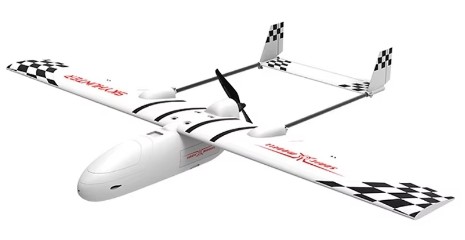
If you look at some of the most successful pusher designs, from the legendary Predator drone to the iconic Piaggio Avanti, you will notice a pattern. They use twin booms—two long tubes extending from the wings back to a tail assembly, with the propeller mounted between them. This arrangement moves the propeller clear of the fuselage, giving it clean air and putting the thrust line closer to the centerline. It also allows the motor to be mounted on a pylon or between the booms, simplifying cooling and CG management. For the RC pilot, a twin-boom pusher like the Skyhunter or the Bixler is often the sweet spot: you get the clear nose and protected propeller of a pusher without the worst of the stability and efficiency penalties.
Putting It All Together
So which one should you choose? The honest answer depends entirely on what you want to do.
If you are learning to fly, buy a nose-mounted puller. The stability, predictable handling, and cooling simplicity will save you from countless frustrations. If you are building a scale model of a Piper Cub or a Spitfire, you mount the motor on the nose because that is where it belongs. If you are flying aerobatics, you want a puller because the prop wash over the tail surfaces gives you crisp, immediate control authority during hovering and high-alpha maneuvers.
If you are flying FPV or carrying a camera payload, consider a pusher. The clear forward view is transformative, and the protected propeller means you can land on rough fields without carrying a bag of spare props. If you are building a flying wing, a pusher is almost mandatory—there is no nose to mount a motor on. And if you are building a scale model of a drone or a modern pusher aircraft, you have no choice but to master the quirks of rear-mounted propulsion.
For everyone else, the twin-boom pusher is the compromise worth exploring. You get eighty percent of the benefit of a true pusher with half the headaches.