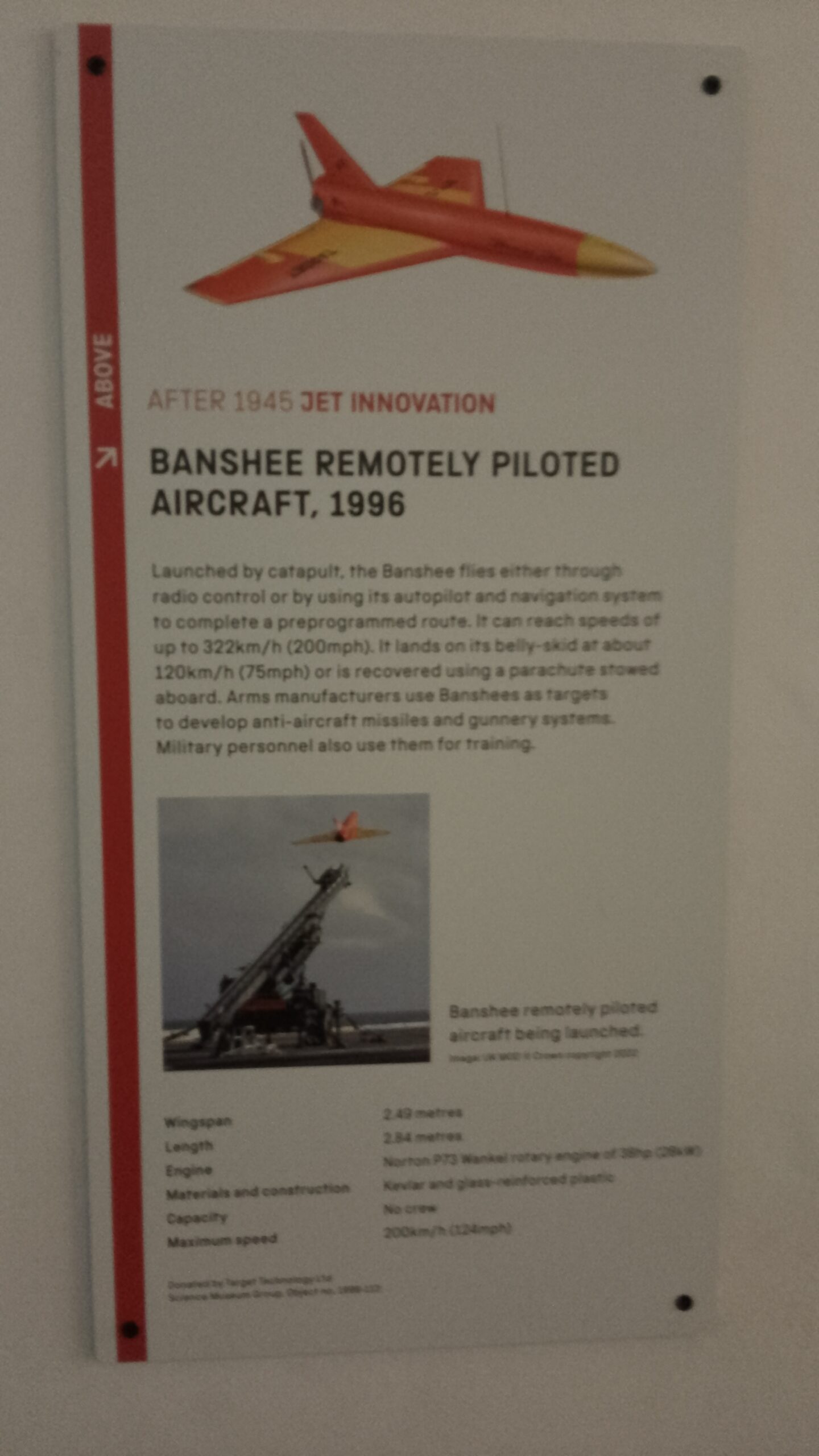
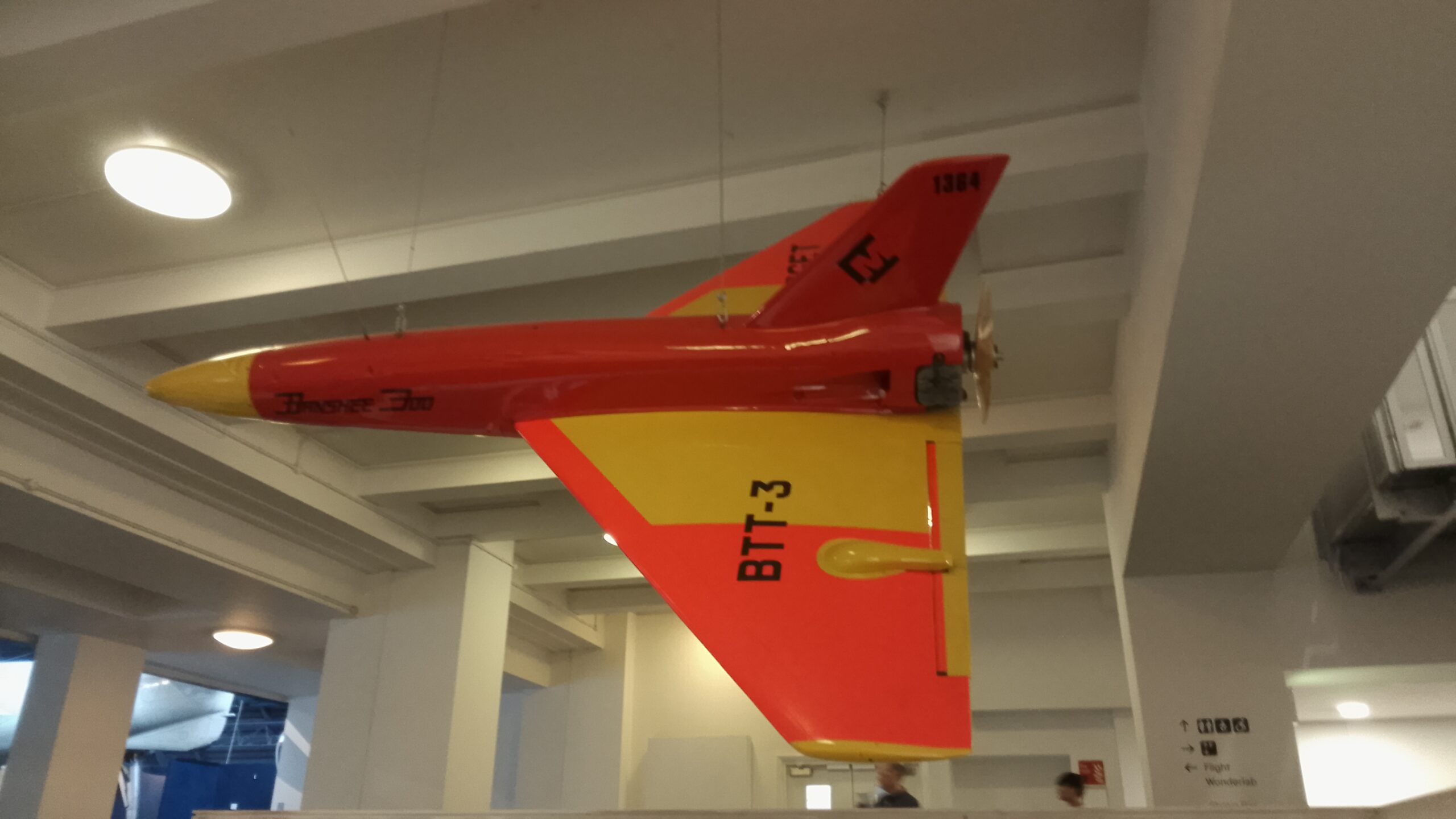
When you hear the name “Banshee,” your mind might jump to the mythological Irish spirit whose wail foretells death, or perhaps the Marvel mutant with the sonic scream. But in 1996, a very different Banshee was taking to the skies—and it screamed just as loudly, just in a different way. I’m talking about the Target Technology Banshee Series 300, a remotely piloted aircraft that entered the Science Museum Group Collection in 1996 as a landmark piece of British drone engineering. If you’ve ever wondered what a military-grade drone looked like before the era of Predators and Reapers, the Banshee is your answer.
What Was the Banshee?
The Banshee wasn’t a toy and it wasn’t a hobbyist’s weekend project. This was a purpose-built aerial target drone—a remote-controlled aircraft designed to be shot at. Its job was to simulate enemy aircraft or missiles so that military forces could train their air defense systems, including radar operators and missile crews, without putting real pilots at risk. Think of it as a high-tech clay pigeon, but instead of a shotgun, you are training with surface-to-air missiles and radar-guided artillery. And unlike a clay pigeon, the Banshee could survive to fly another day. The Series 300 model from 1996 was built in Ashford, Kent, by Target Technology Limited, a company that had been perfecting lightweight drone engines since the early 1980s. By 1996, the Banshee had already proven itself as a workhorse for militaries around the world.
A Delta Wing Built for Speed
The engineering behind the Banshee is genuinely fascinating. The airframe was built primarily from composite materials like Kevlar and glass-reinforced plastic, making it tough enough to take a hit but light enough to fly fast. Its most distinctive feature was the tailless delta wing planform—no tail fins, no extra surfaces, just a sleek, triangular wing that cut through the air like a knife. This design wasn’t just for looks; it gave the Banshee excellent high-speed stability and maneuverability.
Powering this screamer was a 26 horsepower, 342cc two-cylinder two-stroke engine from Normalair-Garrett, configured as a pusher propeller mounted at the rear. Two-stroke is the same engine technology as a chainsaw or a dirt bike—lightweight, simple, and loud. And when I say loud, I mean it. The engine scream is likely where the drone got its name. The performance was genuinely impressive: the Banshee could fly anywhere between 35 knots and 185 knots, which is roughly 40 to 213 miles per hour. It had an endurance of one to three hours in the air, meaning it could loiter, dash, weave, and simulate everything from a slow-moving helicopter to a screaming jet fighter.
Here is the clever part. The Banshee wasn’t disposable, though some were depending on the training scenario. Later versions, including the Series 300, were designed for recovery. A parachute system would deploy, bringing the drone back to earth safely so it could be refueled, repaired, and sent up again. That is cost-effective training.
The Science Museum Connection
So why does the Science Museum in London have one? Because the Banshee Series 300, accessioned in 1996, represents a significant moment in the history of unmanned aerial vehicles. The United Kingdom has been a quiet pioneer in drone technology for decades, and the Banshee is a beautiful example of practical, rugged, “get-the-job-done” British engineering. The museum’s example is estimated to weigh around 39 kilograms—heavier than some models, likely representing a fully equipped operational unit. It sits in the Aeronautics collection, a physical reminder that the drone age didn’t start with the Reaper or the Global Hawk. It started with things like the Banshee: screaming, darting, and dodging missiles so that real pilots didn’t have to.
The Legacy: Still Flying Today
Here is the wildest part about the Banshee: it is still in service. The design has been continuously updated and is now manufactured by QinetiQ, after Meggitt Target Systems was sold in 2016. Later models swapped the two-stroke for Norton P73 Wankel rotary engines—the same engine design as Mazda’s RX-7 sports car—and even jet-powered versions appeared. The latest variant, the Banshee Jet 80+, launched in 2021, is still being used to train air defense crews worldwide. Over 8,000 Banshees have been built across all variants. That is an astonishing number for a target drone. It tells you that when you build something simple, robust, and effective, it never really goes out of style.
The Takeaway
The Target Technology Banshee Series 300 from 1996 isn’t flashy. It doesn’t have stealth capabilities or Hellfire missiles. It is not a weapon itself—it is a teacher. It taught soldiers how to lead a target, taught radar operators how to track a fast mover, and taught missile crews what a real intercept looked like. By taking those lessons in a safe, repeatable environment, it saved lives. So the next time you are at the Science Museum in London, take a moment to find the Banshee. It might not look like much—just a beige delta wing with a propeller on the back. But that little drone screamed across the skies of the 1990s so that the pilots of today could come home.