
If you’ve been into RC on-road cars for a while, you’ve probably heard both the Group C chassis and the F103 mentioned in the same breath. They share DNA, they share a time period, and in many ways, the F103 feels like the natural evolution of what the Group C started. But what’s really the difference, and why do hobbyists still love both? Let’s dig in.
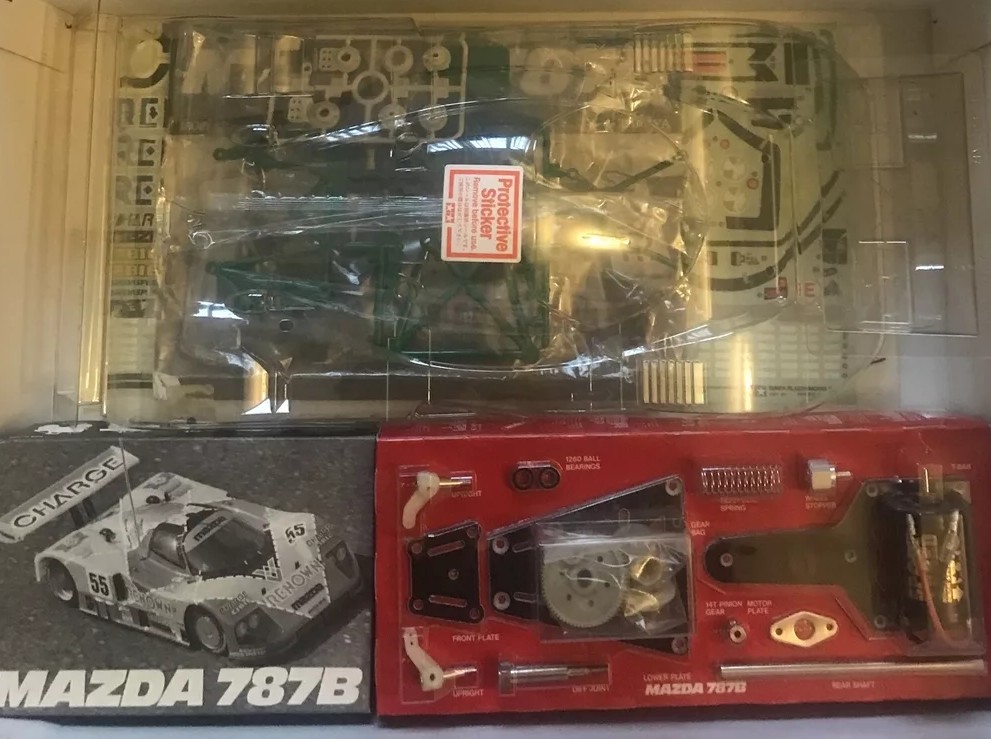
The Group C – Born for Endurance Style
The Tamiya Group C chassis was all about capturing the sleek, low-slung prototype racers of the late ’80s and early ’90s. It was super simple: a flat plate chassis, direct drive rear axle, and a basic kingpin front end. Lightweight, efficient, and blisteringly fast on smooth surfaces.
But with that speed came quirks. Group C cars demanded silky-smooth asphalt or carpet. Hit some bumps or debris, and suddenly you were fighting for control. The simplicity was part of the charm, but also the limitation.
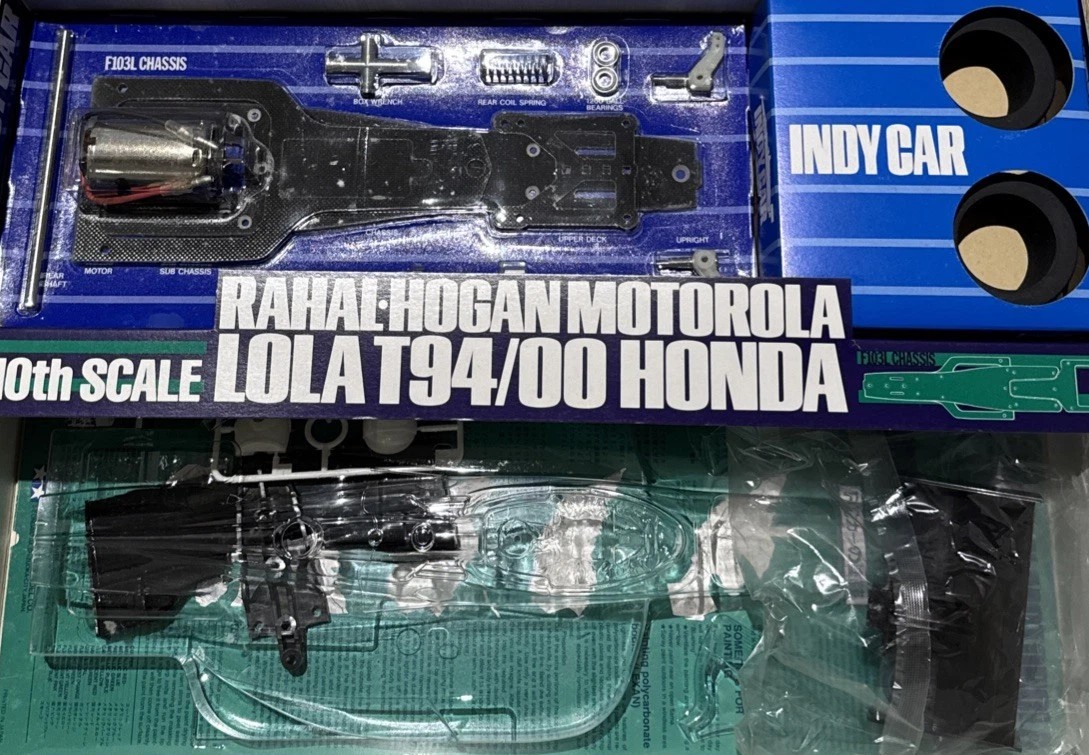
Enter the F103 – Refining the Formula
Tamiya introduced the F103 in 1993, and at first glance, it looked like a close cousin to the Group C. Another flat plate chassis, another direct drive axle, another kingpin front suspension. But the devil was in the details.
-
The rear pod of the F103 was beefier and more adjustable, allowing for better weight distribution and suspension tuning.
-
The T-bar suspension system added more flex and compliance compared to the Group C’s very rigid layout. This meant the F103 could handle rougher surfaces with more confidence.
-
The F103 was primarily designed to carry Formula 1 shells, which were narrower and taller compared to the wide, flat Group C bodies. This slightly changed the handling dynamics but opened up a whole new world of scale realism for F1 fans.
In short, the F103 took the raw speed of the Group C and added more control, refinement, and versatility.
Driving Feel – Slot Car vs. Sculpted Control
If you’ve driven both, you know the difference immediately.
-
Group C cars feel like slot cars without rails—lightning quick and razor sharp, but skittish on anything less than pristine track conditions. When dialed in, though, they’re breathtakingly fast and addictive.
-
F103 cars are more forgiving, with smoother suspension movement and better balance. They still feel direct and fast, but you don’t need to baby them quite as much. They give you confidence to push harder lap after lap.
Legacy and Collectability
Both chassis have earned their place in RC history. The Group C is remembered as that gorgeous, specialized machine—a bit niche, but beloved by those who appreciate its purity. The F103, on the other hand, became one of Tamiya’s most enduring on-road platforms. It was raced, re-released, and refined in countless variations, and even today it’s seen as a classic.
For collectors and hobbyists, the Group C represents a moment in time—Le Mans glory, sleek prototype bodies, and pure efficiency. The F103 feels like the bridge between that raw era and the more advanced, adaptable pan car racing we know today.
Final Thoughts
If the Group C is a piece of art—simple, beautiful, a little temperamental—then the F103 is the evolution that made the art practical. Both have their place, and both deserve a spot in any serious Tamiya fan’s collection.