If you’ve been around RC long enough, the Tamiya Group C chassis holds a special kind of nostalgia. It came out in the early ’90s, when Tamiya was pushing out some of their most iconic on-road cars, and it captured the spirit of real-world endurance racing at the time. Group C racing was huge in the late ’80s and early ’90s—long, low, and aerodynamic prototypes tearing down Le Mans straights at insane speeds. Tamiya wanted to bring that feel to RC, and the Group C chassis was their answer.
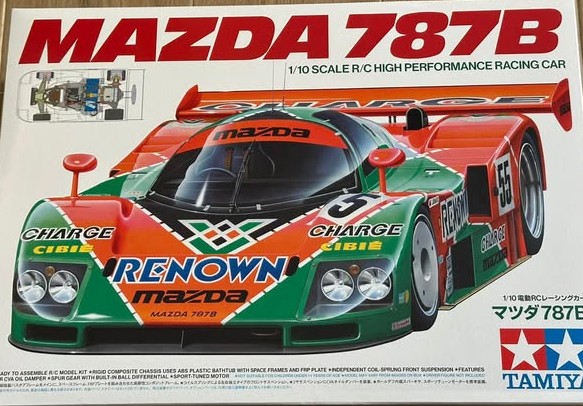
The Design
The chassis itself was simple but effective. It was a 2WD, rear-wheel drive pan car layout—flat plate chassis, direct drive to the rear axle, and a kingpin-style front suspension. Compared to the touring cars that came later, it was feather-light and low-slung, which made it ridiculously quick on smooth asphalt or a proper indoor track.
At the back, it ran a solid rear axle with a differential, driven directly by the motor. The spur gear was right there on the axle—no complicated gearboxes, no extra drivetrain losses. This directness made it incredibly efficient, but it also meant you needed smooth driving and good tires, because there wasn’t much forgiveness if you got it wrong.
The front end was very minimal, just a simple suspension setup with small coil springs on the kingpins. It wasn’t about plush handling—it was about precision. You pointed it, and it darted where you wanted, assuming the surface was smooth enough.
The Look
Where the chassis really shined was under those legendary Group C bodies. Tamiya released shells like the Sauber Mercedes C11, the Nissan R91CP, and the Jaguar XJR-12. These weren’t just “toy” shells—they were beautifully proportioned, with scale details that made them look like mini versions of the real endurance racers. On the track, low to the ground, they looked stunning.
How It Drove
Driving a Group C car is an experience. On a clean surface, they’re blazingly fast and super responsive—like a slot car without rails. But the flip side is they’re not forgiving. Bumps, dust, or rough asphalt can unsettle them in an instant. They’re happiest on carpet or smooth tarmac, where you can really open them up.
The Legacy
The Group C chassis eventually gave way to more versatile touring car platforms like the TA-01 and beyond, but it still has a cult following. Tamiya even re-released some of the classics, and you’ll still see people restoring and running them today, often with modern motors and electronics that push performance way beyond what was possible in the ’90s.
For hobbyists, the Group C cars represent a golden era. They’re simple, beautiful, and brutally fast when set up right. They’re not the most practical RC cars for every surface, but as a piece of RC history—and a joy to look at—they’re something special.