One of the things I love about this hobby is how deep you can go with upgrades. You start off just bashing around with a box-stock RC, and before you know it, you’re swapping in hop-ups, debating gear ratios, and eyeing that carbon fiber chassis plate like it’s a work of art. Fiber parts—whether it’s carbon, graphite, or glass-filled—have this reputation for being “pro level.” But like most things in RC, there are trade-offs.
The Pros
First off, weight savings. Fiber parts are generally lighter than their aluminum or plastic counterparts, which means snappier acceleration and more agile handling. On the track, that translates to quicker transitions in corners and less strain on the drivetrain. It’s not just about speed—it makes the whole car feel more “alive.”
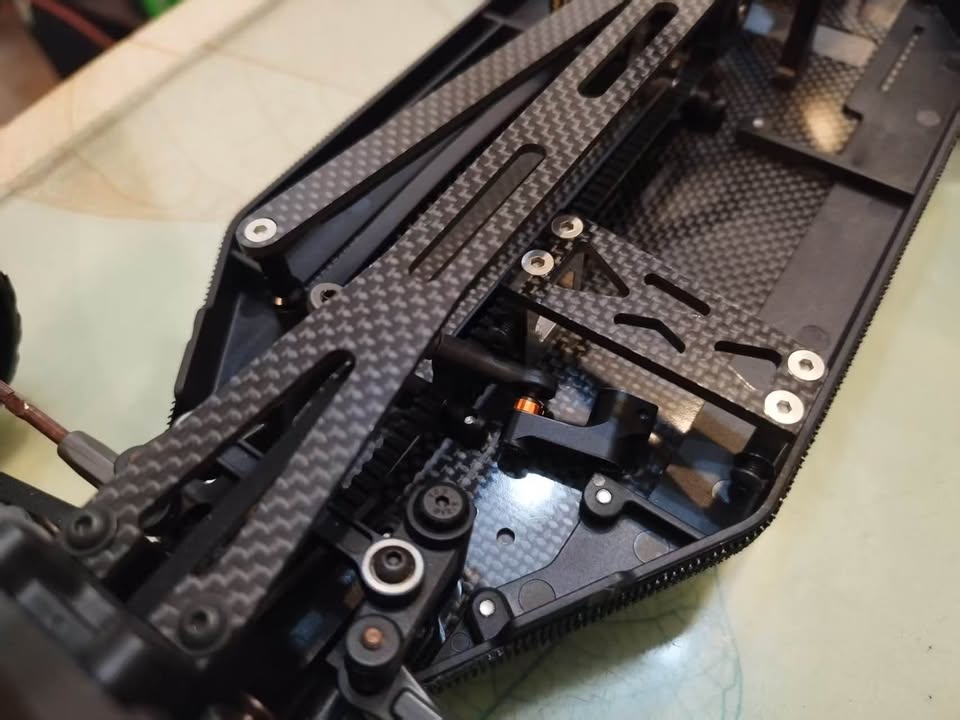
Then there’s stiffness. A carbon fiber chassis or graphite shock tower resists flex far better than most plastics. That rigidity means more predictable handling, especially in high-grip situations. When you’re racing, having that consistency makes a huge difference—it’s the difference between the car sliding out mid-corner and holding the line cleanly.
And, let’s be honest, fiber parts just look amazing. A carbon chassis or a graphite tower has that woven pattern that screams high performance. Even if you’re not chasing lap times, there’s a certain pride in showing off a rig with fiber upgrades—like putting a spoiler on your real car, except this one actually does something.
The Cons
Now, the flip side: durability isn’t always on your side. Fiber parts, especially carbon, don’t bend—they shatter. If you’re a basher and you clip a curb at full throttle, that carbon shock tower can snap clean in two, where a plastic one would just flex and survive. Same goes for side impacts on a carbon chassis.
There’s also the cost factor. Fiber parts aren’t cheap. A full carbon chassis can cost nearly as much as an entry-level RC car. And when you break them—and you will eventually—it hurts your wallet way more than replacing a stock plastic part.
Another thing hobbyists don’t always talk about is tuning flexibility. Sometimes a bit of chassis flex is actually good—it gives the car more forgiveness on bumpy tracks and can improve grip. Go full carbon, and the car might feel too stiff, especially if you’re not racing on perfectly groomed surfaces. In that sense, fiber can sometimes be “too much” for casual driving.
So, Worth It?
From my perspective, fiber parts shine the brightest on the track, where you’re looking for every ounce of performance and precision. They’re a fantastic upgrade for racers who want rigidity, reduced weight, and that pro-level feel. But for bashers or casual weekend hobbyists, fiber can be a mixed bag—awesome to look at, but painful when you crash and crack an expensive part.
For me, I like a balance: carbon shock towers and braces where rigidity helps, but I’ll stick with plastic for arms and bumpers to save myself the heartbreak (and cash) of a catastrophic crash.