
In the late 1980s and early 1990s, 4-wheel steering was a major marketing craze. Brands like Kyosho had flagship models with “Crab Steering” or “4WS.” Today, it’s a true niche feature. Here’s why that golden age of 4WS faded.
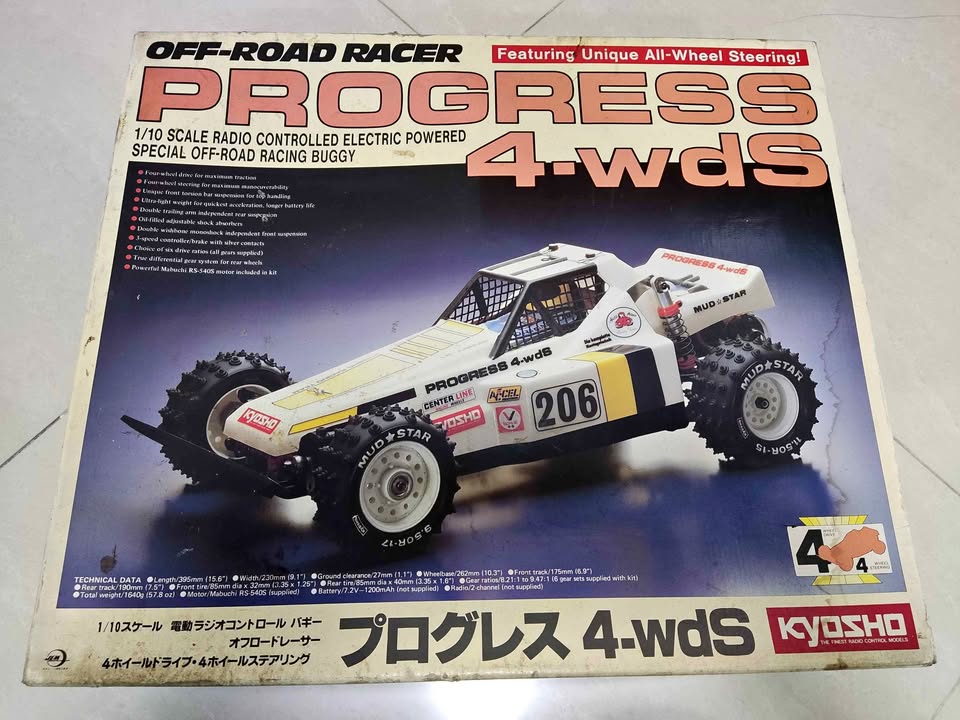
The 1990s: The “Wow Factor” Era
Back then, RC was heavily influenced by real-world automotive concepts and the “cool factor.” 4-wheel steering was emerging in production cars (like the Honda Prelude, Mitsubishi 3000GT) and seemed like the pinnacle of high-tech control.
Why it was exciting:
-
Tight Maneuvering: The party trick. A 4WS car could turn in its own length, spin like a top, or drive diagonally (“crab walk”). It was incredible for showmanship and tight spaces.
-
High-Speed Stability: In theory, in a high-speed corner, rear wheels turning slightly in the same direction as the fronts could make the car more stable.
-
The Novelty: It was simply cool. It made an RC car feel incredibly advanced and unique.
The Reality: Why 4WS Faded from the Mainstream
-
Complexity & Cost: It doubled the mechanical parts. You needed a second servo, extra linkages, a complex mixing system in the transmitter or a separate electronic mixer, and more things to break and adjust. For the average hobbyist, it was a headache.
-
The Racing Reality: It Was Often Slower.
This is the biggest reason. On a racetrack, consistency and predictability are everything.-
Unpredictable Handling: 4WS introduced extra variables. The car’s behavior changed dramatically at different speeds and steering angles. What felt nimble at low speed could make the car “twitchy” or unstable at race pace.
-
Added Weight & Drag: The extra servo and mechanism added weight and internal friction (parasitic drag) in the drivetrain, robbing power and acceleration.
-
Tuning Nightmare: Finding the optimal rear steering angle (both in direction and amount) for each track condition was incredibly complex. A standard 2-wheel-steer car was simply easier and faster to set up consistently.
-
-
The Electronics Revolution (That Made It Obsolete):
Ironically, the technology that could have saved 4WS ended up providing a better solution: Advanced Gyros (Stability Control). A gyro sensor detects rear-end rotation (yaw) and automatically applies tiny steering corrections to keep the car straight or control a slide. It delivers the high-speed stability benefit that 4WS promised, but does it more effectively, with fewer moving parts, and without the low-speed weirdness. For most racers and bashers, a simple gyro is a cheaper, lighter, and more effective stability aid. -
Shift in Priorities: Scale Realism vs. Extreme Performance
The mainstream market split, and neither major segment truly needed 4WS.-
Racers: Wanted the simplest, lightest, most predictable platform. 4WS was the opposite.
-
Bashers & Scalers: While scale crawlers could use 4WS for ultra-tight turning…
-
Dig Units Became the Solution: For extreme rock crawlers, the popular solution for tight turns became the “dig” function—a remote locker that disconnects the rear driveshaft, letting the rear wheels drag while the fronts pull the truck around. It’s simpler and more reliable than a full 4WS system.
-
-
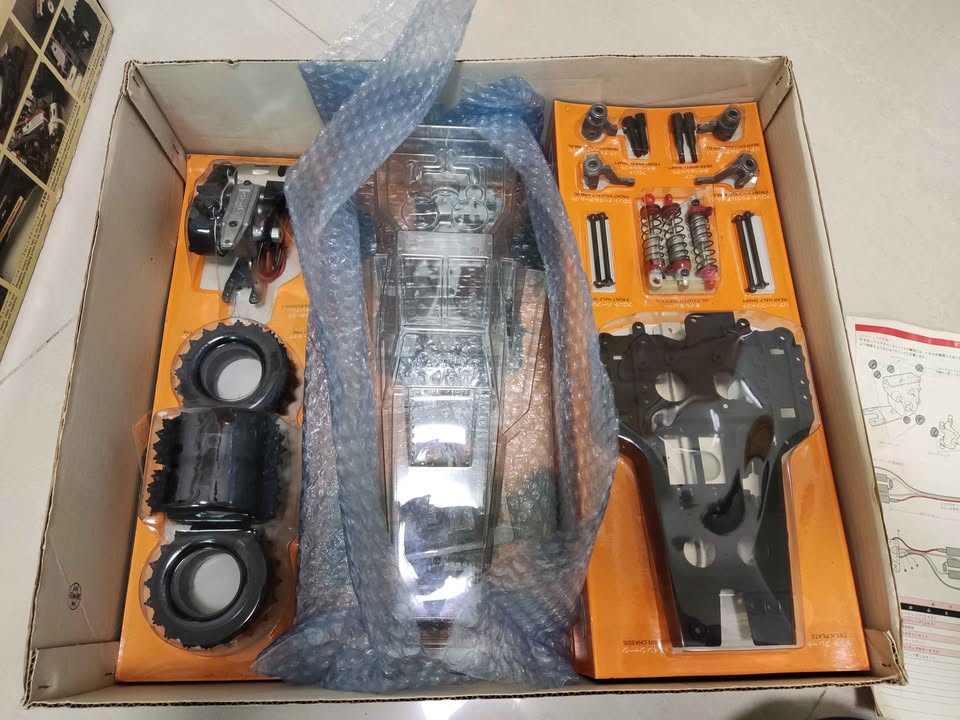
Where 4WS Lives Today: The Thriving Niches
It never died. It just retreated to where its unique advantages are irreplaceable.
-
Competitive Rock Crawling: In ultra-scale, technical rock crawling competitions (like USRCCA events), 4WS is a standard, almost mandatory feature on the most competitive rigs. The ability to “crab” across a rock face or pivot around a precise point is a huge competitive advantage on punishing courses. Brands like Axial and Vanquish Products cater to this.
-
Scale Trail Trucks: For enthusiasts who value ultimate realism and capability on the trail, 4WS is a prized, albeit complex, upgrade. It’s about the experience, not just speed.
-
The “Fun” Segment: Some modern Ready-to-Run models, like the Traxxas TRX-4M and Axial SCX24 (tiny 1/24 scale crawlers), offer 4WS versions. It’s brought back purely for the fun and novelty factor—exactly why it was popular in the 90s! It’s a blast in a living room course.
The Bottom Line
4-wheel steering moved from a mainstream “future tech” gimmick to a specialized tool for a specific job.
The market learned that for going fast (racing), simpler 2WS with a gyro is better. For going anywhere (crawling), 4WS is a complex but invaluable tool for experts. The fun, low-stakes novelty of it is now enjoyed most in the mini-crawler segment.


