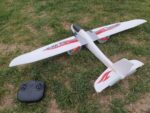
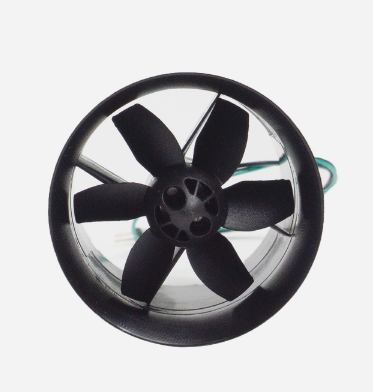
If you’ve ever seen an RC plane scream across the sky with that unmistakable jet-like whine, chances are it was powered by an EDF system. EDF stands for Electric Ducted Fan, and it’s one of the coolest ways to fly RC aircraft—especially if you love modern jets and scale realism.
At its core, an EDF system is RC’s answer to a jet engine. Instead of a propeller spinning in open air, an EDF uses a multi-blade fan enclosed inside a duct. An electric motor spins this fan at extremely high RPM, pulling air in from the front and blasting it out the back to generate thrust. The concept is simple, but the result feels very different from traditional prop-driven RC planes.
One of the biggest attractions of EDF planes is realism. Scale jet models look far more authentic without a big propeller sticking out the nose. The sound is another huge draw. While EDFs don’t perfectly replicate a real jet engine, the high-pitched turbine-like noise adds a level of immersion that prop planes simply can’t match.
Performance-wise, EDF systems behave differently from propellers. Props are very efficient at low speeds and generate lots of static thrust, which is why trainer planes and 3D aircraft rely on them. EDFs, on the other hand, are less efficient at low speed but shine once the plane is moving fast. This makes EDF jets feel more “scale” in flight—they like longer takeoff runs, smooth flying, and wide, fast passes rather than slow, floaty maneuvers.
EDF setups are usually made up of four main parts: the fan unit, the motor, the ESC (electronic speed controller), and the battery. Because EDFs demand high power, they typically use high-KV motors, powerful ESCs, and high-discharge LiPo batteries. It’s not unusual for a mid-size EDF jet to pull significant current, so proper cooling and component matching are critical.
Flying an EDF plane also encourages better piloting habits. Throttle management becomes important, especially during takeoff and landing. Cut power too early on approach, and the jet can sink quickly. Add power smoothly, and the plane comes alive with speed. Many pilots say EDFs feel more “momentum-based,” rewarding smooth inputs rather than aggressive corrections.
Of course, EDF systems aren’t without downsides. They tend to be more expensive, less forgiving for beginners, and more demanding on electronics. Repairs can also be trickier, since fan units are buried inside the fuselage rather than bolted on the front. That’s why EDF planes are usually recommended for intermediate to experienced pilots.
In the end, RC EDF systems are about experience. They trade efficiency and simplicity for speed, sound, and realism. If you’ve mastered prop planes and want something that feels faster, sleeker, and closer to flying a real jet, EDF is where RC aviation starts to feel truly thrilling.
EDF units usually have more blades than open propellers because of how ducted fans generate thrust and what they’re designed to do.
In an EDF system, the fan is spinning inside a tight duct with a relatively small diameter. Because the fan is small, it can’t move a huge volume of air per rotation the way a big propeller can. To make enough thrust, the EDF compensates by using more blades and spinning them at very high RPM. More blades mean more air is grabbed and accelerated each time the fan spins, which increases thrust within that limited diameter.
The duct itself also changes things. Airflow inside a duct is more controlled than open air, and extra blades help maintain smooth, continuous airflow through the fan. With fewer blades, airflow inside the duct can become uneven or turbulent, which reduces efficiency and thrust. Multiple blades help “fill in the gaps” and keep the air moving steadily.
Sound and realism are another factor. EDF jets are often meant to mimic real turbine engines, and multi-blade fans produce that high-pitched jet-like whine people associate with jets. A two-blade or three-blade fan would sound and feel much closer to a propeller, which defeats part of the appeal of EDF systems.
That said, “more blades” doesn’t mean “as many as possible.” There’s a balance. Adding blades increases drag inside the duct, which can reduce efficiency if taken too far. This is why most RC EDFs settle into a practical range—often 5, 7, 9, 11, or 12 blades, depending on size and design. Larger EDF units sometimes use fewer blades, while smaller high-performance units tend to use more.