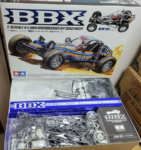
When radio-controlled off-road racing is mentioned, one name has always stood at the front of the pack: the Team Associated RC10. Since its introduction in the early 1980s, the original gold-pan RC10 didn’t just raise the standard—it defined what competitive electric off-road racing could be. It became an icon of durability, innovation, and clever engineering, and it helped shape an entire generation of racers.
Decades later, Team Associated revisited the RC10 legacy in a very different way. The release of the RC10 B44 was not a simple update to a classic platform. Instead, it represented a complete shift in design philosophy—a machine built for the demands of modern tracks, high-powered electronics, and the evolving style of competitive racing.
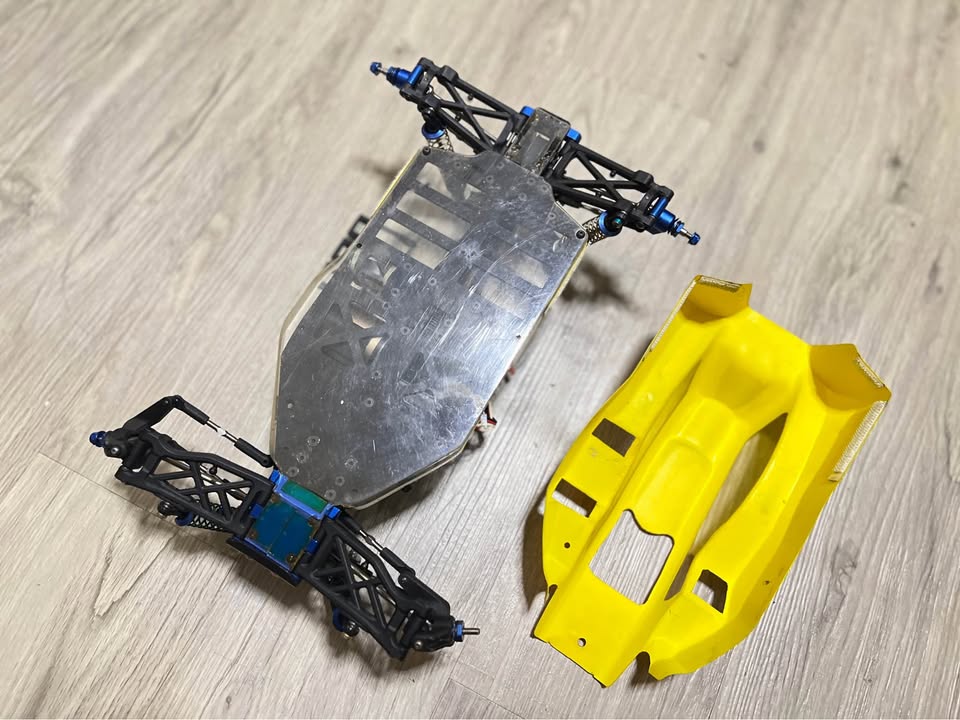
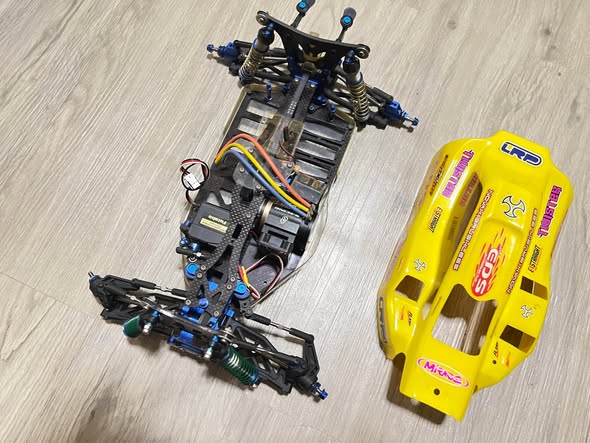
The contrast between the two vehicles begins with their drivetrains. The traditional RC10 is a pure 2-wheel-drive buggy, with its power delivered to the rear wheels and its handling deeply rooted in driver finesse. Its lighter construction and simpler mechanics reward smooth throttle application and precise control. Driving a classic RC10 is an experience defined by balance, weight transfer, and a certain nimbleness that feels almost mechanical and analog. For many, mastering the tail-happy nature of the RC10 is part of its charm.
The RC10 B44, on the other hand, was designed from the ground up as a full-time 4-wheel-drive racing machine. In contrast to the straightforward layout of the original RC10, the B44 uses a more complex drivetrain that includes a center shaft and front and rear differentials. This gives it far more traction and allows it to dive into corners with a level of confidence and aggression that a 2WD buggy simply cannot match. On modern, high-grip tracks, the B44 feels planted, fast, and razor-sharp—built to handle the speed of brushless motors and LiPo batteries that didn’t exist when the original RC10 was conceived.
Beyond drivetrain differences, their chassis philosophies tell two stories from two eras. The early RC10 models relied on aluminum tub or later graphite plate chassis designs—simple, elegantly rigid, and easy to maintain. The B44 embraces a molded composite chassis configured around symmetrical weight distribution, especially suited for saddle-pack LiPo layouts. Its suspension, steering geometry, and overall tuning options are far more intricate, reflecting the sophistication expected in modern competition buggies.
Despite their differences, both vehicles earned their places in RC history. The original RC10 remains the car that built a dynasty, a platform that set standards and continues to inspire nostalgia and respect. The RC10 B44 is the proof that Team Associated could take that legendary spirit and project it forward into a new era, creating a machine capable of meeting the speed, precision, and complexity of contemporary 4WD racing.
While they share the same family name, the RC10 and the B44 serve entirely different purposes. One represents the foundation of off-road RC racing, and the other represents its evolution. Both, in their own ways, are legends.