
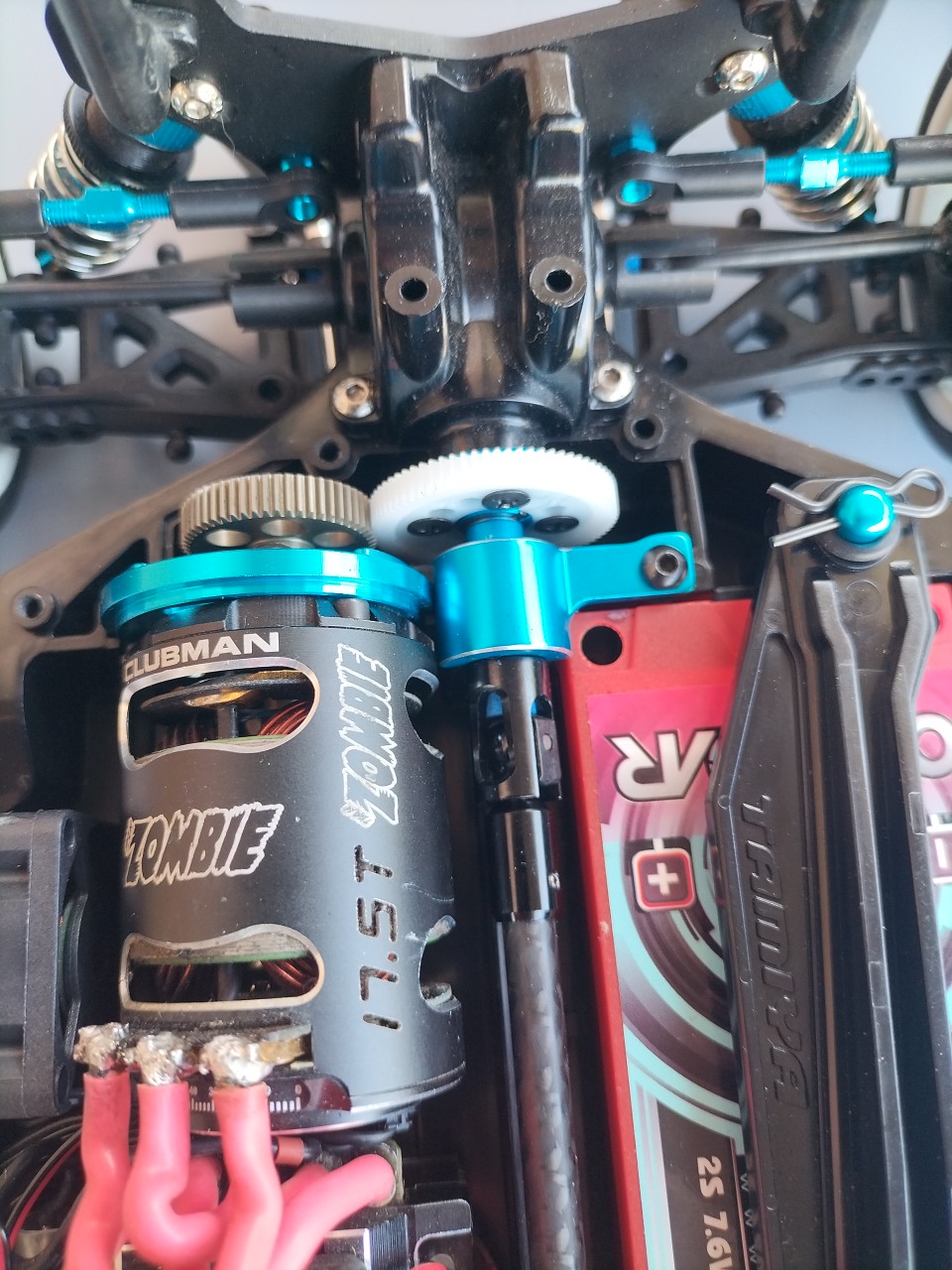
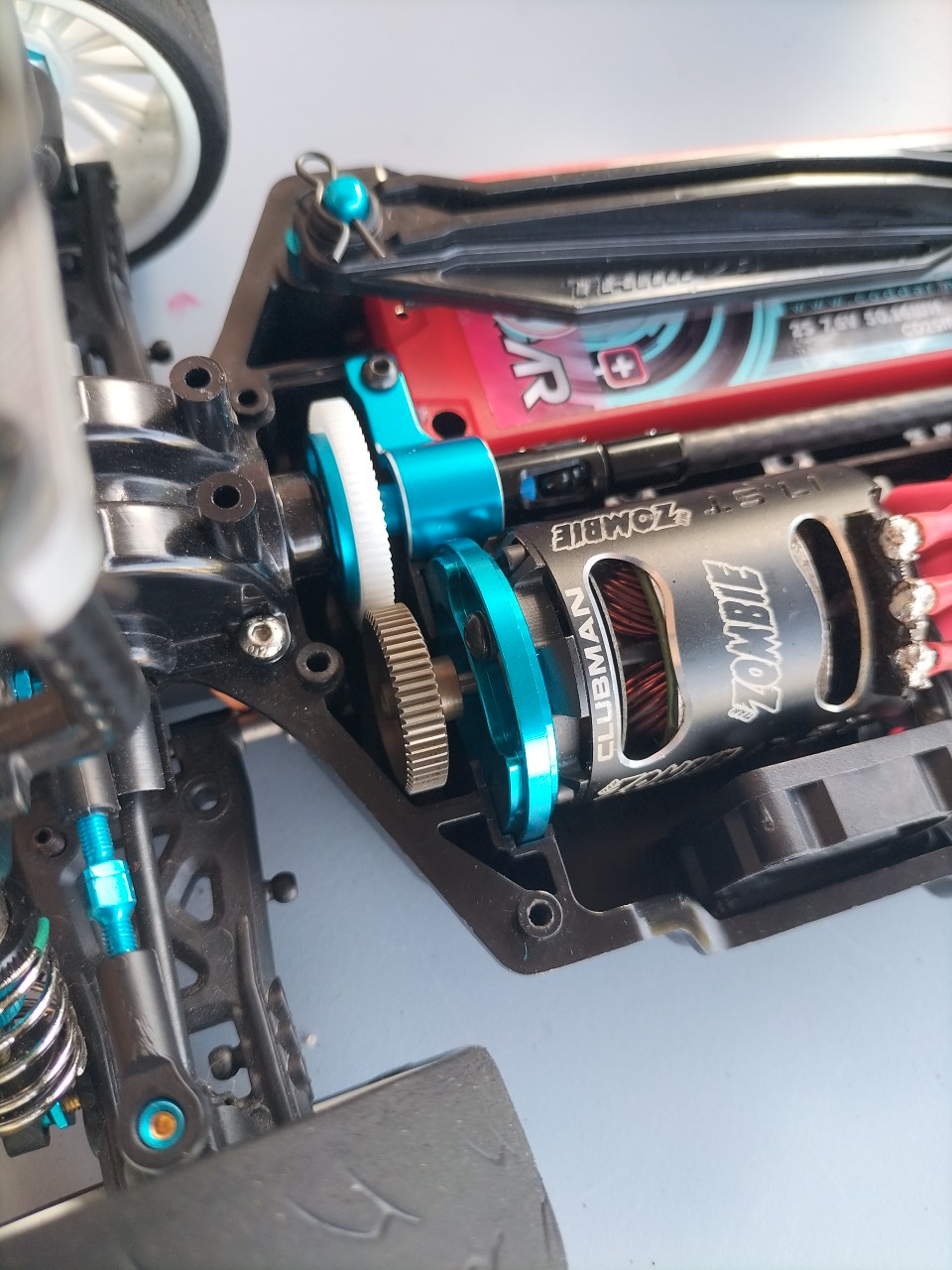
On an RC car, the relationship between the pinion gear (on the motor) and the spur gear (on the drivetrain) determines your gear ratio.
When you run a larger pinion with a not-so-large spur, you’re gearing the car toward higher top speed at the expense of torque and thermal efficiency. Here’s what that means in practice:
- Acceleration & Torque: You lose low-end punch. The car will accelerate more slowly, which can make it feel less responsive out of corners or on loose surfaces.
- Top Speed: The car gains a higher potential maximum speed, but it needs space to reach it. This setup favors long straights over tight tracks.
- Motor Load & Heat: Because the motor has to work harder to push the taller gear ratio, it draws more current. This often causes the motor and ESC to run hotter, and it can shorten their lifespan if cooling isn’t adequate.
- Battery Drain: Aggressive gearing tends to eat through batteries faster, especially under heavy throttle.
- Control & Driveability: It can make the car harder to drive smoothly, since you’re trading usable torque for speed. On smaller or more technical tracks, it may feel sluggish coming out of turns even though it screams on the straights.
So, in short: a large pinion paired with a small spur is aggressive gearing—great if you want raw speed runs, but risky for motor temps and usually less efficient for racing or bashing on tighter tracks.
Total Views: 190 ,
Categories:


