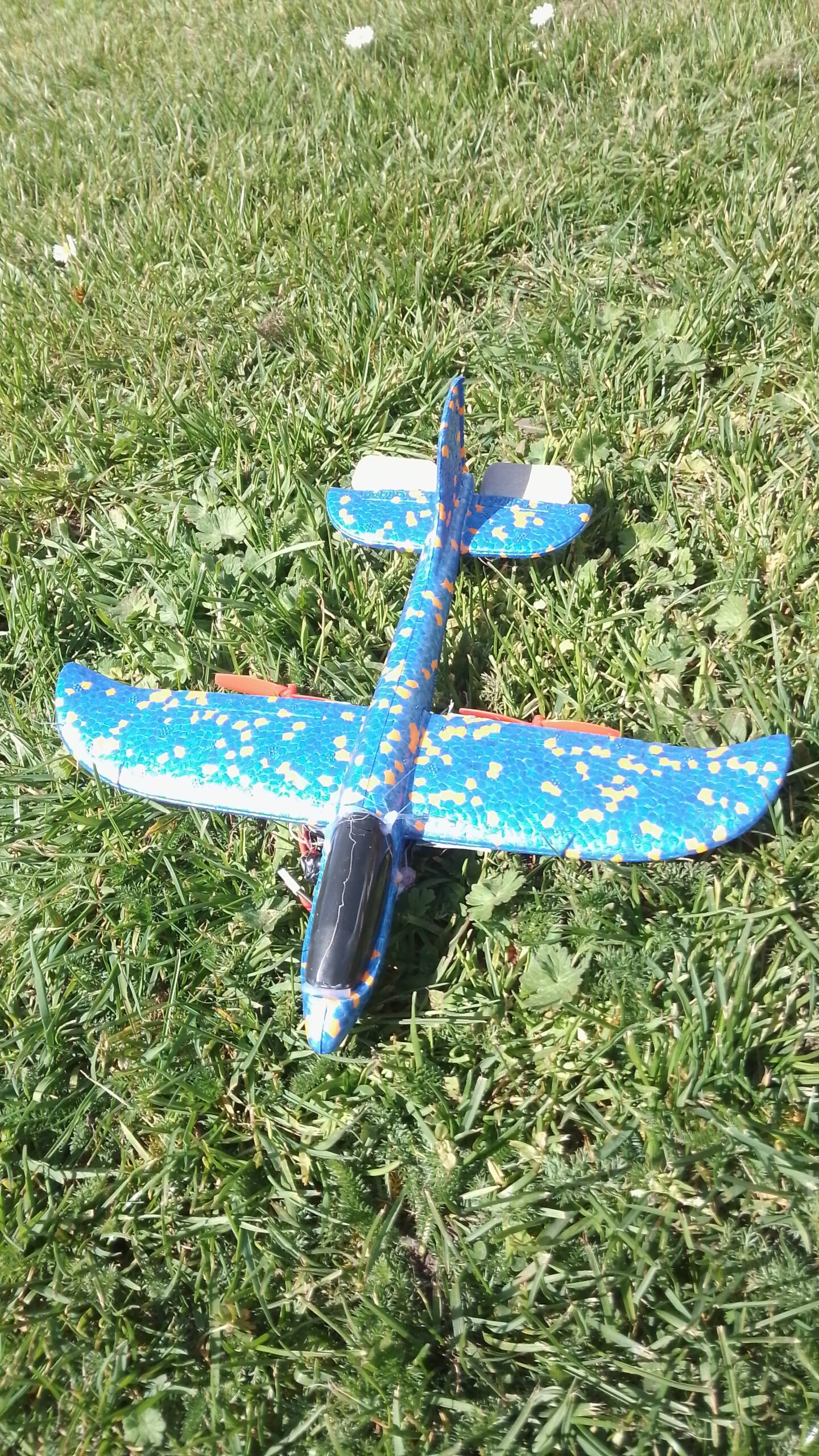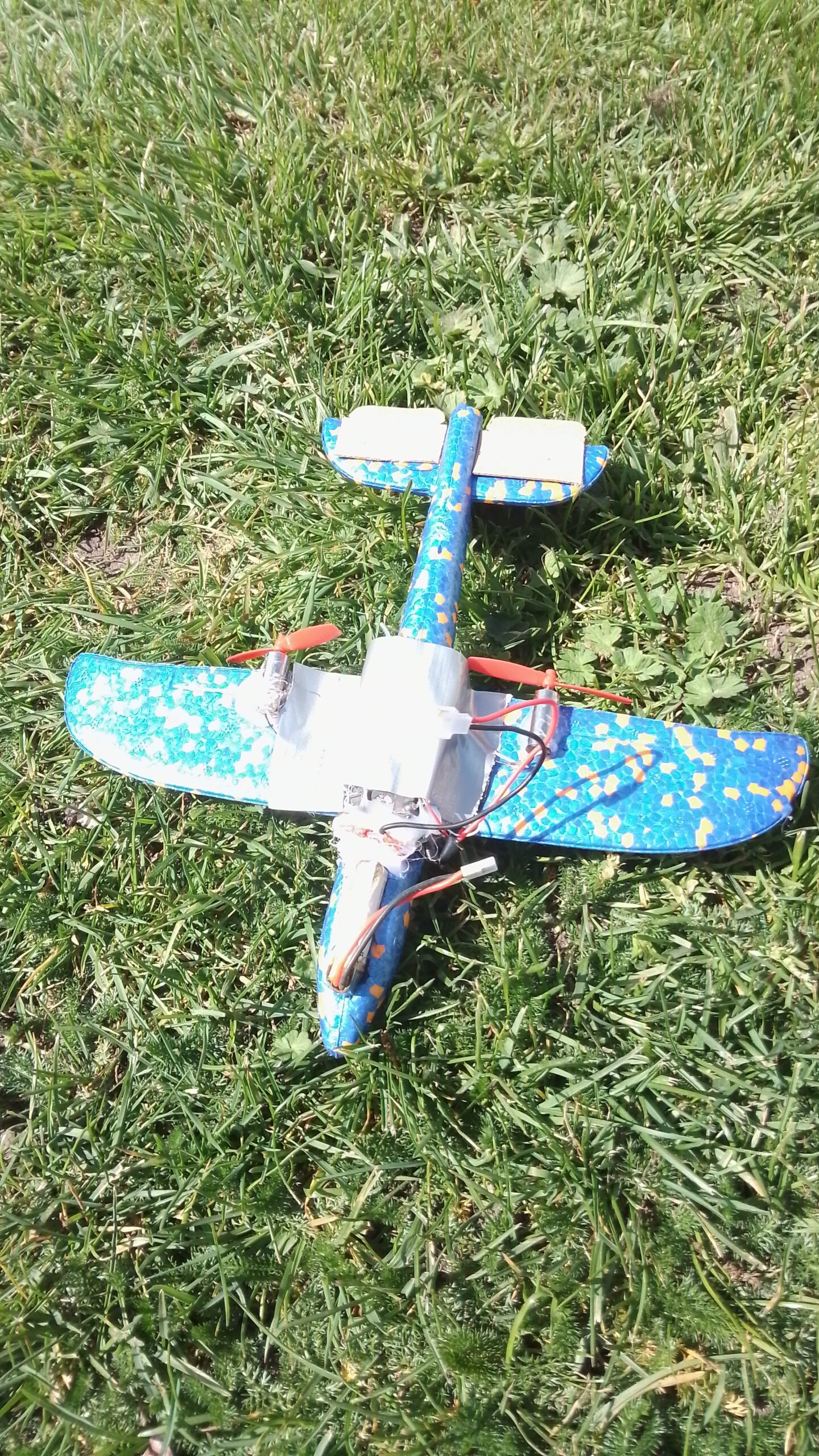
This is an experiment for fun – 1S power differential thrust electronics on a tiny hand thrown glider to produce a small but flyable RCglider (to be precise, a small but overpowered differential thrust plane).
When you command a turn using differential thrust, you are asking the motors to spin up on one side and slow down on the other. Because your motors and battery are far too powerful for the plane’s size, even a small steering input creates a massive difference in thrust between the left and right sides. This does two things at once. First, it yaws the nose in the desired direction. Second, because the motors are mounted above or below the wing’s center of lift depending on your design, that asymmetric thrust also creates a powerful rolling moment. On a small, light airframe, this rolling moment is enormous. Your plane does not simply bank gently into the turn. It snap rolls aggressively, often past ninety degrees of bank.
Once the plane is in that steep bank, two things happen immediately. The lift vector that was holding the plane up is now pointing sideways instead of upward, so the plane begins to sink rapidly. At the same time, the nose is still pointed more or less where it was, so the relative airflow starts coming from below the wing. This dramatically increases the angle of attack. Because your plane is small, its wings have a very low moment of inertia, meaning they cannot resist this sudden change in airflow. The wing that is already low in the roll becomes even more stalled than the high wing, and because your motors are still applying that asymmetric thrust, the condition only worsens. The result is that what should have been a gentle turn becomes a high-speed spiral into a stall, and from there the plane either spins in or simply falls out of the sky.
The core of the problem is that your differential thrust system is too aggressive for the airframe. On a properly sized plane, the amount of roll induced by differential thrust is manageable and can be countered by ailerons or by the plane’s natural stability. On your small, overpowered plane, the roll from differential thrust overwhelms the plane before you even have time to react. By the time you notice the excessive bank, the wing is already stalled.