When people think of Tomy and radio-controlled cars, they often picture toy-grade models with turbo buttons and bold plastic shells. But what many enthusiasts forget is that Tomy also dipped its toes into the hobby-grade RC world, producing some surprisingly serious machines that bridged the gap between toys and full competition kits. These hobby-grade Tomy RC cars are a fascinating and often overlooked chapter in RC history.
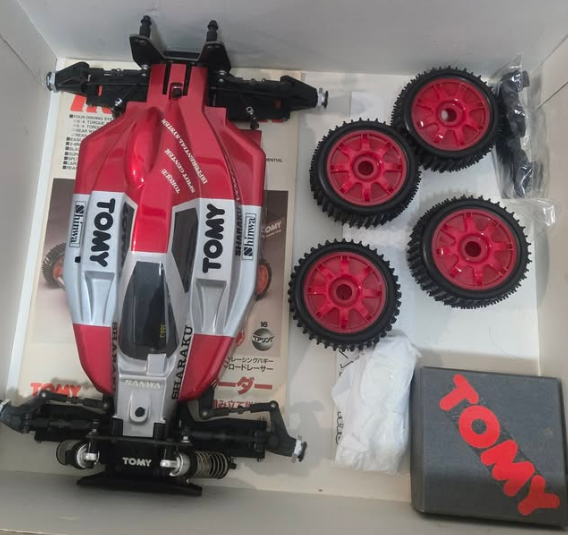
Unlike Tomy’s mass-market RC toys, their hobby-grade models were designed with performance, durability, and upgrade potential in mind. These cars featured stronger chassis designs, replaceable parts, and drivetrains that could handle more power. While they didn’t always match the sophistication of Tamiya or Kyosho at the time, they showed that Tomy understood what hobbyists wanted: realism, control, and the ability to tinker.
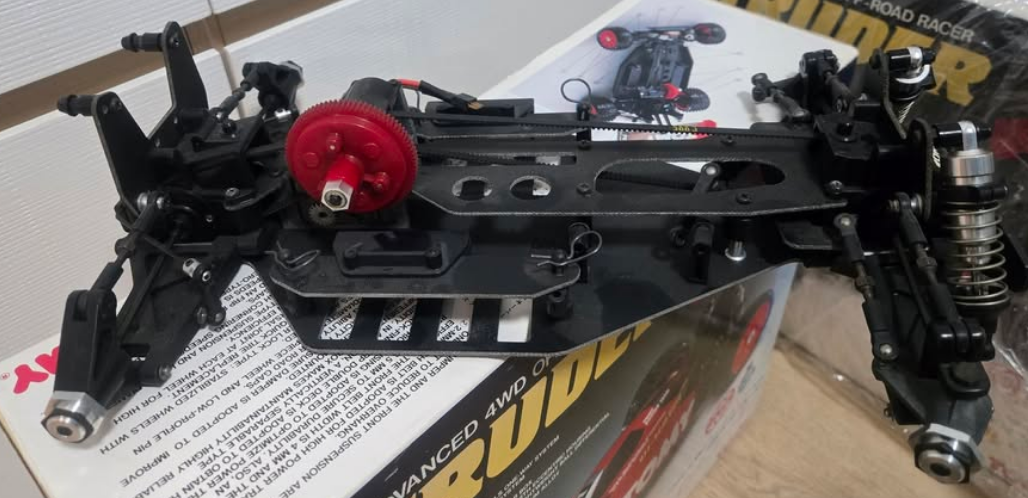
One of the defining characteristics of Tomy’s hobby-grade RC cars was their engineering creativity. Tomy wasn’t afraid to try unconventional layouts or mechanical ideas. Some models featured unique suspension geometries or drivetrain concepts that set them apart from more conservative competitors. This experimental approach gave Tomy RCs a distinct personality, even if it sometimes meant parts compatibility and aftermarket support were limited.
Build quality was another step up from Tomy’s toy-grade offerings. Hobby-grade Tomy RC cars typically used metal gears, oil-filled dampers, and more robust plastics, making them suitable for outdoor running and longer play sessions. They were still aimed at fun rather than pure racing, but they could handle rougher terrain and higher speeds without falling apart.
Where Tomy truly stood out was in how they made hobby-grade RC less intimidating. Their kits and ready-to-run models were often simpler to assemble and maintain than those from traditional hobby brands. For beginners who wanted something more serious than a toy but weren’t ready to dive into full competition RC, Tomy offered a comfortable stepping stone. In that sense, Tomy played an important role in growing the RC hobby by lowering the barrier to entry.
That said, Tomy’s hobby-grade RC cars did face challenges. The company’s primary identity as a toy manufacturer meant hobby shops sometimes overlooked their higher-end offerings. Limited upgrade paths and fewer racing communities built around Tomy platforms also made it harder for these cars to gain long-term traction in the competitive scene.
Today, hobby-grade Tomy RC cars are rare and intriguing collector pieces. They represent a moment when the boundaries between toy and hobby RC were still being defined. For collectors, they offer something different from the usual Tamiya or Kyosho lineup — a blend of playfulness and seriousness that reflects Tomy’s unique DNA.
Looking back, Tomy’s hobby-grade RC cars may not have dominated racetracks, but they absolutely earned their place in RC history. They proved that fun and engineering could coexist, and they helped introduce countless enthusiasts to the deeper side of radio control. For anyone interested in the evolution of RC, these machines are well worth remembering.