A phugoid is an aircraft motion in which the vehicle pitches up and climbs, and then pitches down and descends, accompanied by speeding up and slowing down as it goes “downhill” and “uphill”. It has a nearly constant angle of attack but varying pitch, caused by a repeated exchange of airspeed and altitude. When it occurs,
it is considered a nuisance, but for light weight differential thrust glider plane it is how flying is done.
A differential thrust 2ch glider has no control surfaces. It is flying in phugoid. And when it comes to a stall, nothing can be done to rescue it.
With 3ch you can still try to rescue the plane by manipulating the rudder and/or the elevator. This is a key difference.
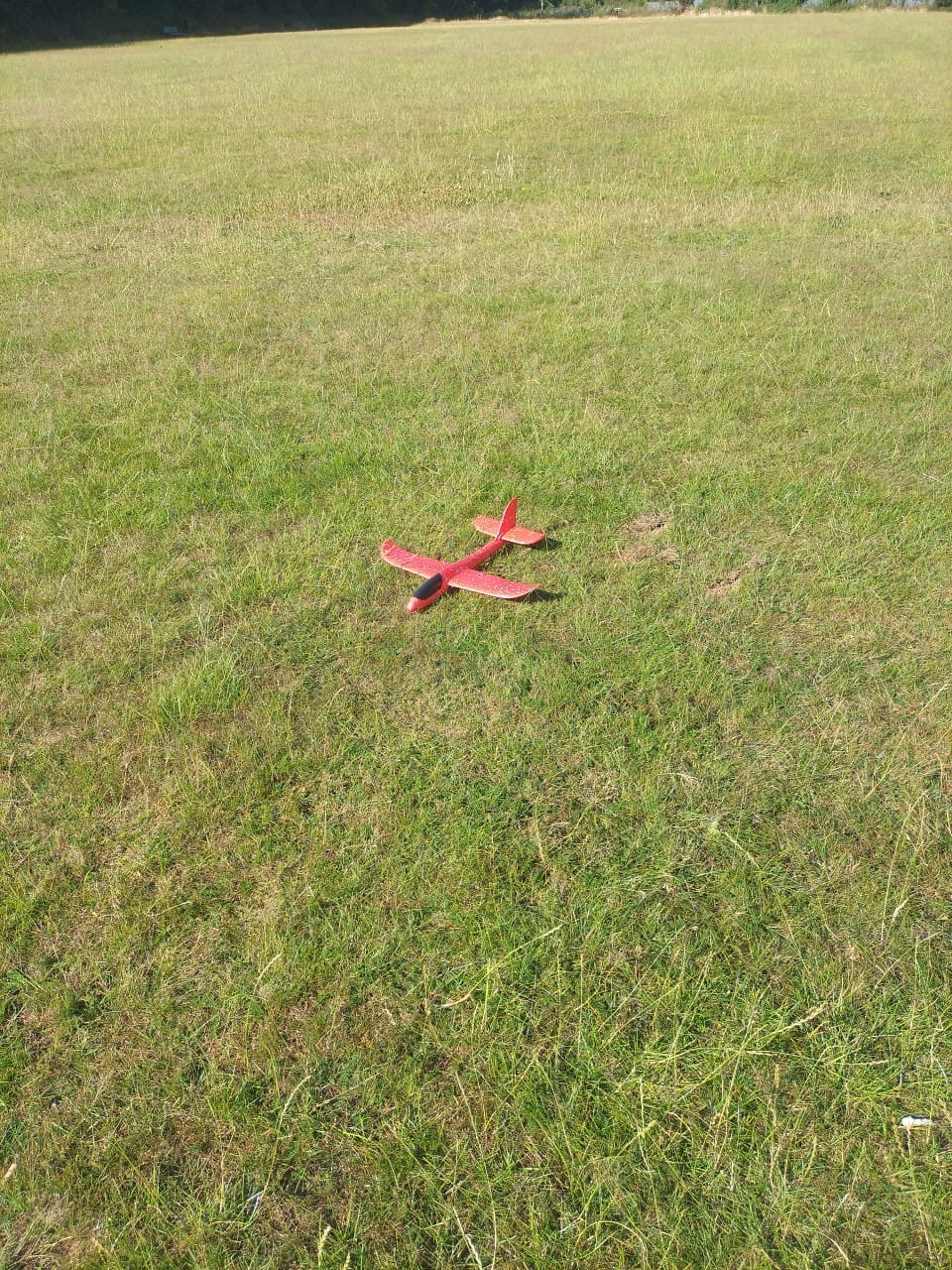
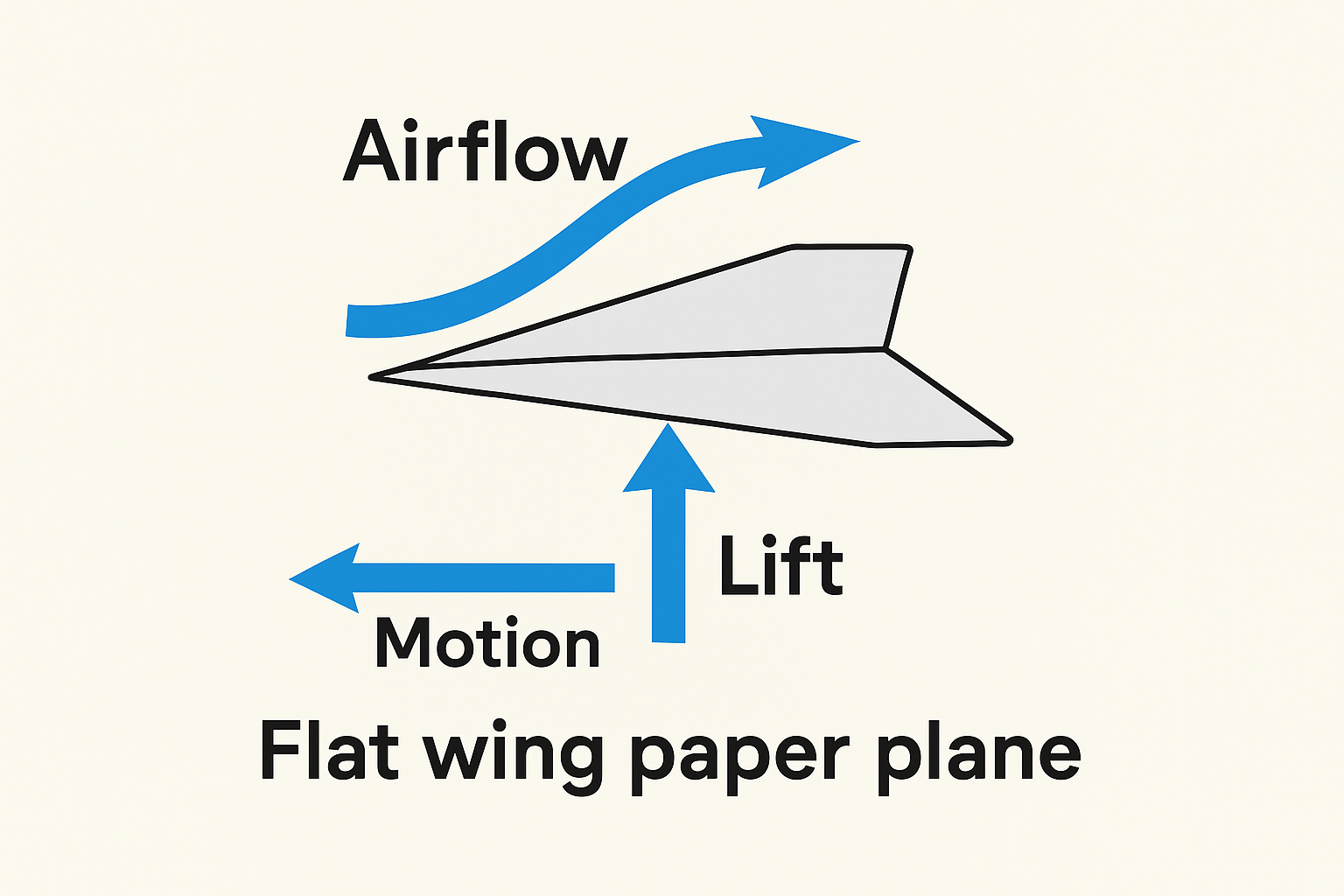
Some cheaper gliders do not even have curved wings – they are just like paper planes. Note that a paper plane (or any wing) generates lift largely because of its angle of attack—the angle between the wing and the oncoming air. Even a flat piece of paper, if tilted slightly upward, deflects air downward. Newton’s Third Law comes into play: the air is pushed down, and the plane is pushed up. This is called Newtonian lift. Also, cheap gliders and paper planes are extremely light. Their weight is so low that even a tiny lift force (or just inertia and gliding) is enough to sustain flight for a few meters. The curved wing isn’t strictly necessary because the plane doesn’t need high-performance lift—it just needs enough to counter its tiny weight. Therefore, even a completely flat paper plane can glide if thrown at the right angle with enough speed.