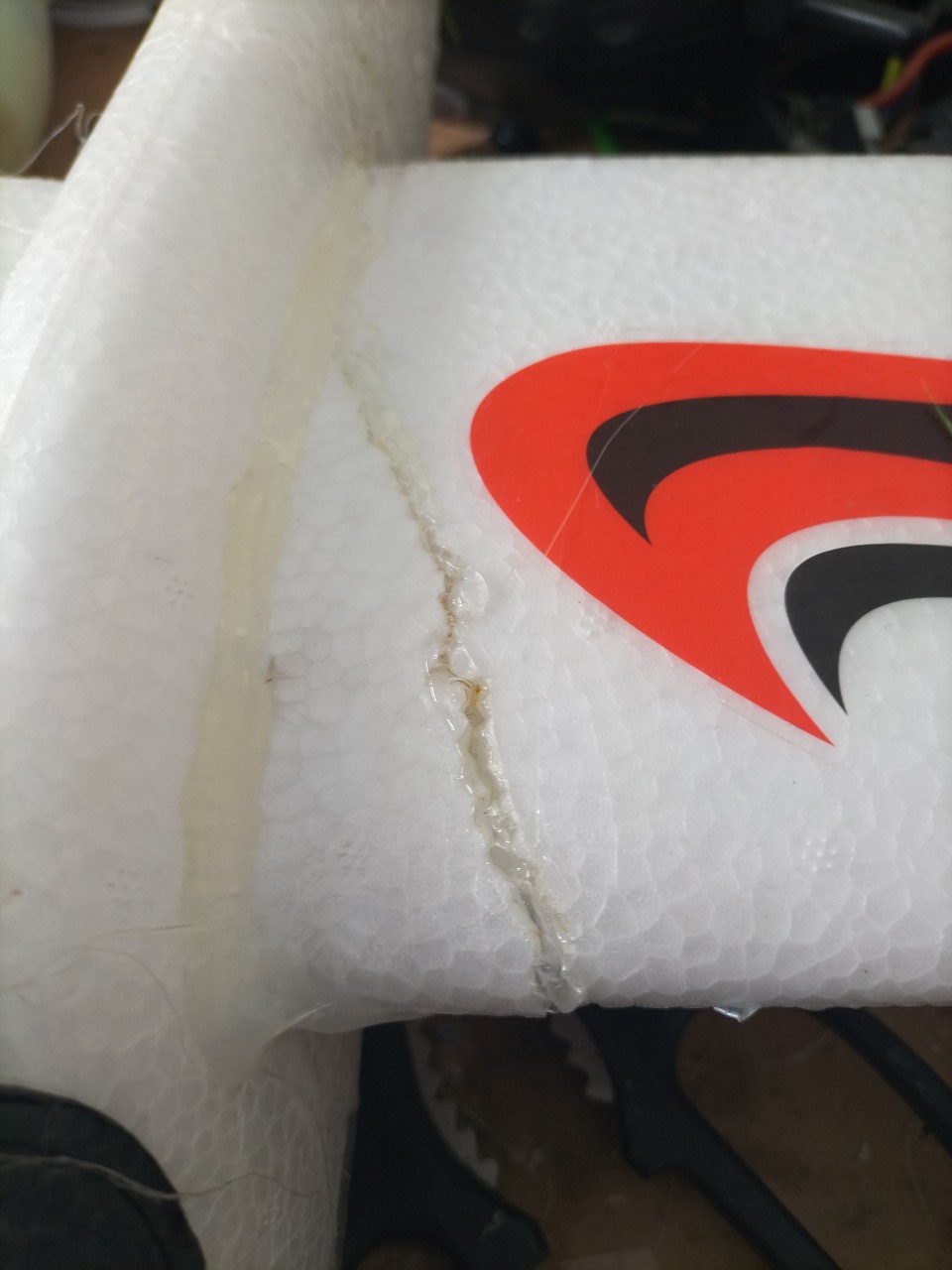
Hot glue has kind of become the go-to fix for broken foam gliders, and it’s not hard to see why. Foam planes crash—it’s part of the hobby—and you need a glue that’s quick, forgiving, and strong without melting the foam. Hot glue checks all those boxes.
The biggest advantage is speed. You don’t have to wait hours like with epoxy or CA. A dab of hot glue, press the foam back together, hold it for a few seconds, and you’re back in the air. That’s perfect for field repairs—carry a little battery-powered glue gun in your bag and you’re sorted.
It also has just the right amount of flexibility. When you glue foam with CA (even foam-safe types), the bond can be brittle, so the same spot might crack again. Hot glue, on the other hand, has some give. When the plane flexes in a rough landing, the joint moves with it instead of snapping.
Another bonus is that it acts like a gap filler. Foam breaks aren’t always clean—sometimes you’ve got missing chunks, dented edges, or jagged cracks. Hot glue can fill those voids and still hold strong, almost like creating a little reinforcement bead.
And maybe the best part? If you mess it up, you can reheat it and redo it. Unlike CA or epoxy, which is permanent once cured, hot glue can be softened again with a heat gun or even a hairdryer, letting you adjust or re-fix a repair. That’s a lifesaver when you’re learning.
Sure, it’s not the lightest adhesive out there, and if you smear too much you can add unnecessary weight to the nose. But for everyday repairs on EPP or EPS gliders, hot glue is tough to beat—it’s cheap, quick, and keeps you flying instead of sitting around waiting for glue to dry.
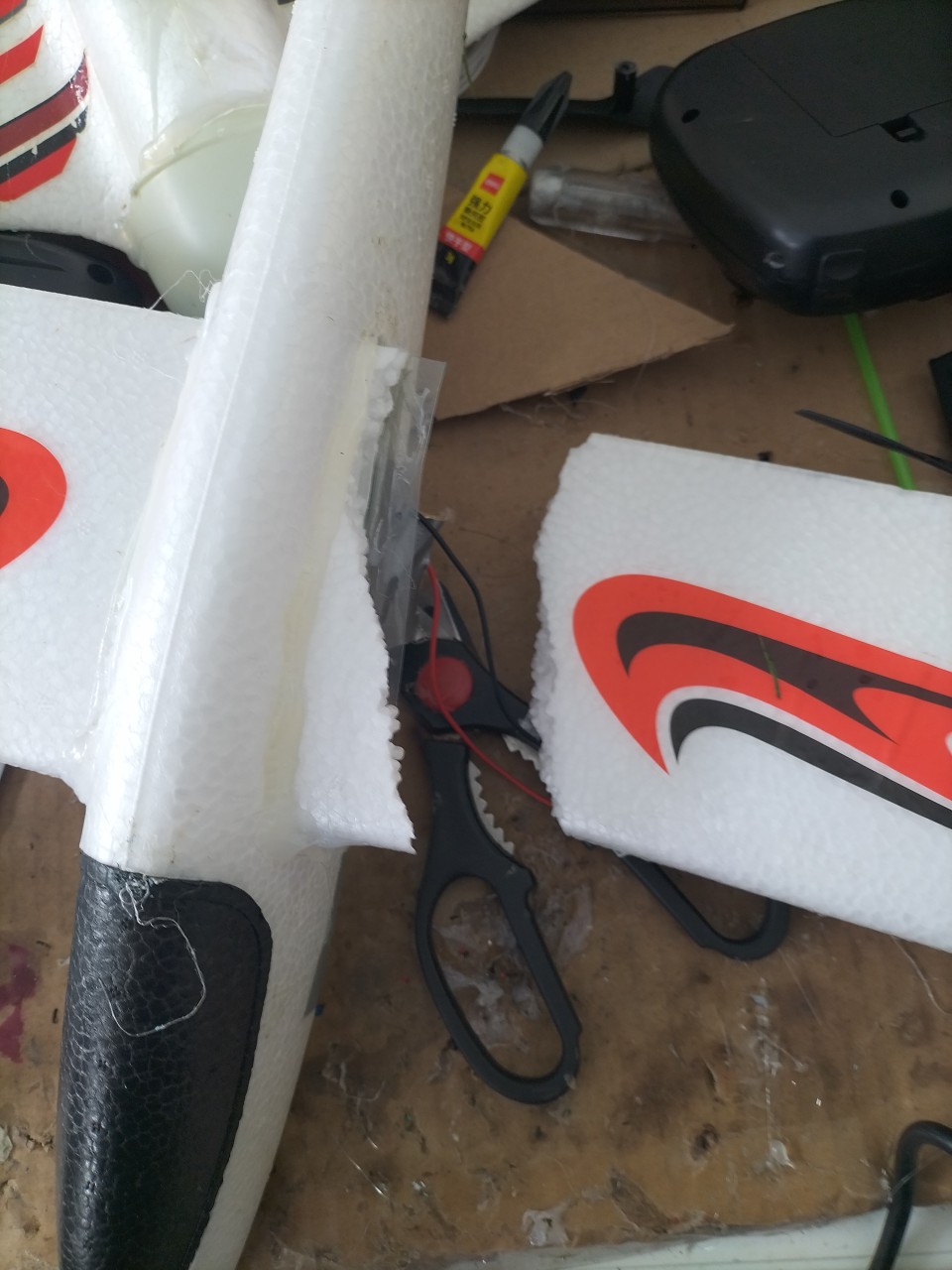
You need a coffee stirrer and hot glue to fix it.
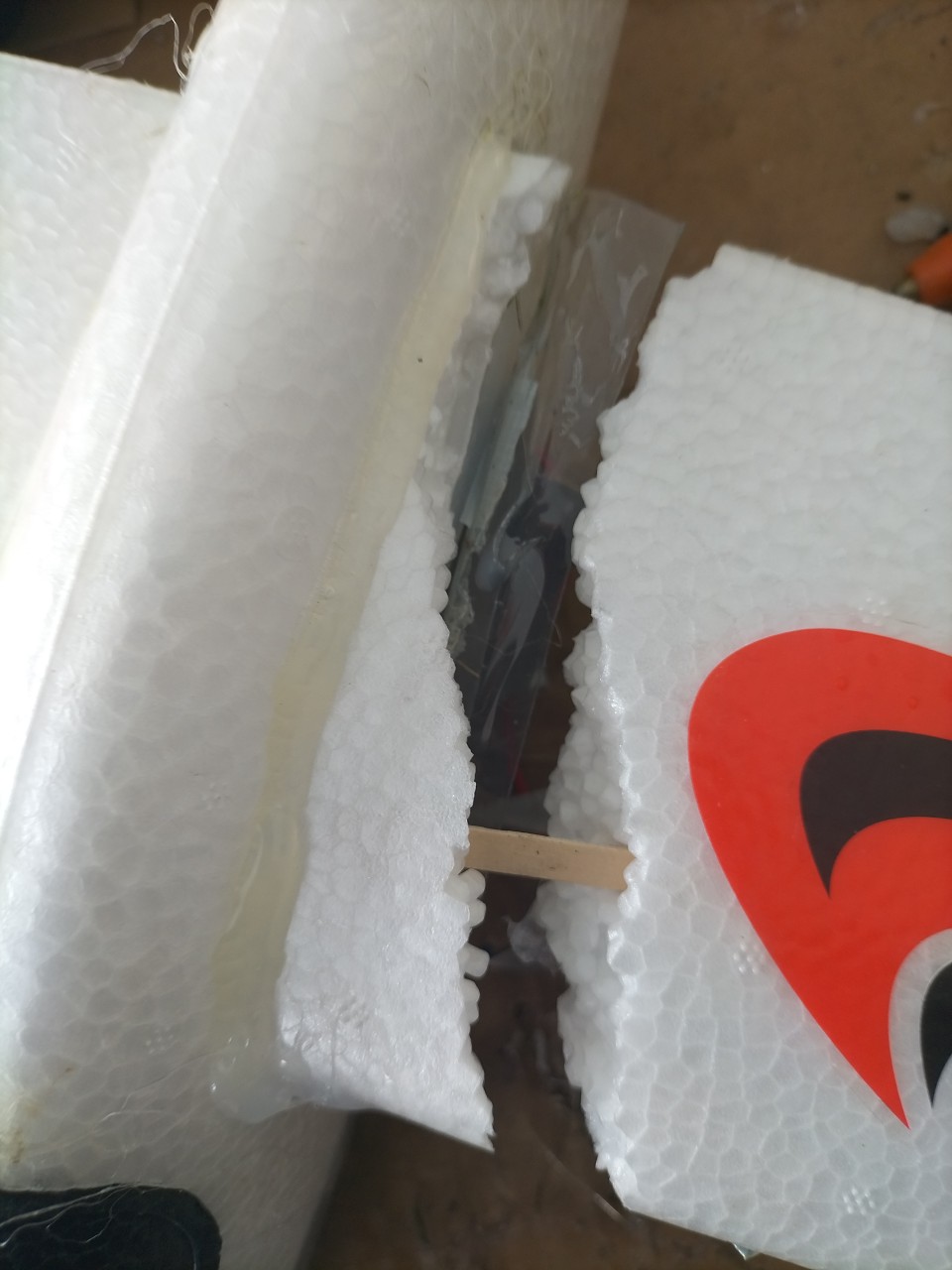
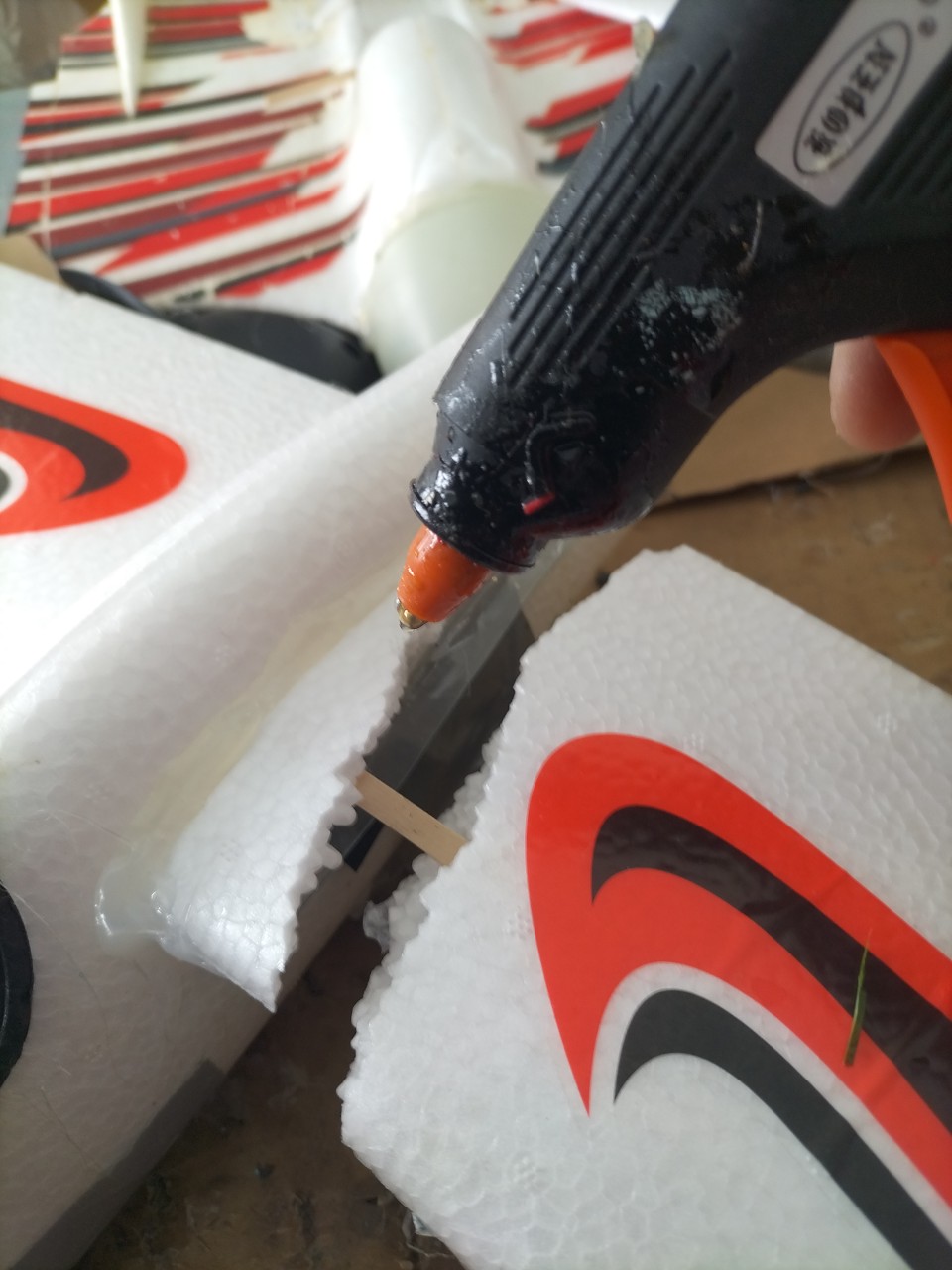
Done!