RC planes use various types of battery plugs to connect their batteries to the electronic speed controllers (ESCs) or power systems. The most common types of battery plugs for RC planes vary based on factors like current-carrying capacity, ease of use, and the plane’s size or power requirements.
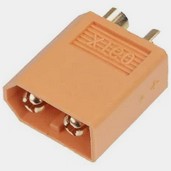
The XT60 is one of the most popular connectors for small to medium-sized RC planes. It can handle up to 60 amps of continuous current and is known for its durability and ease of use. XT60 plugs have a polarized design (you can’t connect them backward), and they provide a secure, solid connection, making them a favorite for many hobbyists. The XT90 is a larger version of the XT60 and is designed for high-current applications, handling up to 90 amps continuously. It’s commonly used in larger RC planes with powerful motors or high-capacity batteries. Like the XT60, it is polarized and provides a strong, reliable connection.
Deans plugs, also known as T-Plugs, are another widely used option, especially in older RC systems. They can handle moderate current levels and are compact and lightweight, making them ideal for smaller RC planes. However, they can be harder to solder and may lose popularity in favor of XT-series connectors. EC3 connectors are rated for up to 60 amps and are used in small to medium RC planes. EC5 connectors are rated for up to 120 amps, making them suitable for larger, high-performance RC planes. Both EC3 and EC5 plugs have a polarized design and are known for their secure fit.
JST plugs are small, red connectors typically used for low-power applications in micro or small RC planes. They are lightweight and simple to use but are not suitable for high-current applications due to their lower current capacity (around 5-10 amps).