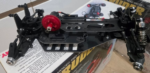
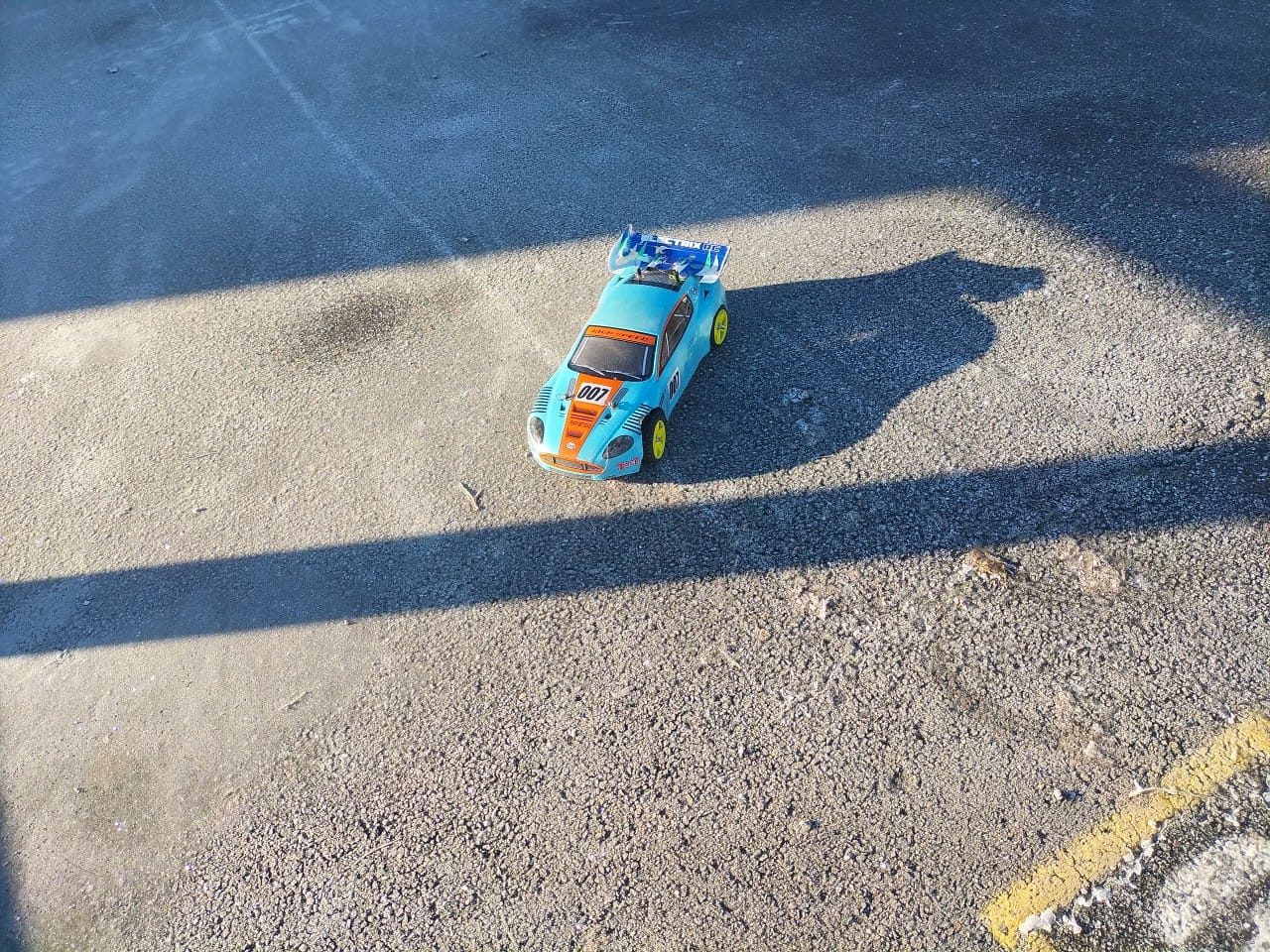
On a frostbound track, a FWD RC car is often easier to control than a 4WD—but that doesn’t mean it’s always faster. The difference comes down to how grip, power, and weight transfer behave on very slippery surfaces.
With front-wheel drive, the same tires are responsible for both pulling the car forward and steering it. On ice or frost, this actually simplifies the car’s behavior. When you add too much throttle, the front tires lose grip and the car tends to understeer—it pushes wide rather than spinning. Understeer is predictable and easy to correct: you lift off the throttle, grip comes back, and the car points where you want it to go again. That predictability is why FWD feels calm and manageable on low-traction surfaces.
A 4WD RC car, on the other hand, has more available traction—but that can be a double-edged sword on frost. Because all four wheels are driving, the car can accelerate more strongly, but when grip finally breaks, it often does so more suddenly. If you apply throttle mid-corner, the rear tires can lose lateral grip while still being driven, leading to snap oversteer or a spin. This makes 4WD faster in skilled hands, but harder for beginners to keep tidy.
Weight transfer also favors FWD on ice. Under acceleration, weight shifts rearward, slightly reducing front grip—but because FWD cars are typically lighter at the rear and less aggressive on power, this transition happens gently. In 4WD cars, the extra drivetrain mass and torque delivery can cause abrupt balance changes, which are harder to manage on a frozen surface.
Another key factor is throttle sensitivity. FWD cars naturally discourage aggressive throttle inputs because spinning the front wheels immediately reduces steering effectiveness. This acts like a built-in “warning system.” With 4WD, you can get on the power earlier, but that extra confidence can quickly turn into trouble when the surface offers almost no forgiveness.